
DeepSeek AI Coding Crushes GPT-4, 55% Faster
The AI Revolution in Software Development
The software development landscape is undergoing a radical transformation, fueled by the rapid advancements in AI technology. As highlighted in the previous section, developers are experiencing significant productivity gains through the integration of artificial intelligence tools into their workflows. This revolution is not just a minor shift, it’s a fundamental change in how software is conceived, developed, and maintained. The increasing capabilities of neural networks are paving the way for a future where AI plays an increasingly central role in the creation of the digital world.
The Rise of Intelligent Coding Assistants
At the heart of this transformation are intelligent coding assistants, powered by sophisticated machine learning algorithms. These tools are capable of understanding, generating, and optimizing code with a level of proficiency that was unimaginable just a few years ago. The impact is undeniable, with the AI in coding market projected to reach $26.5 billion by 2032. This growth is a testament to the value that AI development brings to the software industry. “AI is not just about automating tasks; it’s about augmenting human capabilities and enabling developers to achieve more than they ever could alone,” says Tim Cook, CEO of Apple.
Unprecedented Growth and Potential
The projected growth of the AI in coding market is not just a number, it’s a reflection of a fundamental shift in the industry. This market is expected to grow at a compound annual growth rate (CAGR) of 32.25%. This indicates a rapid adoption and integration of AI into every facet of software development. “We’re witnessing a paradigm shift in how software is developed, and AI is at the forefront of this change,” says Satya Nadella, CEO of Microsoft. As AI continues to mature and evolve, it is poised to unlock even greater potential, driving innovation and reshaping the future of the tech industry.
From Rule-Based Systems to Machine Learning: A Historical Journey of AI in Coding
The Dawn of AI: Early Rule-Based Systems
The journey of AI technology in coding began with rule-based systems, which laid the foundation for future advancements. One of the earliest milestones was the development of LISP in 1958, introducing concepts like symbolic processing and dynamic programming. “LISP was a game-changer, it provided the flexibility needed to explore complex AI concepts,” says John McCarthy, a pioneer in artificial intelligence. These early systems, while groundbreaking, were limited by their rigid structure and inability to adapt to unforeseen scenarios.
Early AI development relied heavily on predefined rules, making systems like the Logic Theorist and the General Problem Solver effective in specific contexts but inflexible overall. These systems struggled with the complexities of real-world applications, highlighting the need for a more adaptable approach. This inflexibility paved the way for future advancements that could handle more dynamic and complex tasks. “The limitations of rule-based systems became increasingly apparent as we tried to tackle more complex problems,” says Allen Newell, co-creator of the Logic Theorist and General Problem Solver. These limitations spurred a shift towards more adaptable paradigms in the field of AI.
The Machine Learning Shift: Adaptability and Evolution
The 1990s marked a significant turning point, with a transition from rule-based systems to machine learning algorithms. Unlike their predecessors, machine learning algorithms could learn from data and improve over time. “The shift to machine learning was revolutionary, it allowed AI systems to evolve and adapt in ways we hadn’t thought possible,” says Tom M. Mitchell, a leading figure in machine learning. This new paradigm enabled AI to tackle more complex and dynamic problems, leading to the sophisticated tools we see today.
This transition to machine learning was not merely a technical update, but a fundamental shift in how artificial intelligence was conceptualized and developed. The adaptability of neural networks allowed them to evolve and improve, handling tasks that were previously impossible. “Machine learning opened up new frontiers in AI, enabling us to create systems that can learn and adapt like never before,” says Yann LeCun, a pioneer in deep learning. The development of these adaptive systems was crucial, setting the stage for the current era of intelligent coding assistants and the continued growth of AI in software development.
DeepSeek: Challenging the Status Quo in AI-Powered Coding
Introducing DeepSeek-V3 and DeepSeek-R1: High-Performance Models
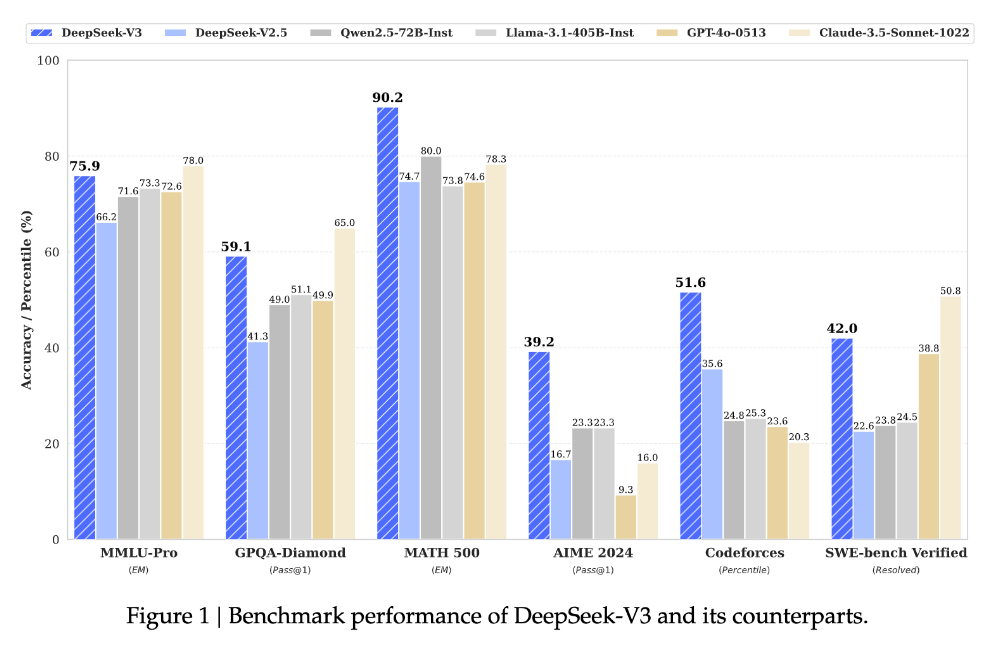
In the rapidly evolving landscape of AI technology, DeepSeek has emerged as a formidable force, directly challenging established players with its cutting-edge language models. DeepSeek-V3, an open-source model boasting 671 billion parameters, leverages a Mixture-of-Experts (MoE) architecture and was trained on an astounding 14.8 trillion tokens. This extensive training allows it to excel in various benchmarks, showcasing its proficiency in coding, reasoning, and mathematics. “DeepSeek’s models are pushing the boundaries of what’s possible with AI in coding,” says a spokesperson from DeepSeek.
Another standout model, DeepSeek-R1, differentiates itself through its unique approach to problem-solving, focusing on executing long chains of reasoning. This method mirrors human-like cognitive processes, making it exceptionally well-suited for complex tasks in science, coding, and mathematics. It has demonstrated exceptional performance on benchmarks like AIME 2024, MATH-500, and SWE-Bench Verified, even surpassing OpenAI’s o1 in certain areas. “The ability of DeepSeek-R1 to handle complex reasoning is a testament to the advancements in artificial intelligence,” says an industry analyst.
Open-Source and Affordable: DeepSeek’s Competitive Edge
DeepSeek’s commitment to open-source principles provides a significant competitive advantage in the AI development market. By making its models freely available, the company fosters a collaborative environment that encourages innovation and customization. “Open source is the key to unlocking the full potential of AI,” says a DeepSeek engineer. This approach allows developers to adapt the technology to their specific needs, driving wider adoption and pushing the boundaries of what’s possible.
Furthermore, DeepSeek distinguishes itself through its competitive pricing strategy, making its high-performance AI accessible to a broader range of users. This affordability, combined with open access and top-tier performance, positions DeepSeek as a compelling alternative in the market. “Democratizing access to advanced AI is crucial for fostering innovation across the industry,” says a tech industry commentator. This forward-thinking approach is likely to further accelerate the adoption of AI in software development.
DeepSeek vs established players like OpenAI and GitHub
The emergence of DeepSeek has intensified the competition in the AI-powered coding arena, directly challenging the dominance of established players like OpenAI and GitHub. While OpenAI’s GPT-4 and GitHub’s Copilot have been at the forefront, DeepSeek’s models are quickly gaining recognition for their comparable, and in some cases superior, performance. “The competition is heating up, and DeepSeek is proving to be a serious contender,” says an AI researcher. This rivalry is driving innovation and pushing the boundaries of what neural networks can achieve in the realm of code generation and optimization.
DeepSeek’s open-source nature and affordability further contribute to its disruptive potential, offering a compelling alternative to the often proprietary and expensive solutions offered by its competitors. By providing open access to its powerful models, DeepSeek is empowering a wider range of developers to leverage the benefits of AI technology. “DeepSeek’s approach could reshape the landscape of AI-powered coding, making it more accessible and collaborative,” says a leading tech analyst. This shift towards open and affordable solutions is likely to have profound implications for the future of software development, fostering greater innovation and accelerating the integration of AI into the industry.
Transforming the Developer Experience: The Impact of AI Coding Assistants
Boosting Productivity and Efficiency
The integration of AI technology into software development is fundamentally reshaping the developer experience, leading to significant gains in productivity and efficiency. Studies have shown that developers using AI tools can experience productivity increases of up to 45%. “The impact of AI on developer productivity is undeniable, it’s accelerating workflows and enabling developers to achieve more in less time,” says a senior software engineer at Google. This boost in productivity is a direct result of AI’s ability to handle complex tasks more efficiently.
One of the most prominent examples of this increased efficiency is seen with GitHub Copilot. Developers using this tool have been found to complete tasks 55% faster. “With AI handling the more mundane aspects of coding, developers can focus on higher-level problem-solving and innovation,” says Thomas Dohmke, CEO of GitHub. These advancements are paving the way for a future where AI development plays an even more integral role in streamlining workflows.
Automating Tasks and Enhancing Code Quality
Beyond speed, artificial intelligence is revolutionizing code quality through automation. AI coding assistants can automate repetitive tasks such as code refactoring, bug detection, and documentation. “By automating these tasks, AI not only saves time but also reduces the likelihood of human error, leading to higher quality code,” says a lead developer at a major tech firm. This automation allows developers to focus on more strategic aspects of their work, improving the overall quality of the software.
The automation capabilities of these tools are enhancing code quality and consistency across projects. AI can identify potential issues and suggest improvements, leading to more robust and maintainable code. “The ability of AI to analyze and optimize code in real-time is transforming how we approach software quality assurance,” says Nat Friedman, former CEO of GitHub. As machine learning algorithms continue to evolve, we can expect even greater improvements in code quality and a reduction in development time.
AI’s Role in Testing, DevOps, and Beyond
AI technology is expanding its influence beyond coding, making significant inroads into software testing and DevOps. In testing, AI can automate test case generation and execution, identifying potential bugs and vulnerabilities more efficiently. “AI-driven testing is becoming increasingly sophisticated, allowing us to catch issues earlier in the development cycle,” says a QA lead at a software company. This integration of neural networks into various stages of development highlights the broad potential of AI.
In the realm of DevOps, AI is streamlining CI/CD pipelines, automating deployments, and enhancing monitoring and observability. AI can predict potential issues and optimize resource allocation, leading to more efficient and reliable operations. “The integration of AI into DevOps is revolutionizing how we manage and deploy software,” says Sam Ramji, CEO of DataStax. The continued evolution of AI development promises to bring even greater automation and optimization to these critical areas, further transforming the software development lifecycle.
Navigating the Challenges and Ethical Considerations of AI in Coding
Over-Reliance and Skill Degradation
While the benefits of AI technology in coding are undeniable, concerns are emerging about potential over-reliance on these tools. Some experts worry that developers might become overly dependent on AI, leading to a decline in fundamental coding skills and problem-solving abilities. “There’s a risk that developers could lose their ability to code effectively without AI assistance,” says a prominent computer science professor. A major concern is the potential for developers to lose their deep understanding of code and become less capable of debugging or innovating independently.
This over-reliance could hinder the development of critical thinking and problem-solving skills, essential for effective software development. For instance, 88% of developers using GitHub Copilot report being more productive overall, but the long-term effects on skill development remain to be seen. “We need to ensure that AI serves as a tool to enhance, not replace, human expertise,” says a senior researcher at a leading AI lab. As AI development continues to advance, striking a balance between leveraging AI’s capabilities and maintaining core developer skills will be crucial.
Bias, Intellectual Property, and Job Market Implications
The increasing use of artificial intelligence in coding raises significant ethical questions. One concern is the potential for bias in AI-generated code, which could perpetuate existing societal biases present in the training data. “If the data used to train these AI models reflects existing biases, the code they generate will likely reflect those biases as well,” says an ethicist specializing in AI technology. Addressing this issue requires careful curation of training data and ongoing monitoring of AI outputs to ensure fairness and equity.
Intellectual property rights also pose a challenge, as questions arise about the ownership of code generated by AI. Determining whether the code belongs to the AI developer, the user, or is in the public domain is a complex legal issue. “The legal landscape surrounding AI-generated code is still largely uncharted territory,” says a legal expert in neural networks and intellectual property. Additionally, the impact of AI on the job market for software developers is a topic of debate, with some আশঙ্কাing job displacement while others see AI as creating new roles and opportunities within the field.
The European Union’s AI Act, is expected to be finalized in 2025
Regulatory frameworks are beginning to emerge to address the challenges posed by AI technology. The European Union’s AI Act, which is expected to be finalized in 2025, aims to regulate the use of AI in high-risk applications, including software development. “This legislation is a significant step towards ensuring responsible AI development and deployment,” says a policy advisor involved in shaping the AI Act. The Act will likely have far-reaching implications for developers and companies using AI in coding, setting standards for transparency, accountability, and risk management.
The Act seeks to classify AI systems based on their risk level, with stricter regulations for high-risk applications. This approach could shape the development and deployment of machine learning models in coding, ensuring they meet certain safety and ethical standards. “The EU’s proactive stance on AI regulation could set a precedent for other regions to follow,” says an industry analyst specializing in AI policy. As the regulatory landscape evolves, developers and organizations will need to adapt to ensure compliance and foster responsible innovation in the field of AI-powered coding.
Embracing the Future of AI-Powered Software Development
A Paradigm Shift in Software Creation
The advent of AI technology in software development represents a profound transformation, reshaping the very foundations of how applications are built. The integration of tools like DeepSeek signifies a departure from traditional coding practices, ushering in an era where artificial intelligence plays a central role. “This is more than just an incremental improvement, it’s a fundamental shift in how we approach software creation,” says a leading AI researcher from MIT. As machine learning continues to evolve, we can expect even more radical changes in the software development landscape.
The capabilities of neural networks are expanding at an unprecedented rate, promising a future where AI is not just an assistant but a key collaborator in the development process. These advancements are driving significant changes in the industry, redefining the roles of developers and the nature of software itself. “We’re entering a new era of creativity and innovation, powered by the synergy between human ingenuity and artificial intelligence,” says Demis Hassabis, CEO of DeepMind. This shift towards AI-driven development is poised to unlock new levels of efficiency and innovation, setting the stage for a new era in the AI development industry.
Responsible Innovation and Collaboration
As we embrace the potential of AI technology, it is crucial to foster a culture of responsible innovation. This involves addressing ethical considerations, promoting transparency, and ensuring that AI is used to augment, not replace, human capabilities. “The future of AI in coding depends on our ability to develop and deploy these tools responsibly,” says Fei-Fei Li, co-director of Stanford’s Human-Centered AI Institute. Collaboration between developers, researchers, and policymakers will be essential to navigate the challenges and maximize the benefits of AI development.
The journey ahead will require a concerted effort to ensure that AI is developed and used ethically, addressing concerns around bias, intellectual property, and job market implications. By fostering open dialogue and collaboration, we can harness the transformative power of AI to create a more innovative and equitable future for software development. “The key is to view AI as a partner, working alongside us to achieve shared goals,” says Andrew Ng, founder of Landing AI. As artificial intelligence continues to mature, embracing this collaborative approach will be vital to realizing the full potential of AI-powered software development.
Read More From AI Buzz

Vector DB Market Shifts: Qdrant, Chroma Challenge Milvus
The vector database market is splitting in two. On one side: enterprise-grade distributed systems built for billion-vector scale. On the other: developer-first tools designed so that spinning up semantic search is as easy as pip install. This month’s data makes clear which side developers are choosing — and the answer should concern anyone who bet […]

Anyscale Ray Adoption Trends Point to a New AI Standard
Ray just hit 49.1 million PyPI downloads in a single month — and it’s growing at 25.6% month-over-month. That’s not the headline. The headline is what that growth rate looks like next to the competition. According to data tracked on the AI-Buzz dashboard , Ray’s adoption velocity is more than double that of Weaviate (+11.4%) […]