
AI-Generated Code Reaches 30% at Tech Giants
The battle for AI supremacy has found a new metric: the percentage of code being generated by AI tools within major tech companies. Both Microsoft and Google are now claiming roughly 30% of their codebases involve AI assistance, but industry experts warn these headline-grabbing figures deserve scrutiny.
Microsoft CEO Satya Nadella revealed during a fireside chat with Mark Zuckerberg at Meta’s LlamaCon that 20%-30% of code within Microsoft’s repositories is now “written by software” – his term for AI-generated code. This disclosure came in direct response to Zuckerberg’s question about AI’s current impact on Microsoft’s development processes.
Not to be outdone, Google CEO Sundar Pichai had announced just days earlier that AI was generating more than 30% of the company’s code. Pichai credited Google’s Gemini models and internal “agentic workflows” that handle complex programming tasks beyond simple suggestions.
Measuring What, Exactly?
The convenient convergence around the 30% figure raises obvious questions. Without a standardized definition of “AI-generated code,” these metrics remain frustratingly opaque.
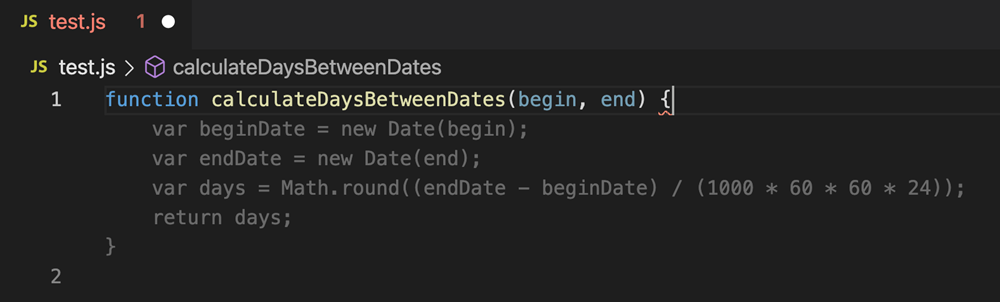
Zuckerberg himself highlighted this ambiguity during the LlamaCon discussion, admitting he couldn’t provide a comparable figure for Meta because of the difficulty in distinguishing substantial code generation from simpler autocomplete suggestions. Is accepting a two-line autocomplete suggestion equivalent to an AI writing a complex function? Industry standards don’t yet exist.
The different phrasing used by each CEO further illustrates this measurement problem. Nadella referenced “accept rates” for AI suggestions reaching “30-40 percent,” while Pichai mentioned developers “accepting suggestions” in nearly one-third of submitted code changes. The distinction may seem subtle, but it could represent fundamentally different metrics.
Different Companies, Different Approaches
While the headline numbers align suspiciously well, the underlying AI strategies appear divergent.
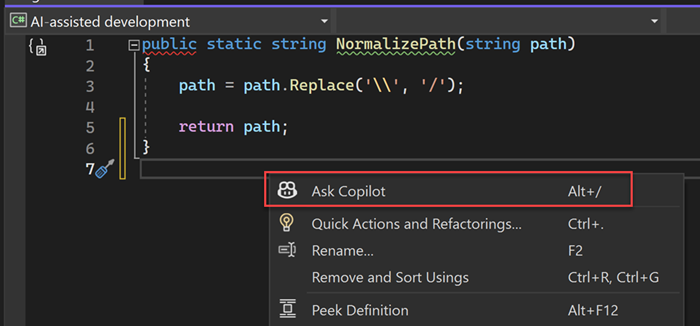
Microsoft’s approach centers around its widely-adopted GitHub Copilot, with Nadella noting varied success across programming languages – “fantastic” for Python but “not that great” for C++. This current state falls far short of Microsoft CTO Kevin Scott’s ambitious prediction that AI could write up to 95% of code by 2030.
Google emphasizes its Gemini models and “agentic workflows” suggesting deeper integration of sophisticated AI that can handle complex tasks. Meanwhile, Meta lacks current metrics but has set a high bar, with Zuckerberg aiming for AI to eventually handle 50% of development for its future Llama models – a dramatic increase from the 8% contribution previously reported from its CodeCompose tool.
The Productivity Promise and Hidden Costs
The productivity gains from AI coding tools appear significant. GitHub claims Copilot helps users code up to 55% faster, with independent analyses showing the average time for pull requests dropping from 9.6 days to just 2.4 days.
But these gains come with substantial risks. Research has identified alarming rates of vulnerabilities in AI-generated code, with some tests finding security issues in up to 41% of generated functions. Thorough human review becomes essential, potentially eroding those initial efficiency gains.
Unresolved questions around intellectual property and copyright for AI training data add another layer of complexity that companies must navigate.
The Future: Collaboration, Not Replacement
Despite the competitive posturing around AI code generation percentages, even tech leaders like Nadella acknowledge that complete automation remains distant. The push toward more capable “agentic” AI continues, with the market for AI coding tools projected to exceed $25 billion by 2030.
The consensus view aligns with Forrester’s prediction that AI will become embedded in comprehensive DevOps platforms, while critical thinking, security validation, and ethical decisions remain firmly in human hands.
For now, understanding the nuances behind these headline figures – and the balance between benefits and risks – remains essential for navigating the rapidly evolving landscape of AI-assisted software development.
Read More From AI Buzz

Vector DB Market Shifts: Qdrant, Chroma Challenge Milvus
The vector database market is splitting in two. On one side: enterprise-grade distributed systems built for billion-vector scale. On the other: developer-first tools designed so that spinning up semantic search is as easy as pip install. This month’s data makes clear which side developers are choosing — and the answer should concern anyone who bet […]

Anyscale Ray Adoption Trends Point to a New AI Standard
Ray just hit 49.1 million PyPI downloads in a single month — and it’s growing at 25.6% month-over-month. That’s not the headline. The headline is what that growth rate looks like next to the competition. According to data tracked on the AI-Buzz dashboard , Ray’s adoption velocity is more than double that of Weaviate (+11.4%) […]