AI Trust Crisis Splits Image Tech: Leica C2PA vs. Polaroid Analog
The rapid advancement of generative AI has created a verifiable crisis of trust in visual media. Research published in PNAS confirms that AI-generated faces are not only indistinguishable from real ones but are often perceived as more trustworthy, fundamentally undermining the axiom that “seeing is believing.” This erosion of digital trust has, in turn, fueled a quantifiable demand for verifiable reality. The global instant camera market, valued at USD 1.10 billion in 2023, is now projected by Mordor Intelligence to reach USD 1.63 billion by 2029, demonstrating a sustained consumer pivot toward tangible artifacts. This market dynamic sets the stage for a fascinating technological divergence, pitting complex cryptographic solutions against simple physical chemistry in the race to authenticate our world. This is a central issue for AI image verification solutions news, where two iconic brands, Leica and Polaroid, offer starkly different answers.
Key Points
• Research published in PNAS shows that AI-generated faces are indistinguishable from real faces, creating a clear market need for verifiable image authenticity.
• The technology industry’s primary response is the C2PA standard, with the Leica M11-P camera being the first to embed cryptographic “Content Credentials” directly into image files at the moment of capture.
• Polaroid offers a contrasting analog solution to AI deepfakes, where the unique, physical, and difficult-to-replicate chemical photograph serves as its own inherent proof of authenticity.
• This demand for tangible media is reflected in market data, with the instant camera market projected to grow at a CAGR of 6.69% through 2029.
The Deepfake Dilemma
The proliferation of sophisticated AI image generators like Midjourney and DALL-E 3 has moved beyond academic exercises and into the public sphere, destabilizing the foundational trust we place in visual information. The challenge is not just the existence of synthetic media, but our documented inability to detect it. The PNAS paper provides stark evidence of this dilemma, creating a clear and urgent need for authentication.
In response, the market is showing a strong preference for the tangible. The steady 6.69% compound annual growth rate projected for the instant camera market is a direct indicator of this trend. Driven by Millennial and Gen Z consumers, this movement is not merely nostalgia. It represents a conscious search for an “unfiltered and genuine” alternative to the curated perfection of social media and the deceptive unreality of AI, as noted by Forbes. This growing demand for physical proof creates a strategic opening for technologies that offer verifiable authenticity.
Cryptography vs. Chemistry
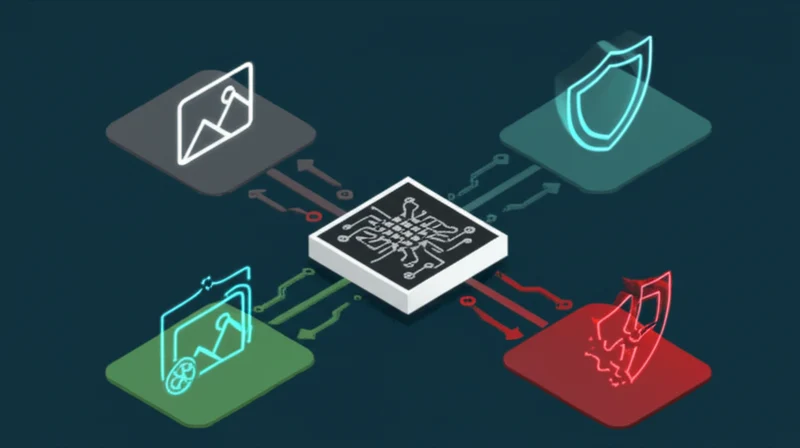
In the debate over Leica C2PA vs Polaroid image authenticity, the industry is pursuing two fundamentally different paths. The first is a high-tech, cryptographic approach championed by the Coalition for Content Provenance and Authenticity (C2PA), an industry consortium that includes Adobe, Microsoft, and Intel among its many influential members. This digital solution is exemplified by the Leica M11-P, the world’s first camera to incorporate C2PA technology.
The M11-P, a key Leica Content Credentials C2PA update, cryptographically signs each image file at the moment of capture, embedding tamper-resistant metadata known as “Content Credentials.” This acts as a digital nutrition label, allowing anyone to verify the image’s origin and edit history. It is a powerful tool for photojournalists and documentarians, but its proof is invisible data that requires a technical process to validate.
Polaroid’s analog solution to AI deepfakes is rooted in physical chemistry. A Polaroid picture is a singular event, a self-contained chemical process that produces one unique object. It cannot be easily copied, digitally altered, or generated by an AI prompt. The authenticity is inherent to the artifact itself—its flaws, its unique color signature, and its physical presence are the proof. This approach requires no technical literacy to understand, offering an intuitive and emotional form of verification.
Analog Scarcity in Digital Abundance
Polaroid has strategically positioned itself to capitalize on this demand for physical proof by leaning into a premium, art-focused identity. This differentiates the brand from its primary competitor, Fujifilm, which dominates the instant photography market with its accessible and affordable Instax line. While Instax focuses on volume and fun, as camera buying guides often highlight, Polaroid is cultivating a niche for those seeking a more deliberate and meaningful creative experience.
Polaroid’s CEO, Oskar Smolokowski, highlighted this strategy in an interview with Creative Review, stating, “It’s a much more precious, and a much more considered, medium… It’s much more of a creative tool.” This philosophy is embodied in the Polaroid I-2. Launched in 2023, the I-2 is a high-end instant camera with manual controls and a sharp lens, aimed squarely at serious photographers. PetaPixel’s review called it “the instant camera for pros we’ve been waiting for,” signaling Polaroid’s successful move upmarket. The brand is not selling a toy; it is selling a tool for creating verifiably authentic artifacts, reinforcing the value of Polaroid camera authenticity AI cannot generate.
Tangible Truth in a Synthetic World
As digital imagery becomes infinitely malleable, the industry’s response is bifurcating. One path, led by the C2PA and Leica, involves adding layers of sophisticated digital cryptography to prove an image is real. The other, championed by Polaroid, involves reverting to a pre-digital state where the physical object is its own unimpeachable evidence. This is not about replacing digital photography but about the emergence of a premium alternative for use cases where tangible proof is paramount. This development demonstrates a growing market that values physical scarcity and intuitive trust over digital complexity, reflecting a broader societal search for what MIT sociologist Sherry Turkle’s work on identifies as a need for authentic connection in our digital lives.
As AI continues to blur the lines of reality, will the ultimate proof of truth be found in a cryptographic signature or in an object you can hold in your hand?
Read More From AI Buzz

Vector DB Market Shifts: Qdrant, Chroma Challenge Milvus
The vector database market is splitting in two. On one side: enterprise-grade distributed systems built for billion-vector scale. On the other: developer-first tools designed so that spinning up semantic search is as easy as pip install. This month’s data makes clear which side developers are choosing — and the answer should concern anyone who bet […]

Anyscale Ray Adoption Trends Point to a New AI Standard
Ray just hit 49.1 million PyPI downloads in a single month — and it’s growing at 25.6% month-over-month. That’s not the headline. The headline is what that growth rate looks like next to the competition. According to data tracked on the AI-Buzz dashboard , Ray’s adoption velocity is more than double that of Weaviate (+11.4%) […]