
Ansys 2025 R2 Moves Beyond AI-Assist to AI-Driven Simulation

Ansys today announced the launch of its 2025 R2 software suite, a landmark release that solidifies the company’s multi-year strategic pivot from AI-assisted features to a fully AI-driven simulation ecosystem. This update deeply integrates and enhances core AI technologies like Ansys SimAI and the PyAnsys framework, moving beyond accelerating existing workflows to enabling predictive engineering at a fundamentally different speed and scale. The release represents a definitive shift in the engineering software landscape, where the value proposition is no longer just about simulation accuracy, but about the velocity and breadth of design exploration that AI enables. This development establishes a new baseline for competitors and sets the stage for the pending Synopsys Ansys AI integration developments.
Key Points
• Strategic Shift Confirmed: The Ansys 2025 R2 release moves beyond AI-assisted features, delivering an integrated platform for AI-driven simulation that leverages a user’s existing engineering data for rapid prediction.
• Core Technology Enhancements: The update features significant advancements in Ansys SimAI, a physics-agnostic platform for training predictive models, and PyAnsys, the open-source framework connecting solvers to Python’s AI libraries.
• Documented Performance Gains: Existing implementations demonstrate a reduction in analysis time from 50 hours on 500 CPU cores to under one hour on a single GPU for complex tasks like automotive aerodynamics, achieving over 95% accuracy.
• Industry-Wide Implications: This release intensifies the competitive landscape, challenging rivals like Siemens and Dassault Systèmes to match the depth of AI integration and pushing the industry toward new data-centric engineering skillsets.
From Co-Pilot to Command Center: The 1000x Leap
The Ansys 2025 R2 release is not a sudden leap but the destination of a calculated journey. For years, the industry has seen AI integrated as an assistant, optimizing design of experiments or building response surfaces. This release formalizes the transition to an AI-driven paradigm, where AI is the engine, not just a co-pilot.
This strategic direction is built on what Ansys CTO Prith Banerjee calls the “1000x” vision—the idea that AI can deliver speedups of three orders of magnitude for certain simulation tasks. This isn’t just about getting answers faster; it’s about transforming the design process from slow, iterative refinement to a rapid, comprehensive exploration of the entire design space. The business context is clear: according to industry analysis from MarketsandMarkets, the simulation software market, valued at over $11 billion in 2023, is projected to exceed $21 billion by 2028, largely driven by AI integration. Research from McKinsey & Company indicates that this approach accelerates product development timelines by 15-20%, a compelling metric for any engineering organization.
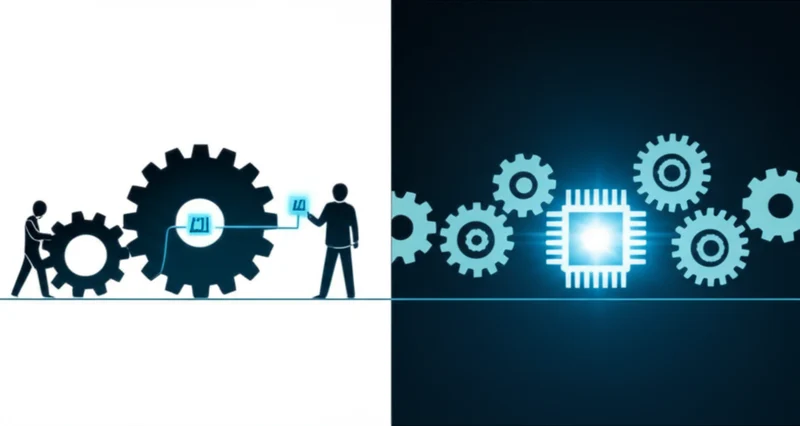
Twin Turbines: SimAI and PyAnsys
At the heart of what’s new in Ansys 2025 R2 AI are two foundational technologies. The first is Ansys SimAI, a cloud-enabled, physics-agnostic platform launched in early 2024. It allows engineers, without needing deep data science expertise, to train AI models on their company’s historical simulation data. The result is a predictive engine capable of forecasting complex physics behavior in minutes instead of days.
The science behind this speed is the use of AI-based Reduced-Order Models (ROMs). A ROM acts as a highly accurate surrogate for a full simulation, interpolating between previously computed results to provide near-instantaneous predictions. This is supported by foundational academic research in Physics-Informed Neural Networks (PINNs), which ensure the AI’s predictions adhere to the governing laws of physics. Ansys case studies document the impact: one automotive customer reduced aerodynamic analysis from 50 hours to under one hour with over 95% accuracy.
The second engine is the PyAnsys framework. This open-source Python initiative is the critical link that connects Ansys solvers to the vast ecosystem of AI/ML libraries like PyTorch and TensorFlow. It provides the automation and customization layer for organizations to build bespoke, AI-driven workflows, making the distinction between AI-assisted vs AI-driven simulation a practical reality.
Data Hunger Games: Trust and Competition
While the performance gains are significant, the 2025 R2 release also highlights the market realities and implementation hurdles of AI-driven engineering. Ansys operates in a fiercely competitive Computer-Aided Engineering (CAE) market, projected by Grand View Research to hit $16.33 billion by 2030. Competitors like Siemens, with its Simcenter and “executable digital twin” strategy, and Dassault Systèmes, with its 3DEXPERIENCE platform, are also investing heavily in AI integration.
The primary challenge for adoption, as noted by analysis in Digital Engineering 24/7, is data dependency. The effectiveness of tools like SimAI is “highly dependent on the quality and quantity of the training data.” Companies with rich simulation archives stand to benefit immensely, while others may face a “cold start” problem. Furthermore, the “black box” nature of some AI models remains a concern, especially in safety-critical applications. This necessitates a “human-in-the-loop” approach, where AI provides powerful suggestions, but final validation rests on expert engineering judgment, a point emphasized in a recent Deloitte report on generative AI.
Silicon Meets Simulation: The New Engineering Equation
The Ansys 2025 R2 release is more than an incremental update; it is a clear statement on the future of product development. By maturing its AI platform from a set of features into an integrated, data-driven engine, Ansys has redrawn the boundaries of engineering simulation. With Ansys 2025 R2 AI-driven simulation, the focus now shifts from the capability of the solver to the quality of the data used to train its AI surrogate. This development firmly places the onus on engineering teams to evolve, demanding new skills in data curation and model validation.
This release successfully transitions the conversation from theoretical potential to documented capability. The key question for the industry is no longer if AI will drive simulation, but how organizations will adapt their processes, talent, and infrastructure to harness its power. How will engineering teams balance the incredible speed of AI prediction with the irreplaceable value of human engineering intuition?
Tags
Read More From AI Buzz

Vector DB Market Shifts: Qdrant, Chroma Challenge Milvus
The vector database market is splitting in two. On one side: enterprise-grade distributed systems built for billion-vector scale. On the other: developer-first tools designed so that spinning up semantic search is as easy as pip install. This month’s data makes clear which side developers are choosing — and the answer should concern anyone who bet […]

Anyscale Ray Adoption Trends Point to a New AI Standard
Ray just hit 49.1 million PyPI downloads in a single month — and it’s growing at 25.6% month-over-month. That’s not the headline. The headline is what that growth rate looks like next to the competition. According to data tracked on the AI-Buzz dashboard , Ray’s adoption velocity is more than double that of Weaviate (+11.4%) […]