
Anthropic Overtakes OpenAI in Enterprise AI Market Share

New market data showing Anthropic overtaking OpenAI in enterprise indicates a significant shift in the corporate AI landscape, challenging the narrative of OpenAI’s undisputed dominance. A July study by Menlo Ventures reveals that Anthropic’s Claude models have surpassed OpenAI’s GPT in the enterprise space, securing a 32% market share compared to OpenAI’s 25%. This development validates Anthropic’s disciplined, enterprise-focused strategy, which prioritizes technical reliability and measurable return on investment over the mass-market consumer hype that propelled ChatGPT to global fame. While OpenAI commands public attention and a larger overall revenue figure, this emerging data suggests the quiet, strategic battle for high-value corporate clients is being won by its more focused rival.
The trend signals that for businesses, the key metric is not user volume, but mission-critical performance.
Key Points
- New data shows Anthropic overtaking OpenAI in enterprise, with Claude models claiming 32% corporate market share to GPT’s 25%.
- Anthropic’s enterprise-first model generates 80% of its revenue from corporate clients, contrasting sharply with OpenAI’s 30%.
- Claude’s lead is attributed to documented superior accuracy in structured business tasks like coding, legal analysis, and financial modeling.
- Microsoft, OpenAI’s primary partner, is integrating Claude into its software, confirming strong enterprise demand for Anthropic’s models.
Battle of Business Models
The generative AI landscape is defined by the divergent strategies of its two leading players. OpenAI built a consumer-facing empire on the back of ChatGPT, which boasts over 800 million weekly users and has driven the company to an approximate $13 billion annual revenue run rate. However, this revenue is primarily derived from consumer subscriptions and its deep partnership with Microsoft, with corporate customers accounting for only about 30% of its business.
In contrast, Anthropic, founded by former OpenAI researchers, has deliberately positioned itself as a technical supplier for the enterprise. Approximately 80% of Anthropic’s revenue comes from enterprise accounts, fueling a $7 billion annual revenue run rate that is projected to hit $9 billion by 2025, with some reports suggesting even more aggressive growth targets. This focus on the Claude vs ChatGPT for business ROI equation yields higher-value contracts and a more predictable revenue stream, as businesses integrate its models into core processes.

Corporate Boardrooms Choose Claude
While consumer metrics favor OpenAI, the battle for the enterprise presents a different picture. The latest `Anthropic enterprise market share` data from the Menlo Ventures study documents a clear lead for Claude in corporate adoption. This advantage is even more pronounced in specialized, high-value domains where precision is paramount.
The same survey estimated Claude’s share in computer programming to be roughly double that of GPT. This preference is validated by independent benchmarks. Vals AI, a startup that ranks LLMs on business-oriented tasks, currently lists Claude as the top-performing enterprise-grade model. Vals co-founder Rayan Krishnan noted, “Anthropic is laser-focused on agentic enterprise use cases and they’re playing a very competitive game with OpenAI right now.”
Technical Excellence Trumps Viral Fame
The data points to a clear answer for `why companies are choosing Anthropic over OpenAI`. The preference is rooted in a combination of technical performance, a safety-first philosophy, and a resilient partnership strategy. The Menlo Ventures report credited Claude’s lead to its superior accuracy in structured tasks like coding, financial analysis, and legal drafting, where reliability outweighs conversational creativity.
This technical edge is reinforced by Anthropic’s foundational commitment to AI safety through its “Constitutional AI” technique. This approach bakes ethical principles into the model’s training, ensuring more predictable and controllable behavior—a critical selling point for risk-averse corporations concerned with compliance and brand safety. This contrasts with OpenAI’s more permissive stance, which caters to a broad consumer base.
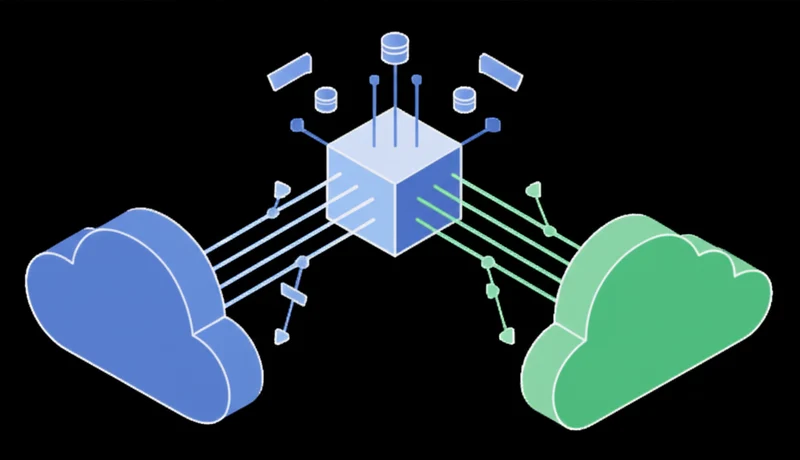
Furthermore, Anthropic has pursued a multi-cloud strategy, securing investments and computing resources from both Amazon (AWS) and Google Cloud. This avoids vendor lock-in and provides broad access to enterprise ecosystems, a contrast to OpenAI’s strategy of forging mega-deals for data center construction to fuel its growth. In a telling move, Microsoft itself announced it would integrate Anthropic’s Claude into its Copilot software suite, a clear signal that enterprise demand for Claude is too strong for even OpenAI’s closest partner to ignore.
ROI vs. Reach: Redefining AI Success
While the `OpenAI hype vs Anthropic strategy` debate continues, with analysts noting the corporate challenge to OpenAI’s hype machine, recent enterprise adoption data complicates the definition of “winning.” OpenAI maintains an undeniable lead in public visibility, consumer scale, and overall revenue. However, Anthropic is building a formidable and structurally sound business by dominating the high-value corporate market.
Anthropic’s success in securing a leading market share where budgets are largest and ROI is the primary metric demonstrates the power of its disciplined approach. The fact that OpenAI’s key ally is hedging its bets with Claude is potent evidence of this momentum, even as both companies pour billions into advancing AI infrastructure. As the AI market matures, will sustainable enterprise value ultimately prove more decisive than mass-market visibility?
Read More From AI Buzz

Vector DB Market Shifts: Qdrant, Chroma Challenge Milvus
The vector database market is splitting in two. On one side: enterprise-grade distributed systems built for billion-vector scale. On the other: developer-first tools designed so that spinning up semantic search is as easy as pip install. This month’s data makes clear which side developers are choosing — and the answer should concern anyone who bet

Anyscale Ray Adoption Trends Point to a New AI Standard
Ray just hit 49.1 million PyPI downloads in a single month — and it’s growing at 25.6% month-over-month. That’s not the headline. The headline is what that growth rate looks like next to the competition. According to data tracked on the AI-Buzz dashboard , Ray’s adoption velocity is more than double that of Weaviate (+11.4%)