
Apple Commits $500 Billion to US Manufacturing, Plans Houston AI Facility and Detroit Academy
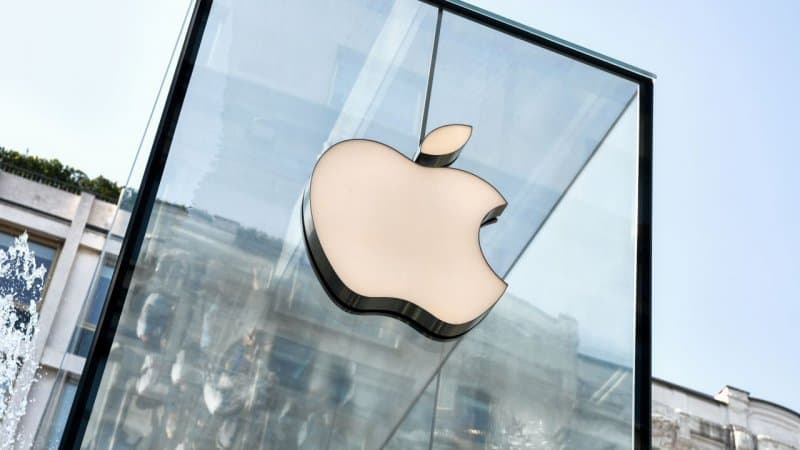
The U.S. government’s push for increased domestic technology investment has found a powerful ally in Apple, as the tech giant announced a landmark $500 billion investment in U.S. operations over the next four years. This massive commitment spans high-end manufacturing, engineering, and educational initiatives, with a particular focus on artificial intelligence and semiconductor production.
At the heart of Apple’s investment is a groundbreaking 250,000-square-foot AI server manufacturing facility in Houston, Texas. This facility, set to begin construction later this year and complete in 2026, will be dedicated to producing servers for Apple Intelligence, the company’s proprietary AI system. The move represents a significant shift, bringing production of these critical components from overseas to American soil.
The Houston facility is just one piece of a broader expansion of Apple’s U.S. infrastructure. The company is simultaneously expanding server capacity across its existing data centers in North Carolina, Iowa, Oregon, Arizona, and Nevada, creating a robust network to support its growing AI initiatives. While the scale of this expansion raises environmental considerations, particularly regarding power and water requirements, Apple emphasizes that its new servers are designed with energy efficiency in mind, stating that its data centers already run on 100% renewable energy.
In a bold move to strengthen domestic manufacturing capabilities, Apple is doubling its U.S. Advanced Manufacturing Fund to $10 billion. The fund has already made significant impacts across 13 states, supporting innovation and creating high-skilled manufacturing jobs. A notable portion of this expansion includes a “multibillion-dollar commitment” to TSMC’s Fab 21 facility in Arizona, where Apple stands as the largest customer.
Understanding that infrastructure alone isn’t enough, Apple is making substantial investments in workforce development. The company is establishing a new Apple Manufacturing Academy in Detroit, where Apple engineers will collaborate with experts from institutions like Michigan State University to train workers in AI and smart manufacturing techniques. This academy aims to help small and medium-sized businesses, particularly those transitioning from traditional automotive manufacturing, adapt to new technologies and manufacturing methods.
According to Rosemary Coates, executive director of the Reshoring Institute, Apple’s investment represents the culmination of long-term planning that began during the Obama administration. “Geopolitical factors and recent supply chain disruptions have accelerated these plans,” she notes. The company’s decision could influence other tech manufacturers to reconsider their own manufacturing strategies.
Mark Zetter, a management consultant with Venture Outsource, adds a note of caution about the complexity of shifting manufacturing ecosystems: “Moving large-scale manufacturing operations out of China is both complex and expensive. Companies must carefully consider factors such as labor force availability, infrastructure, and government incentives.”
The investment comes at an interesting time for Apple, which recently reported a global workforce of 164,000 people. The company plans to add 20,000 new positions over the next four years, though the geographic distribution of these jobs remains unspecified. Apple maintains its position as a major contributor to the U.S. economy, having paid more than $75 billion in U.S. taxes over the past five years, including $19 billion in 2024 alone.
“We are bullish on the future of American innovation, and we’re proud to build on our long-standing U.S. investments with this $500 billion commitment to our country’s future,” said Tim Cook, Apple’s CEO. “From doubling our Advanced Manufacturing Fund, to building advanced technology in Texas, we’re thrilled to expand our support for American manufacturing.”
The investment signals a potential shift in global manufacturing patterns, particularly in high-tech sectors. As geopolitical tensions and supply chain vulnerabilities continue to influence corporate strategy, Apple’s commitment could catalyze a broader movement toward domestic production of critical technologies. The focus on AI infrastructure is particularly noteworthy as the AI server market is projected to reach $298 billion by 2025. This positions Apple to compete more effectively in the rapidly evolving AI landscape, though industry analysts note that competitors like Nvidia and Microsoft are making their own aggressive moves in the sector.
As this massive investment unfolds over the next four years, its impact will likely extend beyond Apple’s immediate operations to influence industry trends, workforce development, and the broader trajectory of American manufacturing. The success or challenges of this initiative could serve as a blueprint for other companies considering similar strategic shifts in their manufacturing and innovation footprint.
Read More From AI Buzz

Vector DB Market Shifts: Qdrant, Chroma Challenge Milvus
The vector database market is splitting in two. On one side: enterprise-grade distributed systems built for billion-vector scale. On the other: developer-first tools designed so that spinning up semantic search is as easy as pip install. This month’s data makes clear which side developers are choosing — and the answer should concern anyone who bet […]

Anyscale Ray Adoption Trends Point to a New AI Standard
Ray just hit 49.1 million PyPI downloads in a single month — and it’s growing at 25.6% month-over-month. That’s not the headline. The headline is what that growth rate looks like next to the competition. According to data tracked on the AI-Buzz dashboard , Ray’s adoption velocity is more than double that of Weaviate (+11.4%) […]