
Apple vs OpenAI App Strategy: OS AI vs ChatGPT Platform

OpenAI’s ChatGPT app platform launch has officially transformed ChatGPT into an application platform, a move that repositions the popular chatbot as a direct challenger to the traditional app store model. At its recent DevDay, the company announced that developers can now build and run apps directly within the chat interface, presenting a significant architectural threat to Apple’s long-standing ecosystem dominance. In response, Apple is preparing a formidable counter-offensive, not by launching a rival platform, but by deeply integrating advanced AI into its operating system. This sets the stage for a strategic battle over the future of apps, pitting OpenAI’s centralized conversational hub against Apple’s decentralized, OS-level intelligence layer.
Key Points
- OpenAI launched an app platform within ChatGPT, giving developers access to its 800 million weekly active users.
- Apple’s counter-strategy focuses on a revamped Siri that leverages existing developer frameworks to control apps.
- The core conflict is between OpenAI’s chat-based universal interface and Apple’s deeply integrated, on-device intelligence.
- Apple’s success depends on overcoming Siri’s tarnished reputation, a significant brand liability for its new AI features.
Battle of the Interfaces: Chat vs. OS
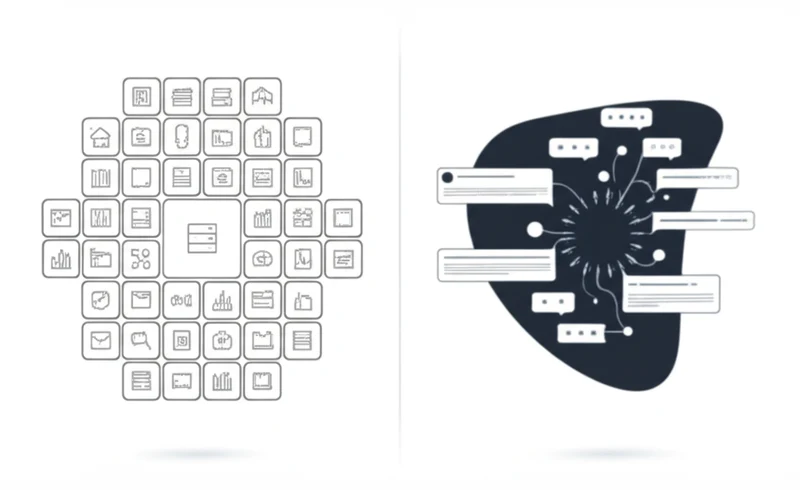
The clash between the two technology giants represents a fundamental divergence in the vision for human-computer interaction. OpenAI is betting on a centralized model where the conversational interface becomes the new universal operating system. The strategy, as outlined by CEO Sam Altman, is to evolve ChatGPT from a system you ask anything to, to one you can ask to do anything for you. This offers developers a powerful new distribution channel to ChatGPT’s 800 million weekly active users.
Apple, conversely, is pursuing a decentralized model where intelligence is an ambient layer woven throughout the existing OS. The company’s plan is to “kill the app icon without killing the app itself” by transforming Siri into an intelligent agent that executes complex actions within the apps already on a user’s device. This approach leverages Apple’s vertically integrated ecosystem of roughly 1.5 billion active iPhones, upgrading the platform users operate daily rather than asking them to adopt a new one.
Developer Battlegrounds: SDKs vs. Frameworks
The technical approaches are as divergent as the strategies. OpenAI’s “Apps SDK” allows developers to build applications that run inside a conversation, enabling a user to perform tasks with services like Canva or Zillow without leaving the ChatGPT window. However, this model introduces documented user experience hurdles. Early analysis indicates that imprecise queries can result in failed actions, and the system requires a steep learning curve .
Furthermore, the current implementation is limited to single-task interactions and abstracts away an app’s unique branding and UI.
Apple’s OS integration AI counter offensive relies on existing developer frameworks like SiriKit and App Intents. This strategy brings enhanced AI capabilities to applications with minimal extra work for developers who have already adopted these tools. App Intents, for example, allows the next-generation Siri to invoke any item from an app’s menus or access on-screen text for more natural, context-aware interactions. This deep integration, powered by a system reportedly called “Linwood,” which utilizes large language models by combining Apple’s foundational models with third-party technology, also enables access to on-device data, aligning with Apple’s privacy focus and allowing for more personalized actions.
Ecosystem Strength vs. Brand Weakness
Apple’s greatest asset in the Apple vs OpenAI app strategy battle is its massive incumbency advantage. With control over hardware, software, and a mature App Store, Apple has years of user muscle memory on its side. However, the company faces a significant technical liability in Siri’s tarnished reputation. The assistant is widely regarded as an “embarrassment,” and this brand damage poses a risk to the adoption of its new AI features.
Industry observers note this challenge. Bloomberg’s Mark Gurman argues that Apple is making a “mistake” by embedding its advanced AI, tested internally as “Veritas,” solely within the damaged Siri brand. He suggests a standalone app could generate far more interest. Recognizing the limits of a software-only approach, OpenAI is reportedly exploring its own hardware with former Apple designer Jony Ive, acknowledging that controlling the user experience device is critical.
The Execution Endgame
While OpenAI’s ChatGPT app platform launch presents a legitimate paradigm shift, Apple’s strategy of deep, native integration is a powerful and logical extension of its existing strengths. By enhancing the apps users already know, Apple offers a path of less resistance compared to OpenAI’s request for users to learn an entirely new interaction model. The outcome will be determined by execution. Apple must deliver a smarter Siri vs ChatGPT apps experience that is profoundly better than its predecessor, overcoming years of user frustration.
The company’s leadership appears committed to this, with CEO Tim Cook reportedly calling the AI effort the company’s “biggest transformation in decades” and telling employees, “This is sort of ours to grab. We will make the investment to do it.” If it can successfully fuse its new AI capabilities with its unparalleled ecosystem, it will not only defend its dominance but also define a more seamlessly integrated future for computing.
Read More From AI Buzz

Vector DB Market Shifts: Qdrant, Chroma Challenge Milvus
The vector database market is splitting in two. On one side: enterprise-grade distributed systems built for billion-vector scale. On the other: developer-first tools designed so that spinning up semantic search is as easy as pip install. This month’s data makes clear which side developers are choosing — and the answer should concern anyone who bet […]

Anyscale Ray Adoption Trends Point to a New AI Standard
Ray just hit 49.1 million PyPI downloads in a single month — and it’s growing at 25.6% month-over-month. That’s not the headline. The headline is what that growth rate looks like next to the competition. According to data tracked on the AI-Buzz dashboard , Ray’s adoption velocity is more than double that of Weaviate (+11.4%) […]