
AWS Expert: Fix Flawed AI Integration with Spec-First Dev

In a direct challenge to the prevailing use of AI in software development, a top expert from Amazon Web Services has outlined why current integration methods are fundamentally flawed, proposing a new paradigm that shifts the center of gravity from writing code to crafting detailed specifications. Speaking at the DevSparks Hyderabad 2025 event, as covered by YourStory, Raja SP, Head of Developer Acceleration at AWS, detailed the shortcomings of both “AI-Managed” and “AI-Assisted” patterns, arguing they fail to deliver on AI’s transformative promise. Instead, he introduced an “AI-driven development lifecycle” designed to achieve exponential productivity gains by treating specifications as the new source code, a move that redefines the very nature of a developer’s role in the age of generative AI, potentially making specification authors the new rockstars of the industry.
Key Points
- An AWS expert identified current “AI-Managed” and “AI-Assisted” coding patterns as inadequate for production-grade workloads.
- A proposed “AI-driven development lifecycle” aims for 5x to 20x productivity gains by automating code generation.
- This new model elevates the role of the “Spec Author,” who creates precise, machine-interpretable blueprints for AI systems.
- The framework shifts software iteration from direct code changes to modifying the specification as the single source of truth.
The Black Box Paradox
Analysis from industry leaders supports the AWS expert flawed AI integration thesis, indicating that the initial wave of AI in software engineering is yielding limited returns. At the AWS conference, Raja SP identified two prevalent but flawed AI adoption patterns that highlight the need for a more structured approach to harness the technology’s full capabilities.
The first, the “AI-Managed” pattern, involves providing vague requirements to an AI and treating it as a “black box” to generate a solution. Raja SP cautioned against this for serious projects, stating, “I have not seen production-grade workloads built this way” as noted in his talk at DevSparks Hyderabad 2025 . The ambiguity of the input leads directly to unpredictable and unreliable output. The second, more common “AI-Assisted” pattern, only produces modest productivity gains of 10-15%, a figure highlighted during the AWS presentation .
In this model, senior engineers use AI tools for narrow tasks like generating boilerplate code, falling far short of a revolutionary impact.
Blueprint as the New Codebase
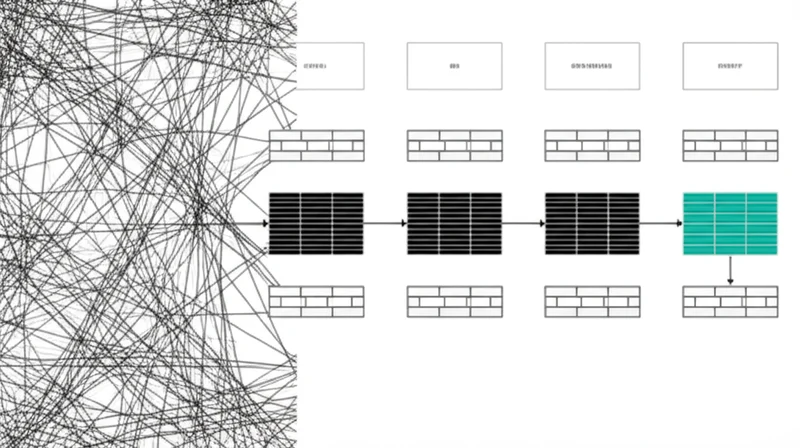
The proposed solution, generating significant AI-driven development lifecycle news, is a fundamental restructuring of the development process into an AI-driven development lifecycle. This new framework, which targets consistent 5x to 20x productivity gains, places the specification at its core, transforming it from a guiding document into an executable blueprint. This approach to specification over code AI development is designed to automate the 30% of time developers currently spend on manual coding, a metric referenced at a previous DevSparks event.
This lifecycle begins with an “intensive elaboration phase,” where cross-functional teams collaborate to produce a comprehensive and unambiguous specification. Once this blueprint is validated, the AI executes an “automated construction phase,” compressing months of coding into days. Crucially, iteration and bug fixes are no longer handled by altering the generated code. Instead, developers modify the specification, and the AI regenerates the application, ensuring the spec remains the single source of truth.
Specification Maestros Take Center Stage
This operational shift necessitates a new high-value role, validating the premise that “Spec Authors” will become central figures in development, according to a HackerNoon story title. This role is a hybrid of four key disciplines: systems architecture for high-level design, deep domain expertise to translate business logic, technical precision to write machine-interpretable rules, and AI orchestration to instruct models effectively.
In this model, the intellectual heavy lifting moves from writing lines of code to crafting a perfect specification. This change, a core part of the “spec author as rockstar” thesis, reorders team dynamics, placing a premium on design and communication skills. Development teams are expected to become smaller and more strategic, focused on architecture and product strategy while AI manages the bulk of implementation. The AWS OpenAI development lifecycle discussion points toward this structural evolution.
When AI Misinterprets Instructions
While the vision of a spec-driven future is compelling, its implementation faces significant technical and practical hurdles. Generative AI is not infallible; it can misinterpret specifications and produce subtle, hard-to-find bugs. The challenge of debugging code generated by a complex neural network, which you did not write, is a substantial obstacle.
Furthermore, as Raja SP noted, the “black box” nature of AI remains a risk for mission-critical systems. The industry also faces a considerable skill gap. Educational and corporate training programs are optimized for producing coders, not the multi-disciplinary spec authors this new paradigm demands. The ecosystem of tools to support a full AI-driven lifecycle—platforms for authoring, validating, and versioning specifications for AI execution—is still in its infancy, representing a critical dependency for widespread adoption.
Architecting the AI-Human Partnership
The analysis from AWS provides a clear signal that the next phase of AI in software engineering involves a fundamental reimagining of the creative process, not just better tools for coders. As AI’s capacity for code generation matures, the primary source of value and the critical bottleneck is shifting from implementation to specification. The engineers who master the art of instructing AI with precision and clarity will be the ones who define the next generation of technology, becoming, as one analysis puts it, the “new rockstars of dev.” As AI increasingly handles the “how,” will the industry successfully retool its talent to master the “what”?
Read More From AI Buzz

Vector DB Market Shifts: Qdrant, Chroma Challenge Milvus
The vector database market is splitting in two. On one side: enterprise-grade distributed systems built for billion-vector scale. On the other: developer-first tools designed so that spinning up semantic search is as easy as pip install. This month’s data makes clear which side developers are choosing — and the answer should concern anyone who bet […]

Anyscale Ray Adoption Trends Point to a New AI Standard
Ray just hit 49.1 million PyPI downloads in a single month — and it’s growing at 25.6% month-over-month. That’s not the headline. The headline is what that growth rate looks like next to the competition. According to data tracked on the AI-Buzz dashboard , Ray’s adoption velocity is more than double that of Weaviate (+11.4%) […]