
Baidu Launches ERNIE 4.5 and X1 AI Models, Claiming Performance Gains and Lower Costs
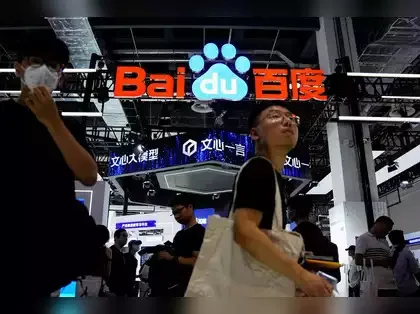
BEIJING — Chinese tech giant Baidu unveiled two new AI models over the weekend: ERNIE 4.5 and ERNIE X1, in what industry observers describe as a direct challenge to OpenAI’s market dominance. The announcement comes amid intensifying competition in the global AI sector.
The launch has attracted significant attention from both technology analysts and enterprise customers, particularly due to Baidu’s claims of superior performance at dramatically lower costs compared to Western alternatives. Industry experts are now examining whether this move could fundamentally alter the economics of AI deployment worldwide.
Technical Breakthrough and Strategic Pricing Behind ERNIE’s New Models
“Our testing demonstrates that these models exceed the capabilities of both DeepSeek’s non-reasoning V3 and OpenAI’s GPT-4.5 across multiple standard metrics,” said Robin Li, Baidu’s founder and CEO, during the announcement. Independent evaluations show strong performance on C-Eval (which assesses Chinese language models across 52 subject areas), CMMLU (measuring multitask language understanding in Chinese), and GSM8K (focusing on mathematical reasoning).
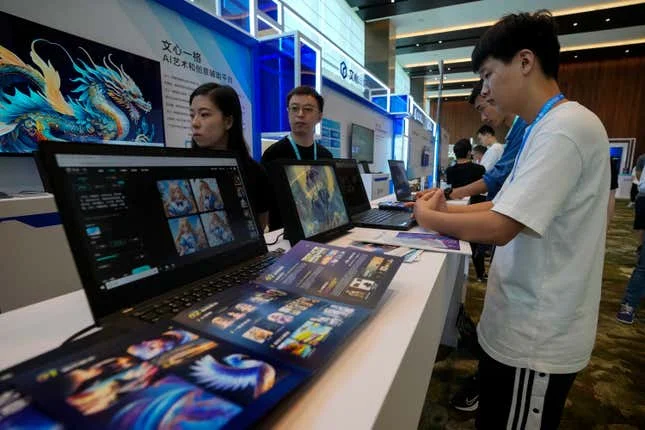
The most significant aspect of Baidu’s announcement may be its pricing structure. According to company documents released yesterday, ERNIE X1 will cost 50% less than DeepSeek’s R1 reasoning model, while ERNIE 4.5 will be offered at approximately 99% less than OpenAI’s GPT-4.5. Financial analysts suggest this aggressive pricing could disrupt current market dynamics and dramatically lower barriers to enterprise AI adoption.
However, these advantages come with notable tradeoffs. Unlike DeepSeek R1, ERNIE models aren’t fully open-sourced (though Baidu has committed to releasing ERNIE 4.5 as open source by June 30, 2025). More critically, they offer a significantly reduced context window of just 8,000 tokens compared to GPT-4.5’s 128,000 tokens – a limitation that feels almost archaic in an era where million-token context windows are becoming the standard.
To put this in perspective, tokens represent how AI models process information. A 128,000-token window can handle roughly the equivalent of a 250-page novel, while ERNIE’s 8,000-token limit drastically restricts the amount of content the model can process at once.
As noted by commentator @claudeglass on X, this narrow context window might limit ERNIE’s applications primarily to customer service chatbots rather than more complex use cases.
Despite these limitations, Baidu has committed on their official X account to making the ERNIE 4.5 model family open source by mid-2025, potentially opening the door for community improvements.
Both models are now accessible through Baidu’s API and via “ERNIE Bot,” the company’s Chinese-language alternative to ChatGPT. The chatbot offers question answering, text generation, creative writing, and conversational capabilities, and has been made freely available to users.
ERNIE 4.5 Multimodal Powerhouse Delivers at a Fraction of the Cost
ERNIE 4.5 represents Baidu’s latest foundation model, designed as a native multimodal system capable of processing text, images, audio, and video inputs. It stands as a direct competitor to OpenAI’s GPT-4.5.
The model features significant enhancements in comprehension, generation, reasoning, and memory. Baidu highlights improvements in hallucination prevention, logical reasoning frameworks, and coding capabilities that make ERNIE 4.5 particularly versatile.
According to internal testing, ERNIE 4.5 surpasses GPT-4.5 across multiple benchmarks while maintaining its dramatically lower cost structure. This performance-to-price ratio could make it especially attractive for organizations looking to scale their AI implementations.
The technical advancements behind ERNIE 4.5 include FlashMask Dynamic Attention Masking, Heterogeneous Multimodal Mixture-of-Experts, and Self-feedback Enhanced Post-Training – reflecting Baidu’s substantial investment in pushing the boundaries of AI research.
ERNIE X1 Challenges DeepSeek with Advanced Reasoning Capabilities
The ERNIE X1 reasoning model introduces sophisticated deep-thinking capabilities designed around understanding, planning, reflection, and evolution. Unlike standard multimodal models, X1 specializes in complex reasoning and tool integration.
ERNIE X1 can perform advanced search operations, document-based question answering, AI-generated image interpretation, code execution, and web page analysis. This focus on reasoning and tool use positions it for specialized applications requiring deeper analytical capabilities.
The model integrates with various Baidu tools, including academic search, business information search, and franchise research. Its development leverages Progressive Reinforcement Learning, End-to-End Training with Chains of Thought and Action, and a Unified Multi-Faceted Reward System – reflecting a comprehensive approach to reasoning-focused AI.
Access and Implementation Guide for New Users
Users interested in exploring these new models can access them through the official ERNIE Bot website.
For enterprise users and developers seeking API integration, ERNIE 4.5 is now available through the C-Eval platform, with ERNIE X1 expected to follow shortly.
Disruptive Pricing: The Numbers Behind Baidu’s Market Strategy
ERNIE 4.5: Input at $0.55 USD per 1 million tokens and Output at $2.2 per 1M tokens.
ERNIE X1: Input at $0.28 per 1M tokens and Output at $1.1 per 1M tokens.
For comparison:
- • GPT-4.5: $75.00 per 1M tokens (Input) and $150.00 per 1M tokens (Output).
- • DeepSeek R1: $0.55 per 1M tokens (Input) and $2.19 per 1M tokens (Output).
The stark pricing contrast between ERNIE models and OpenAI’s offerings underscores Baidu’s aggressive market strategy. The company has also announced plans to integrate these models across its broader ecosystem, including Baidu Search and the Wenxiaoyan app.
Enterprise Decision Framework: Key Considerations
For technology leaders evaluating these new offerings, several key factors warrant consideration:
Performance vs. Cost Trade-offs
While the dramatic price difference is compelling, organizations should conduct independent testing to verify performance claims in real-world scenarios.
Multimodal Applications
ERNIE 4.5’s ability to process text, images, audio, and video opens possibilities for industries like customer support, content creation, legal tech, and financial services.
Tool Integration Potential
ERNIE X1’s capacity to work with external tools could drive significant automation and efficiency improvements in specific workflows.
Regional Optimization
Given Baidu’s focus on Chinese-language processing and regional knowledge, these models may offer particular advantages for organizations operating in China or targeting Chinese-speaking markets.
Organizations should carefully review Baidu’s policies on data handling, compliance frameworks, and usage terms before implementing these solutions.
Market Impact: Baidu’s Strategic Positioning
Baidu’s stock rose 3.7% following the announcement, reflecting positive investor sentiment. The company has reportedly allocated $1.5 billion toward AI infrastructure development for 2025, according to its most recent quarterly filing.
“This represents a clear shift in Baidu’s strategic priorities,” said Wei Zhang, technology analyst at East Asia Markets. “They’re leveraging their domestic AI expertise to position for global competition, particularly in enterprise markets where price sensitivity is high.”
Sources familiar with the company’s roadmap indicate that Baidu plans to expand its AI service offerings significantly in the coming quarters, with particular emphasis on enterprise-grade solutions. The company has already secured partnerships with several major Chinese corporations for early implementation of the new models.
Expert Analysis: The Token Window Controversy
Not all reactions have been positive. “While the pricing strategy creates immediate market pressure, the 8,000-token context window is simply inadequate for many enterprise applications,” Dr. Ling Chen, AI researcher at Stanford University, told this publication. “OpenAI’s 128,000-token capacity remains a significant competitive advantage for complex use cases.”
Several major technology firms have already begun evaluating the new models. “We’re running extensive benchmarks comparing ERNIE 4.5 against our current AI infrastructure,” confirmed Sarah Jones, CTO at GlobalShop, a Fortune 500 e-commerce company. “If performance metrics validate Baidu’s claims, the cost savings could be substantial enough to warrant a partial migration.”
A recent Morgan Stanley report suggests that the enterprise AI market could reach $1.3 trillion by 2027, with cost-performance ratio becoming an increasingly critical factor in adoption decisions. Baidu’s move appears strategically timed to capitalize on this growing demand while challenging established pricing models.
The Future of AI Economics: Price Wars or Quality Race?
Analysts point to several factors that will determine the long-term impact of Baidu’s latest move in the competitive AI landscape.
“The pricing strategy represents a clear challenge to established players,” said Marcus Lee, AI industry analyst at Global Tech Insights. “If these models deliver on their performance claims, we could see a significant downward pressure on AI pricing across the industry.”
Meanwhile, enterprise customers are taking a measured approach. “We’re evaluating how the 8,000-token context window might impact our more complex use cases,” noted Jennifer Wu, Director of AI Integration at Meridian Financial. “That’s a serious constraint we need to weigh against the cost advantages.”
The promised open-sourcing of ERNIE 4.5 by mid-2025 could also reshape developer ecosystems, particularly for organizations focused on Chinese-language applications and markets.
Baidu declined to comment on specific plans for expanding context windows or international market strategies. Industry observers will be watching closely to see if the company can leverage its domestic market dominance to build a truly global AI platform.
As competition intensifies in the AI sector, one certainty remains: the race to balance performance, accessibility, and cost is accelerating. Baidu’s aggressive entry into this space signals that the next phase of AI development may be defined as much by economic disruption as by technological innovation.
Tags
Read More From AI Buzz

Vector DB Market Shifts: Qdrant, Chroma Challenge Milvus
The vector database market is splitting in two. On one side: enterprise-grade distributed systems built for billion-vector scale. On the other: developer-first tools designed so that spinning up semantic search is as easy as pip install. This month’s data makes clear which side developers are choosing — and the answer should concern anyone who bet […]

Anyscale Ray Adoption Trends Point to a New AI Standard
Ray just hit 49.1 million PyPI downloads in a single month — and it’s growing at 25.6% month-over-month. That’s not the headline. The headline is what that growth rate looks like next to the competition. According to data tracked on the AI-Buzz dashboard , Ray’s adoption velocity is more than double that of Weaviate (+11.4%) […]