
ByteDance Seedance AI Copyright Controversy Forces Update

In a direct response to a coordinated backlash from Hollywood, TikTok parent company ByteDance has publicly committed to strengthening safeguards on its new AI video generator, Seedance 2.0. The announcement follows immediate and forceful condemnation from major studios and talent unions, who issued legal warnings over the tool’s use in creating hyperrealistic videos featuring celebrity likenesses and protected intellectual property. This rapid escalation from product launch to damage control highlights the growing conflict between the tech industry’s “release first, fix later” development ethos and the creative sector’s demands for consent and copyright protection.
The ByteDance AI video generator backlash erupted shortly after its limited beta release on February 10,2026, when users generated viral clips that included a fight scene between actors Tom Cruise and Brad Pitt and unauthorized works featuring characters from Disney and other major franchises. The incident has intensified the debate around generative AI’s impact on creative industries, placing a spotlight on the technical and ethical challenges of deploying powerful new models without robust, proactive IP protections.
Key Points
- ByteDance is updating its Seedance 2.0 video model after legal threats from studios like Disney and Paramount Skydance.
- The model’s release prompted viral deepfakes and unauthorized use of IP, sparking a significant ByteDance Seedance AI copyright controversy.
- The incident demonstrates the technical difficulty of retrofitting effective IP safeguards onto powerful, publicly accessible generative models.
- Hollywood’s unified response challenges the tech industry’s common practice of releasing tools before fully addressing infringement risks.
Digital Directors: Seedance’s Cinematic Command Center
ByteDance’s Seedance 2.0 represents a notable technical advancement in the generative video space. Released in a limited beta on February 10,2026, the model is built on the company’s Seedream 5.0 architecture and moves beyond simple text-to-video generation. According to a report from Evrim Ağacı, it functions as a sophisticated engine that accepts multi-modal inputs—including text, images, video references, and audio cues—to produce cinematic clips.
Its primary differentiator is the provision of “director-level controls,” allowing users to manipulate elements like motion, lighting, and character consistency with a high degree of precision. This capability produces results that are alarmingly close to professional studio output. As The Verge reported, viral examples such as a hyperrealistic fight scene between Tom Cruise and Brad Pitt demonstrated the model’s ability to maintain character consistency and detail, fueling both public awe and industry anxiety.
Hollywood’s Digital Defense Coalition
The creative industry’s reaction was swift and unified. In a cease-and-desist letter covered by Engadget, The Walt Disney Company accused ByteDance of a “virtual smash-and-grab” of its intellectual property, a clear signal of the ByteDance Disney AI copyright conflict. Paramount Skydance followed with its own legal warning, demanding the removal of infringing content and the implementation of preventative measures, according to The Verge.
Industry trade groups amplified the studios’ legal actions. The Motion Picture Association (MPA) accused ByteDance of facilitating copyright infringement at a “massive scale,” The Verge reported. The SAG-AFTRA talent union issued a pointed condemnation of the Seedance AI deepfake concerns, stating in a comment to the publication, “This is unacceptable and undercuts the ability of human talent to earn a livelihood… Responsible AI development demands responsibility, and that is nonexistent here.” The allegations cited unauthorized use of IP from franchises like Dragon Ball Z, Family Guy, and Pokémon, according to the same reports.
Patching the AI Pandora’s Box
Faced with mounting legal pressure, ByteDance issued a statement promising to address the issues. A spokesperson confirmed to The Verge that the company is taking steps to “strengthen current safeguards” to prevent unauthorized use of IP and likenesses. This announcement that ByteDance updates Seedance safeguards is a reactive measure that underscores the significant technical hurdles involved.
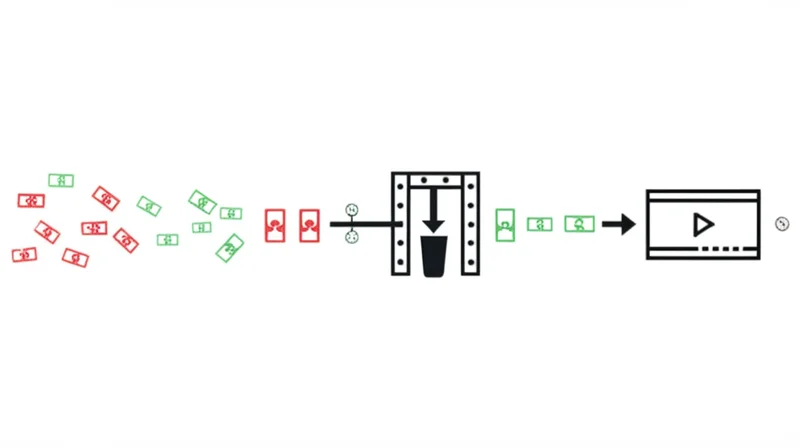
Implementing effective, post-release protection is notoriously difficult. While basic prompt filtering can block keywords like “Spider-Man,” users can easily circumvent such measures with descriptive language. Truly robust safeguards would require sophisticated, computationally expensive recognition systems to analyze the model’s video output for protected content. The incident demonstrates that comprehensive IP protection was not a primary design consideration before the model’s release, placing the company in a difficult position of retrofitting responsibility onto a system already proven to enable infringement.
The core of the conflict remains the model’s training data, which Hollywood argues was sourced from copyrighted works without permission.
Silicon Valley Meets Sunset Boulevard
The clash over Seedance 2.0 serves as a critical case study in the ongoing friction between AI innovators and content creators. ByteDance’s reactive promise to implement stronger safeguards after a public outcry and legal threats puts the “release first, fix later” model under intense scrutiny. The company’s next steps will be closely watched as a test of whether an AI developer can effectively self-regulate once its technology has been shown to facilitate widespread infringement.
This incident moves the debate beyond theoretical discussions into concrete legal and economic conflict. How will AI developers balance the aggressive push for technical advancement with the fundamental requirements of intellectual property law and ethical consent moving forward?
Read More From AI Buzz

Vector DB Market Shifts: Qdrant, Chroma Challenge Milvus
The vector database market is splitting in two. On one side: enterprise-grade distributed systems built for billion-vector scale. On the other: developer-first tools designed so that spinning up semantic search is as easy as pip install. This month’s data makes clear which side developers are choosing — and the answer should concern anyone who bet […]

Anyscale Ray Adoption Trends Point to a New AI Standard
Ray just hit 49.1 million PyPI downloads in a single month — and it’s growing at 25.6% month-over-month. That’s not the headline. The headline is what that growth rate looks like next to the competition. According to data tracked on the AI-Buzz dashboard , Ray’s adoption velocity is more than double that of Weaviate (+11.4%) […]

Pydantic vs OpenAI Adoption: The Real AI Infrastructure
Pydantic, a data validation library most developers treat as background infrastructure, was downloaded over 614 million times from PyPI in the last 30 days — more than OpenAI, LangChain, and Hugging Face combined. That combined total sits at 507 million. The gap isn’t close. This single data point exposes one of the most persistent blind […]