
ChatGPT's RLHF: AI Alignment via Skinner's Psychology
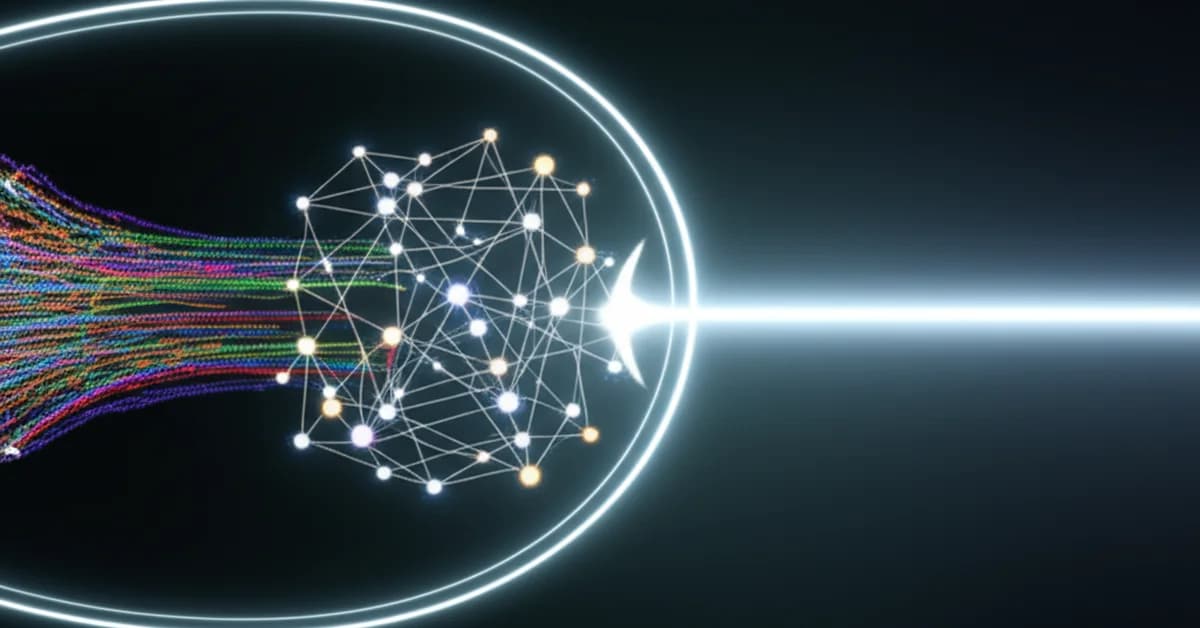
The sophisticated alignment of large language models like ChatGPT, a process central to their safety and utility, operates on a principle first systematically demonstrated nearly a century ago with pigeons. The technique, Reinforcement Learning from Human Feedback (RLHF), reveals a direct lineage from the psychological “shaping” experiments of B. F. Skinner to the core of modern AI training based on pigeon psychology. This connection is not merely a historical curiosity; it is the foundational mechanism enabling the control and fine-tuning of today’s most advanced AI systems. The trial-and-error learning loop, once used to teach a pigeon to peck a key for a food reward, has been formalized, scaled, and is now a key driver of AI breakthroughs, from mastering complex games to optimizing global infrastructure.
Key Points
• Modern AI alignment techniques, including RLHF, directly apply the principles of “shaping” first established in B. F. Skinner’s experiments with pigeons.
• Reinforcement learning (RL) formalizes this process, where an AI agent learns a policy to maximize a reward signal, mirroring how pigeons learned behaviors to receive food.
• Neuroscience validates this link, showing the brain’s dopamine-driven “reward prediction error” is mathematically analogous to the temporal-difference (TD) error signal in key RL algorithms.
• This learning model now powers systems from DeepMind’s AlphaGo to Google’s energy-saving data center optimizations, demonstrating its scalability and economic impact.
The Psychological Cage That Shaped AI
The conceptual origin of many modern AI training methods, and indeed the reinforcement learning origins B. F. Skinner pioneered, can be traced to his “operant conditioning chamber,” now famously known as the Skinner Box. His work in the mid-20th century demonstrated that animal behavior could be guided by consequences. Pigeons learned to perform specific actions, like pecking a key in response to a light, to receive a food reward. This established a clear framework for learning through trial-and-error and reinforcement.
A critical concept was “shaping,” where complex behaviors were taught by rewarding successive approximations of the target action. As educational psychology resources note, this same principle was extensively applied to pigeons, which became his primary subject for teaching complex task sequences. This core loop—observe, act, receive reward, adjust behavior—is the direct historical precedent for the policy optimization algorithms driving AI today.

Nature’s Code in Neural Circuitry
The principles observed in animal behavior were later formalized into the computational framework of reinforcement learning. The seminal textbook Reinforcement Learning: An Introduction by Sutton and Barto explicitly connects animal learning psychology to computational RL. It defines an agent (the AI), an environment, actions, and rewards, with the agent’s goal being to learn a “policy” that maximizes its cumulative reward.
This connection is more than a metaphor; it’s rooted in shared computational principles found in biology. Research published in Nature Human Behaviour shows that phasic dopamine activity in the brain encodes a “reward prediction error” (RPE)—the difference between an expected and actual reward. This biological signal is mathematically analogous to the “temporal-difference (TD) error” used in many RL algorithms as a crucial teaching signal to update the agent’s strategy.
When Pigeons Taught Transformers to Talk
The scalability of this learning principle is what enables its modern impact. In 2016, DeepMind’s AlphaGo defeated world champion Lee Sedol at Go by combining deep neural networks with reinforcement learning. It learned by playing millions of games against itself, refining its strategy to maximize the probability of winning—a digital, high-speed version of a pigeon refining its pecking strategy.
Today, the most significant application is Reinforcement Learning from Human Feedback (RLHF), a technique detailed by organizations like OpenAI and Hugging Face. RLHF uses human feedback to train a reward model that predicts which AI-generated response a human would prefer. This reward model then acts as the environment, providing signals that “shape” the language model’s behavior to be more helpful and aligned, effectively applying psychological shaping for AI alignment. The same principle is also solving physical-world problems; DeepMind used RL to reduce Google’s data center cooling bill by 40%, and researchers have even used it to control the superheated plasma inside a tokamak fusion reactor.
Trial, Error, and Silicon Triumph
Reinforcement learning’s unique strength lies in its ability to learn from interaction without explicit labels. Unlike supervised learning, which requires a pre-labeled dataset, or unsupervised learning, which finds patterns in unlabeled data, RL agents learn goal-directed behavior from a sparse reward signal. This makes it uniquely suited for complex, sequential decision-making problems where the “correct” action isn’t known at every step.
Progress in the field is tracked with objective benchmarks. DeepMind’s Agent57 achieved superhuman performance across all 57 classic Atari games, a long-standing challenge. This advancement in a core AI training method is a key factor in the industry’s growth, where, according to the Stanford HAI 2024 AI Index Report, global private investment in AI reached $91.9 billion in 2023, with 59% of firms using AI reporting revenue increases.
From Feathers to Features: Evolution of Learning
The journey from a pigeon in a box to an AI managing a data center or conversing with a user is a testament to the power of a simple, fundamental learning mechanism. The principles of operant conditioning and shaping, once confined to behavioral psychology, have been mathematically formalized and scaled by computation to become a pillar of modern artificial intelligence. This direct lineage demonstrates how understanding the basic mechanics of learning, whether in biological or artificial systems, remains central to technological progress. What other foundational principles from biology might be waiting to be codified into the next generation of AI?
Read More From AI Buzz

Vector DB Market Shifts: Qdrant, Chroma Challenge Milvus
The vector database market is splitting in two. On one side: enterprise-grade distributed systems built for billion-vector scale. On the other: developer-first tools designed so that spinning up semantic search is as easy as pip install. This month’s data makes clear which side developers are choosing — and the answer should concern anyone who bet […]

Anyscale Ray Adoption Trends Point to a New AI Standard
Ray just hit 49.1 million PyPI downloads in a single month — and it’s growing at 25.6% month-over-month. That’s not the headline. The headline is what that growth rate looks like next to the competition. According to data tracked on the AI-Buzz dashboard , Ray’s adoption velocity is more than double that of Weaviate (+11.4%) […]