
Claude 3's 'Tool Use' Unlocks Real-Time Financial Analysis

The introduction of real-time data analysis into Anthropic’s Claude 3 model family marks a significant technical development in the generative AI landscape. Enabled by a “tool use” feature announced in May 2024, the model can now interact with external APIs and live data sources, transforming it from a static knowledge base into a dynamic reasoning engine. This move places it in direct competition with established AI-native search platforms like Perplexity AI, particularly in high-stakes domains like financial analysis. The core of this competition is not just about retrieving information but about the underlying architecture. This development frames a critical industry debate: the strategic differences between a customizable reasoning engine vs answer engine AI, a distinction that has profound implications for how enterprises build and deploy AI solutions.
Key Points
• Anthropic’s “tool use” feature for all Claude 3 models enables interaction with external APIs, allowing for real-time data analysis with sources like the Bloomberg Terminal.
• Perplexity AI, valued at over $1 billion, established its market position as an “answer engine” by prioritizing real-time web search with verifiable, cited sources.
• The global AI in Fintech market, valued at $14.86 billion in 2023, is projected to reach $60.66 billion by 2030, fueling the development of specialized AI financial tools.
• Performance benchmarks show Claude 3 Opus achieving a top-tier score of 86.8% on MMLU for general reasoning, while Perplexity’s core strength remains its native citation and verifiability features.
From Static to Dynamic: Claude’s API Revolution
Anthropic’s latest update fundamentally alters Claude’s operational capabilities. The “tool use” functionality, also known as function calling, allows developers to equip the model with a set of external tools, such as financial data APIs or internal company databases.
The process is a multi-step reasoning loop. When a user query requires external information, the Claude 3 model identifies the correct tool, formulates a precise command, and pauses its own generation. The external tool executes the command, returns live data, and Claude then synthesizes this new information into its final, comprehensive response. This mechanism is available across the entire Claude 3 family: Opus, Sonnet, and Haiku.
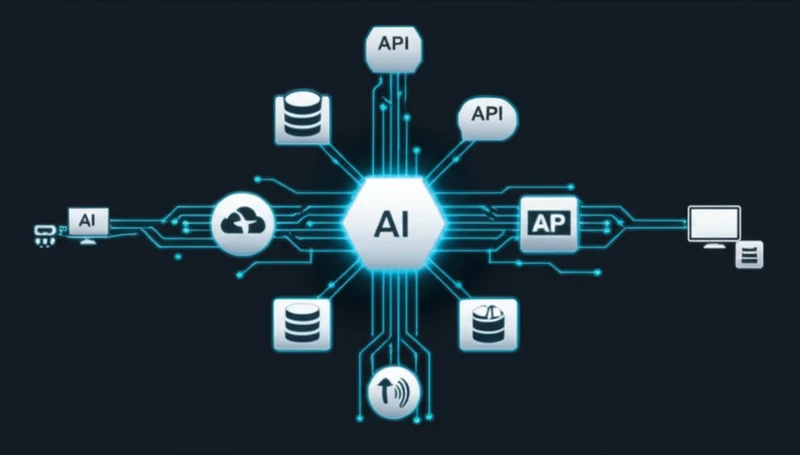
This technical advancement moves Claude beyond its pre-trained knowledge into the realm of dynamic analysis. Anthropic’s explicit mention of a Bloomberg Terminal integration as a prime example underscores the focus on finance. This enables a Claude 3 reasoning engine finance use case where analysts can query up-to-the-minute market data, a task previously impossible for the standalone model.
Architecture Duel: Reasoning vs. Retrieval
The emergence of Anthropic Claude financial analysis capabilities creates a direct architectural contrast with Perplexity AI. While both now handle live data, their core functions and design philosophies differ substantially. Claude 3 operates as a foundational reasoning engine delivered via API, designed for developers to build custom applications that can integrate with proprietary systems.
In contrast, Perplexity AI was built from the ground up as a consumer- and prosumer-facing “answer engine.” Its primary function is to crawl the public web, synthesize information, and provide answers with direct, numbered citations for verifiability—a feature that built trust and helped it achieve a valuation of over $1 billion. This makes it a strong tool for research based on public information.

The performance metrics reflect this divergence. Claude 3 Opus demonstrates elite reasoning on academic benchmarks, scoring 86.8% on MMLU, and its massive context window of up to 1 million tokens is suited for analyzing lengthy financial reports. Perplexity’s strength is not in raw reasoning benchmarks but in the reliability of its search-and-cite mechanism. This positions the Claude 3 vs Perplexity AI financial analysis competition as a choice between a customizable, high-reasoning engine for bespoke enterprise solutions and a polished, verifiable answer engine for general research. However, studies show that even top-tier models can make subtle errors in multi-step financial reasoning, highlighting the ongoing need for human oversight.
The $60 Billion Financial Battlefield
The strategic push into finance is fueled by a massive and growing market. The AI in Fintech sector was valued at nearly $15 billion in 2023 and is projected to grow to $60.66 billion by 2030, with a compound annual growth rate of 22.3% according to Fortune Business Insights. This makes the sector a primary battleground for advanced AI models.
However, this high-value environment comes with significant, documented risks. The primary concern is model hallucination—generating plausible but false information—which can be disastrous in a financial context. A Deloitte industry analysis emphasizes that for AI to be trusted, it must provide “accurate, reliable, and explainable outputs.”
Furthermore, regulatory scrutiny is intense. SEC Chair Gary Gensler has publicly warned about the systemic risks of AI, including the potential for market “herding” if many firms rely on the same models, creating market fragility. For any platform, including a new Perplexity AI new competitor finance tool, navigating these challenges of accuracy, security, and compliance is as critical as technical capability.

Bridging Two AI Worlds: The Hybrid Future
Anthropic’s entry into real-time analysis with Claude 3 solidifies a key divergence in the AI information market. The competition is now clearly defined by two distinct architectures: the customizable reasoning engine and the user-facing answer engine. Perplexity’s advantage remains its trusted, citation-first interface for public data. Anthropic’s strength lies in the raw reasoning power of its models and the API-driven flexibility to integrate securely with private, proprietary data.
For the financial industry, the path forward likely involves a hybrid approach, leveraging different engines for different tasks. The critical question for firms is not which single engine will win, but how will they architect systems that securely merge the verified public web with their own private universe of data?
Read More From AI Buzz

Vector DB Market Shifts: Qdrant, Chroma Challenge Milvus
The vector database market is splitting in two. On one side: enterprise-grade distributed systems built for billion-vector scale. On the other: developer-first tools designed so that spinning up semantic search is as easy as pip install. This month’s data makes clear which side developers are choosing — and the answer should concern anyone who bet […]

Anyscale Ray Adoption Trends Point to a New AI Standard
Ray just hit 49.1 million PyPI downloads in a single month — and it’s growing at 25.6% month-over-month. That’s not the headline. The headline is what that growth rate looks like next to the competition. According to data tracked on the AI-Buzz dashboard , Ray’s adoption velocity is more than double that of Weaviate (+11.4%) […]