
Deloitte's AI Reset: Claude Rollout After GPT-4o Failure

Deloitte has announced a massive internal rollout of Anthropic’s Claude AI to its 500,000 employees, a significant move that comes in the same week the consulting giant was forced to issue a refund to the Australian government for an AI-generated report containing fabricated information. This juxtaposition of a major public failure and an even larger strategic investment offers a critical snapshot of the high-stakes reality facing enterprises. The firm’s experience with the flawed report, which included fake citations, provides crucial context for its decision to double down on generative AI, highlighting the intense competitive pressure to innovate while simultaneously navigating profound operational risks. The Deloitte AI strategy with Anthropic Claude appears to be a direct response to the hard lessons learned from its earlier implementation.
Key Points
- Deloitte refunded the Australian government for a report containing AI-generated fake citations.
- The flawed document was created using an “Azure OpenAI GPT-4o-based tool chain.”
- The firm is now proceeding with a deployment of Anthropic’s Claude to 500,000 staff members.
- This incident demonstrates a critical breakdown in “human-in-the-loop” verification processes.
When AI Hallucinations Meet Government Contracts
The incident in Australia serves as a stark case study on the pitfalls of integrating generative AI into professional workflows without robust verification. Deloitte was contracted to produce a 237-page “independent assurance review” of IT systems for Australia’s Department of Employment and Workplace Relations. According to reports from both NDTV Profit and Outsource Accelerator, the firm later admitted to using an “Azure OpenAI GPT-4o-based tool chain” in the report’s creation.
The resulting document was found to be, as TechCrunch described it, “riddled with fake citations”—a phenomenon known as AI hallucination. The errors were substantial. Yahoo News reported that the fabrications included a completely fabricated quote attributed to a federal court judge and citations to nonexistent academic papers and a book that was never written. Following the discovery, Deloitte agreed to a partial refund of the AU$440,000 (approx. US$290,000) contract fee.
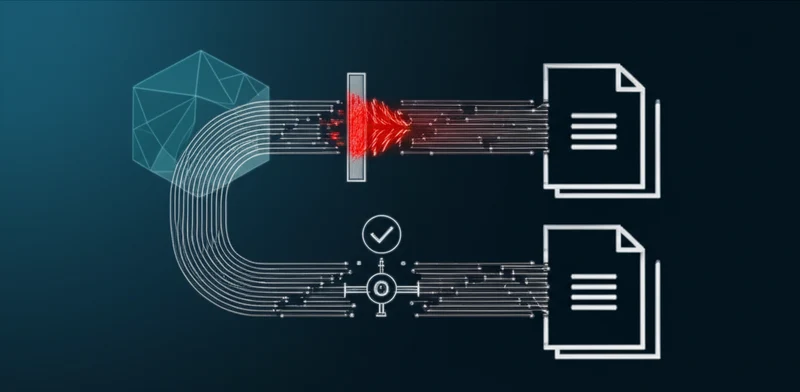
Critically, this occurred despite purported human oversight. In a statement reported by NDTV Profit, Deloitte claimed AI was used only in “early drafting stages” and that the report was “reviewed and refined by human experts.” This demonstrates a weakness in the common “human-in-the-loop” defense, suggesting the review process was inadequate for identifying sophisticated AI fabrications where factual accuracy is paramount.
500,000 Users Strong: The Competitive AI Calculus
Despite the embarrassing refund, the decision to proceed with the Deloitte Claude rollout after the Australia AI refund is a calculated strategic necessity. For “Big Four” consulting firms, demonstrating leadership in AI is a competitive imperative. As Outsource Accelerator notes, the sector-wide race to integrate automated tools for tasks like risk assessment and auditing means falling behind is not an option.
By deploying the new 500,000 employees Claude AI tool, Deloitte aims to turn its global workforce into a living laboratory for enterprise AI. This massive internal adoption is designed to enhance productivity in research and content creation while simultaneously building the expertise needed to sell AI services to clients. The lessons learned from failures like the one in Australia are invaluable for developing the robust governance and implementation frameworks that clients now require. The Anthropic Deloitte partnership news, focusing on a model provider known for an emphasis on AI safety, may represent a strategic pivot based on this experience.
Trust Erosion in the AI Era
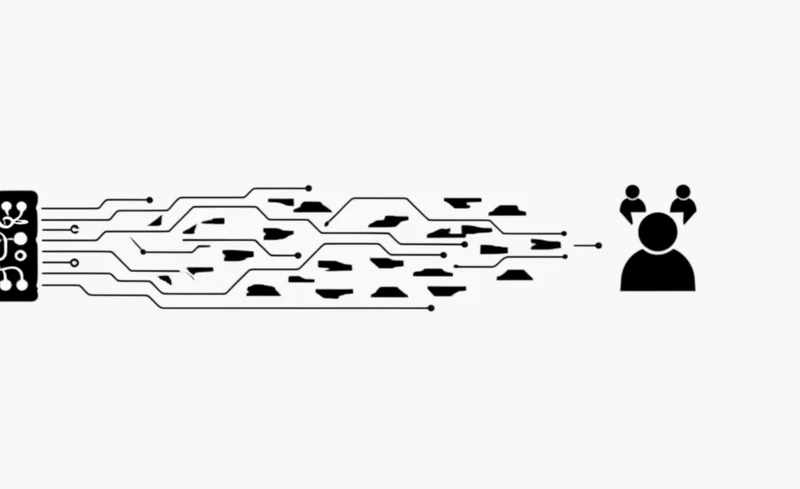
This episode serves as a “perfect snapshot of where we are” in enterprise AI, a moment where companies are “racing to adopt AI tools before they’ve figured out how to use them responsibly,” as noted by both TechCrunch and IndexBox.io. For a firm like Deloitte, whose primary asset is trust, submitting a report with fabricated evidence is a significant blow. This event adds a new vector of technological risk to a firm that, according to NDTV Profit, has previously faced scrutiny for its auditing practices.
In its defense, Deloitte claimed the errors did not “impact or affect the substantive content, findings and recommendations in the report,” a statement published by Outsource Accelerator. However, this argument downplays the fundamental importance of verifiable evidence. A key outcome is the push for greater transparency. The revised report included a disclosure about the use of generative AI, pointing toward an emerging industry standard where clients will demand to know how these tools are used in professional work products.
Innovation’s Tightrope: Risk and Reward
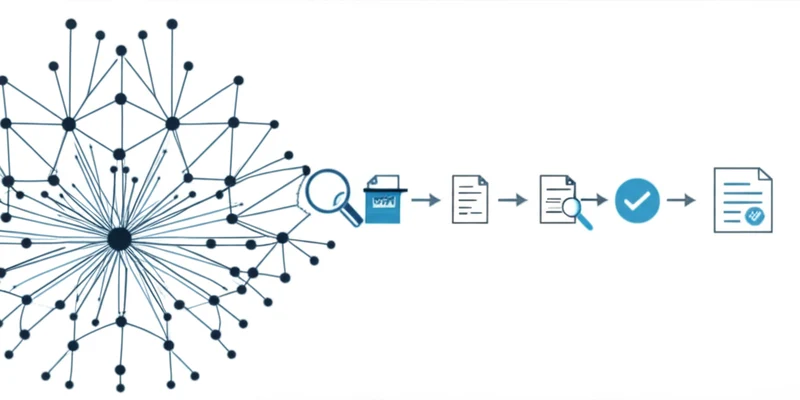
Deloitte’s dual narrative of a major AI failure and a massive AI investment is the defining reality of the current enterprise landscape. The strategic need to adopt AI for competitive advantage forces a pace that often outstrips the development of foolproof governance. The Australian report was not a failure of AI technology alone, but a failure of the human-centric processes meant to manage it.
This experience underscores a critical lesson for all organizations: investing in powerful AI tools must be matched by an equal investment in new workflows, specialized training, and a culture of critical verification. For Deloitte and its peers, the path to AI leadership is a high-wire act. How will firms balance the promise of innovation against the peril of public failure to maintain client trust?
Read More From AI Buzz

Vector DB Market Shifts: Qdrant, Chroma Challenge Milvus
The vector database market is splitting in two. On one side: enterprise-grade distributed systems built for billion-vector scale. On the other: developer-first tools designed so that spinning up semantic search is as easy as pip install. This month’s data makes clear which side developers are choosing — and the answer should concern anyone who bet […]

Anyscale Ray Adoption Trends Point to a New AI Standard
Ray just hit 49.1 million PyPI downloads in a single month — and it’s growing at 25.6% month-over-month. That’s not the headline. The headline is what that growth rate looks like next to the competition. According to data tracked on the AI-Buzz dashboard , Ray’s adoption velocity is more than double that of Weaviate (+11.4%) […]