
Google Introduces AI Mode for Personalized Search, Raising Questions About Website Traffic
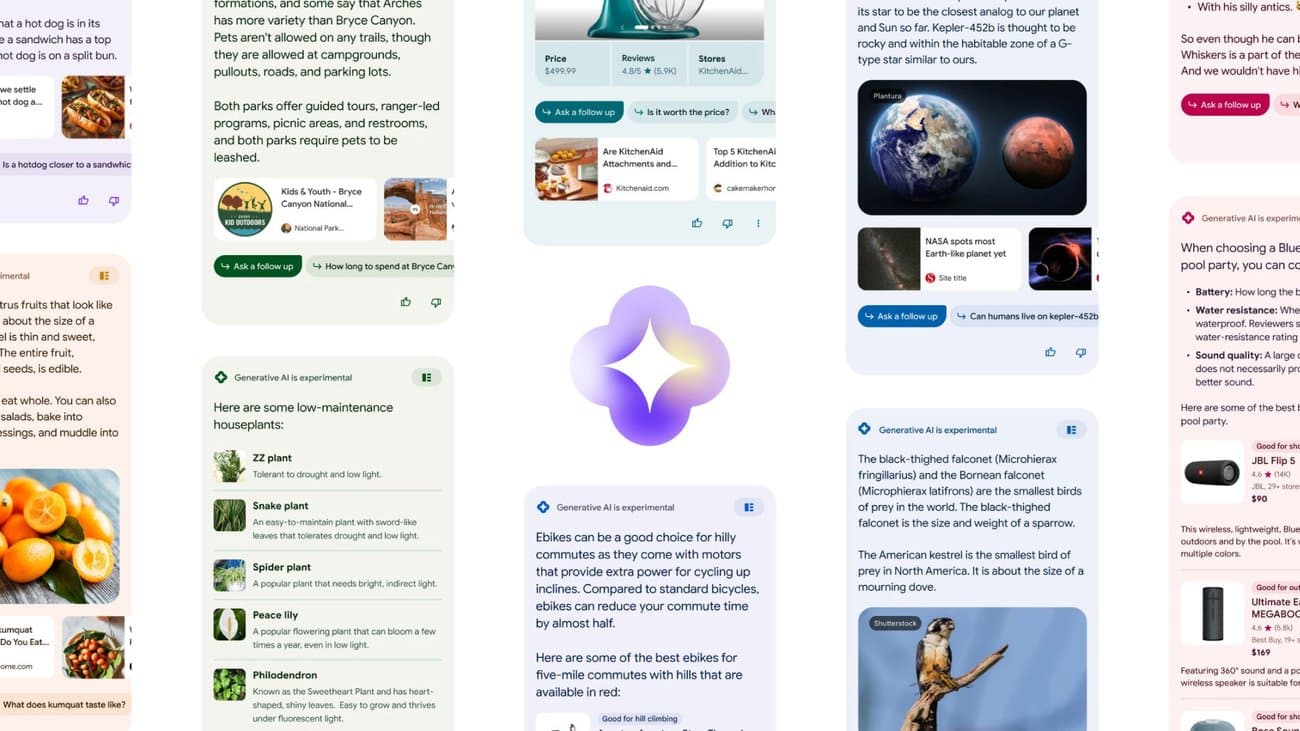
March 7, 2025 | Google’s relentless pursuit of AI dominance has reached a new milestone with the introduction of “AI Mode,” a feature currently available to subscribers of Google One AI Premium. This marks a significant evolution in how users interact with the search giant, potentially reshaping the very fabric of the web as we know it. The core premise, as initially signaled nearly a year ago at Google’s developer conference, is to “let Google do the Googling for you.” This seemingly innocuous statement carries profound implications for users, businesses, and the future of online information.
The Genesis of AI Mode: A Response to Shifting User Behavior
The impetus for AI Mode stems from a confluence of factors. First, the rise of AI-powered chatbots like ChatGPT, Perplexity, and others has demonstrated a growing user appetite for direct answers and conversational interactions. Many users have already begun to replace traditional Google searches with queries in these alternative platforms, seeking a more streamlined and intuitive experience. This shift in user behavior has put pressure on Google to innovate and retain its dominance in the search market.

Second, Google itself has recognized the potential of AI to enhance its core product. The company envisions a future where users can trust the search engine to not only find information but also synthesize and summarize it, sparing them the need to visit multiple websites. This vision is appealing to Google, particularly as it allows for the integration of advertisements within the AI-generated summaries, as evidenced by their plans to pepper AI overviews with advertisements. This creates a new revenue stream and potentially increases the time users spend within Google’s ecosystem.
The Publisher’s Dilemma: Traffic Erosion and the Threat to Online Businesses
While AI Mode offers potential benefits to users and Google, it presents a significant challenge to the millions of businesses that rely on Google to send them traffic. The core concern is that AI overviews, by providing sufficiently comprehensive answers, will disincentivize users from clicking on links to external websites. This fear is not unfounded. Some businesses have already experienced a decline in organic traffic as AI Overviews have become more prevalent.
The story of Chegg, the online education company, serves as a stark warning. Chegg’s business model, which involved offering services to students for a subscription fee, has been severely impacted by the rise of free AI tools like ChatGPT and Google’s own AI-powered features. This case highlights the disruptive potential of AI and the vulnerability of businesses that rely on providing information that can now be readily synthesized by AI.
Phase Two: AI-Generated Results Take Center Stage
For the past year, Google search has been in a transitional phase, with AI-generated summaries appearing alongside traditional search results. The crucial question has been what would happen when AI-generated results became the *primary* way Google answers most queries. This week, that question was answered with the introduction of AI Mode. This represents “phase two” of Google’s AI evolution, where links to the original sources are relegated to a secondary position.
As Robby Stein, vice president of product for search, explained in a blog post, AI Mode is designed to handle even the “toughest questions” with “more advanced reasoning, thinking and multimodal capabilities.” This suggests a significant leap in the sophistication of Google’s AI, capable of tackling complex queries that previously required multiple searches.
Under the Hood: Gemini 2.0 and a Broader Web Crawl
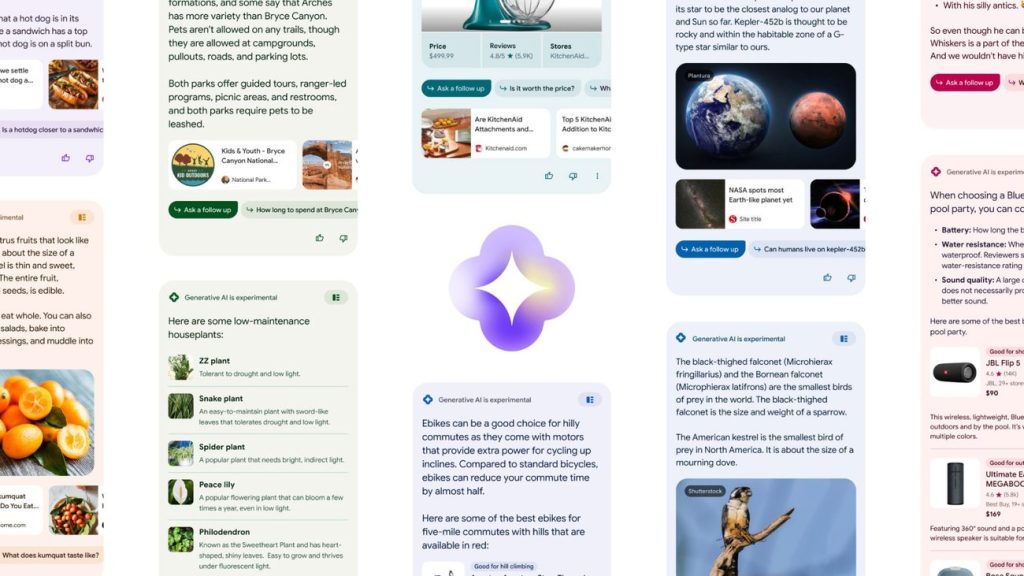
AI Mode is powered by a customized version of Google’s Gemini 2.0 model, which Stein claims is well-suited to answer questions that might have previously taken multiple searches. This represents a significant advancement in Google’s AI capabilities. Unlike traditional search, AI Mode allows for follow-up questions, creating a more conversational and interactive experience. Crucially, unlike some standalone chatbots, it remains connected to Google’s search index, enabling it to provide real-time and local business information.
Stein also revealed that AI Mode queries a broader set of websites than traditional search and explores multiple related topics simultaneously. This approach aims to deliver more comprehensive and nuanced responses. Furthermore, Google has attempted to build in a degree of “AI humility,” with AI Mode acknowledging uncertainty or declining to offer a summary when confidence is low. This is a crucial step in addressing concerns about the reliability and accuracy of AI-generated content.
The Link Conundrum: Visibility vs. Clicks
Perhaps the most encouraging aspect of AI Mode, at least from a publisher’s perspective, is the continued presence of links to the web. In the initial demos, AI Mode featured prominent carousels of links directly beneath the first paragraph of the AI-generated answer, as well as a column of links to the right. Each paragraph also included a small link icon directing users to the source of the information. This suggests that Google is, at least initially, attempting to strike a balance between providing AI-generated summaries and driving traffic to original sources.
However, the current implementation, as experienced by the author, has fewer links than the demo version. Stein acknowledged this, stating that more carousels of links are planned for future updates. This discrepancy highlights the ongoing evolution of AI Mode and the uncertainty surrounding its final form. The crucial question remains: even if links are present, will users actually click on them?
Real-World Testing: Strengths, Weaknesses, and Quirks
Initial testing of AI Mode reveals a mixed bag. On the positive side, Google seems to have learned from past AI missteps. AI Mode avoids the infamous “glue on pizza” and “eat rocks” hallucinations that plagued earlier AI Overviews. It correctly advises against ingesting glue (“Glue is not meant for consumption and can be harmful if ingested.”) and consuming rocks (“Rocks are not digestible by the human body.”). This demonstrates a clear effort to improve the accuracy and safety of AI-generated responses.
However, the current version exhibits a clear bias towards queries related to products, travel, or other commercial topics. When asked about politics or social issues, AI Mode often declined to generate a response, instead displaying only links to potentially relevant websites. For example, queries like “how has the Trump administration acted to restrict free expression so far in 2025?” and “why do conservatives want to shut down DEI programs?” yielded no AI-generated summaries, only links. This suggests a cautious approach to politically sensitive topics, potentially to avoid controversy or accusations of bias.
The current implementation also shows some inconsistencies compared to demos. A GIF in the announcement post showed AI Mode creating a detailed table comparing smart rings, smart watches, and tracking mats; the version available at the time of the original article’s writing only generated text.
AI Mode vs. Gemini: A Confusing Landscape of AI Assistants
The proliferation of AI tools within Google’s ecosystem raises questions about their intended use cases and potential overlap. AI Mode, Gemini, and other AI-powered features offer similar functionalities, making it unclear when to use one over the other. For example, when asked to create a menu for a party, AI Mode provided basic suggestions, while Gemini, leveraging its memory feature and knowledge of the user’s profession, offered similar options with tech-inspired names (“Binary Code Caprese Skewers,” “Data Stream Hummus,” “AI Algorithm Spiced Nuts,” etc.).
This example highlights the potential for personalization and the increasing difficulty in understanding how Google is tailoring answers to individual queries. It also underscores the subjective nature of evaluating these tools, as user preference will likely vary depending on the desired level of creativity and context awareness.
The Long-Term Implications: A Web Without Clicks?
AI Mode, while currently an experiment, represents a significant step towards a future where AI plays a dominant role in how users access information. The trajectory of AI Overviews, which transitioned from an experiment to a default feature for over a billion users, suggests that AI Mode could follow a similar path. The good news, for now, is that Google is still making an effort to highlight real websites. The bad news is that the mere presence of links does not guarantee clicks. As AI becomes increasingly capable of providing comprehensive and accurate summaries, the incentive for users to visit external websites may diminish, potentially leading to a significant decline in organic traffic for many online businesses.
The future of the web hinges on the delicate balance between AI efficiency and website visibility. Google’s challenge is to create a system that satisfies user demand for quick answers while simultaneously supporting the ecosystem of online content creators. Whether this is achievable remains to be seen. The rise of AI Mode marks a pivotal moment in the evolution of search, forcing us to confront fundamental questions about the value of information, the role of online publishers, and the very nature of the web itself.
The Ethical Considerations and Potential for Bias
Beyond the economic impact, the rise of AI-powered search raises significant ethical considerations. The potential for bias in AI-generated summaries is a major concern. As AI models are trained on vast datasets, they can inadvertently reflect and amplify existing biases present in the data. This could lead to skewed or incomplete information being presented to users, particularly on sensitive topics like politics, social issues, and history.
Google’s cautious approach to politically charged queries in AI Mode, as observed in the initial testing, may be an attempt to mitigate this risk. However, it also raises questions about censorship and the potential for AI to shape public discourse in subtle but significant ways. Transparency in how AI models are trained and how they arrive at their conclusions is crucial to address these concerns.
The Need for Adaptability and New Content Strategies
For website owners and online businesses, adapting to the changing search landscape is paramount. Simply relying on traditional SEO techniques may no longer be sufficient. Content creators need to develop strategies that make their content more likely to be selected and synthesized by AI models. This may involve focusing on creating high-quality, authoritative content that directly answers user queries in a clear and concise manner. Structuring content in a way that is easily digestible by AI, such as using clear headings, bullet points, and concise summaries, may also increase the chances of being featured in AI-generated overviews. Furthermore, exploring new ways to engage with users beyond traditional website visits, such as through interactive content, social media, and email newsletters, may become increasingly important.
The Future of Search: A Hybrid Approach?
The ultimate future of search may lie in a hybrid approach that combines the efficiency of AI-generated summaries with the depth and context provided by original source material. A system that seamlessly integrates AI-powered answers with prominent links to relevant websites, allowing users to easily delve deeper into topics of interest, could offer the best of both worlds.
User education will also be crucial. Users need to be aware of the limitations of AI-generated summaries and the importance of critically evaluating information, even when it comes from a trusted source like Google. Promoting media literacy and critical thinking skills will be essential in navigating an increasingly AI-driven information landscape.
The journey towards an AI-powered future for search is ongoing. The introduction of AI Mode represents a significant milestone, but it is just one step in a longer process of evolution and adaptation. The challenges and opportunities presented by this technology are immense, and the choices we make now will shape the future of the web for years to come.
Read More From AI Buzz

Vector DB Market Shifts: Qdrant, Chroma Challenge Milvus
The vector database market is splitting in two. On one side: enterprise-grade distributed systems built for billion-vector scale. On the other: developer-first tools designed so that spinning up semantic search is as easy as pip install. This month’s data makes clear which side developers are choosing — and the answer should concern anyone who bet […]

Anyscale Ray Adoption Trends Point to a New AI Standard
Ray just hit 49.1 million PyPI downloads in a single month — and it’s growing at 25.6% month-over-month. That’s not the headline. The headline is what that growth rate looks like next to the competition. According to data tracked on the AI-Buzz dashboard , Ray’s adoption velocity is more than double that of Weaviate (+11.4%) […]