
Google, PJM, and Tapestry Deploy AI to Solve Grid Crisis

In a groundbreaking collaboration announced by Google, the tech giant is partnering with PJM Interconnection—North America’s largest grid operator—and Alphabet’s Tapestry technology to address one of the most pressing challenges facing our energy future. This partnership represents what Google calls its “biggest step yet” in applying artificial intelligence to strengthen the electricity grid. By tackling the years-long delays plaguing new power projects, this initiative aims to transform our energy landscape, improving reliability, affordability, and sustainability for the 67 million people served by PJM.
The Grid’s Perfect Storm: Why AI Intervention is Critical Now
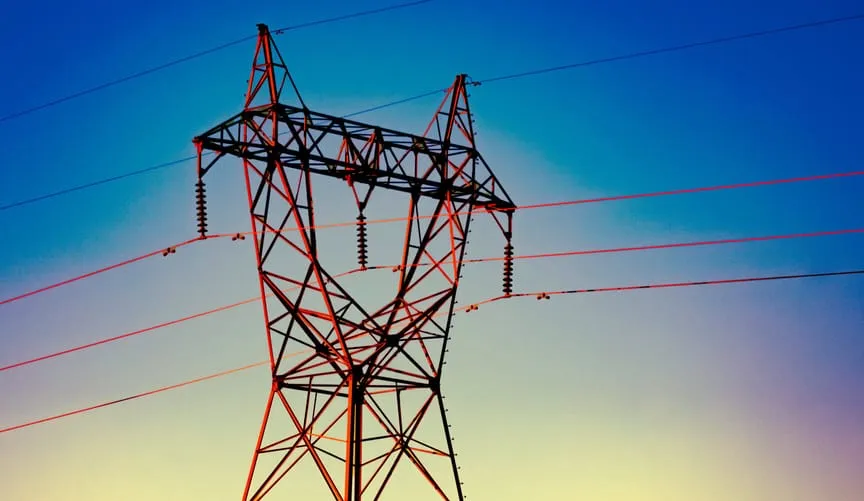
PJM Interconnection manages the complex flow of electricity across 13 states and the District of Columbia, serving 67 million people. Like much of America’s grid, PJM faces unprecedented challenges: electricity demand is surging after remaining flat for nearly two decades; renewable energy integration is becoming increasingly complex; infrastructure is aging; traditional power plants are retiring; and the queue for connecting new power sources has become severely congested.
This initiative combines Google’s cutting-edge AI capabilities—drawing expertise from Google Cloud and Google DeepMind—with PJM’s extensive operational experience and specialized tools from Tapestry, an Alphabet moonshot project dedicated to enabling a reliable, affordable, and sustainable energy future.
The United States stands at a pivotal moment for innovation and growth, largely powered by AI applications. However, realizing this potential hinges on modernizing our electrical infrastructure. The urgency is clear from rapidly increasing demand forecasts. In 2024, the Federal Energy Regulatory Commission’s (FERC) five-year demand growth forecast reportedly tripled compared to the previous year. Current projections show U.S. peak energy demand could increase by an enormous 128 GW by 2030—a growth rate our current system simply cannot handle. Key drivers include the massive energy requirements of data centers powering the AI revolution itself, alongside broader trends like transportation and industrial electrification.
Exacerbating this demand pressure is a critical supply-side bottleneck: the massive backlog of new power generation projects waiting to connect to the grid. By late 2023, the national queue of waiting projects was estimated at over double the entire installed capacity of the U.S. power system. According to Lawrence Berkeley National Laboratory, an astonishing 2,600 gigawatts (GW) of potential capacity—primarily wind, solar, and battery storage—remains stalled in the connection process.
Grid operators like PJM are struggling to update their systems to process interconnection requests, which have exploded from dozens annually a few years ago to thousands today. In PJM’s region alone, approximately 200 GW of renewable projects are stalled, facing multi-year delays (sometimes exceeding six years) due to complex, largely manual study and approval processes. This “great bottleneck” severely hampers the deployment of resources needed to meet rising demand and critical climate goals.
Further complicating matters is the aging grid infrastructure, much of which is decades old, combined with numerous retirements of traditional power plants. These retirements, driven by economic factors and environmental regulations, remove controllable power sources just as demand is spiking and variable renewables are increasing. PJM, for instance, anticipates the potential retirement of 40 GW of its current generation capacity by 2030, raising serious resource adequacy concerns.
This triple challenge—rising demand, stalled new supply, and diminishing existing resources—creates serious reliability risks, highlighting the urgent need for innovative approaches to grid management and modernization.

Tapestry’s AI Toolkit: Building the Grid of Tomorrow
At the heart of this multi-year effort is Tapestry, Alphabet’s specialized AI engine for grid transformation. Launched in 2017 with the ambitious goal of creating a virtual model of the power grid—sometimes described as a “Google Maps for electrons”—Tapestry aims to replace the current fragmented system of incompatible tools used by grid operators. Leveraging Google Cloud‘s scalable computing power and expertise from Google DeepMind, Tapestry will enhance its core technology to develop new collaborative AI tools specifically for PJM.
Tapestry’s technology aims to provide unprecedented visibility and analytical capabilities for managing increasingly complex electricity flows, intelligently optimizing how new power generation connects to PJM’s grid.
This collaboration unites the strengths of Alphabet entities—Tapestry, Google Cloud, and Google DeepMind—to create AI tools enabling PJM to make faster, more confident decisions. By applying Tapestry’s solutions, the partners expect to significantly reduce processing times for new project applications, allowing new capacity to come online much faster and ultimately boosting grid reliability, affordability, and clean energy integration.
Key Focus Areas:
- Accelerating Energy Capacity Integration: Tapestry is developing AI-powered tools to streamline the interconnection application and verification process. These tools use natural language processing to automatically validate information in interconnection applications—often lengthy PDF documents—checking details like site control and equipment specifications against reliable data sources.
- Enhancing Efficiency and Affordability: A critical component of Tapestry’s approach involves consolidating the dozens of existing databases and tools used for evaluating interconnection requests into a unified model of PJM’s network. This technology forms the foundation of Tapestry’s vision for a comprehensive grid model—a secure platform where grid planners and project developers can access consistent, current information and collaborate effectively.
- Integrating Diverse Energy Resources: Variable energy sources like wind and solar represent a large portion of projects in the PJM interconnection queue. Successfully integrating these resources while maintaining grid stability is a significant challenge. Tapestry’s AI-driven automation and planning tools are specifically designed to support the rapid and reliable integration of these varied energy sources, helping PJM manage the complexities of their fluctuating output.
Real-World Impact
The potential impact is substantial. In a pilot project with Chile’s grid operator, Tapestry’s Grid Planning Tool reportedly allowed planners to run grid simulations 86% faster than before and analyze 30 times more scenarios simultaneously, enabling more robust planning. While specific time-reduction targets haven’t been announced for this partnership, the promise of AI automation is clear. FERC Commissioner David Rosner recently noted that “using machine learning, automation, and other technologies to streamline and expedite the interconnection process” could be transformative.
The significance extends beyond time savings. As Tapestry CEO Emilie Gubian observed, “The clean energy transition is fundamentally a data problem.” With interconnection queues growing faster than human analysts can process, AI offers a path to scale up analytical capabilities to match the pace of clean energy development.
While AI won’t address all grid interconnection challenges—physical infrastructure constraints and policy issues remain significant—these tools could substantially reduce administrative bottlenecks currently delaying projects by years. For developers and investors waiting in interconnection queues, these AI advances offer hope that the path to grid connection could become more predictable and efficient—potentially saving millions in carrying costs and accelerating the clean energy transition.
Tags
Read More From AI Buzz

Vector DB Market Shifts: Qdrant, Chroma Challenge Milvus
The vector database market is splitting in two. On one side: enterprise-grade distributed systems built for billion-vector scale. On the other: developer-first tools designed so that spinning up semantic search is as easy as pip install. This month’s data makes clear which side developers are choosing — and the answer should concern anyone who bet […]

Anyscale Ray Adoption Trends Point to a New AI Standard
Ray just hit 49.1 million PyPI downloads in a single month — and it’s growing at 25.6% month-over-month. That’s not the headline. The headline is what that growth rate looks like next to the competition. According to data tracked on the AI-Buzz dashboard , Ray’s adoption velocity is more than double that of Weaviate (+11.4%) […]