
GPT-5 Targets August Release to Counter Rival Benchmarks

In a market defined by rapid-fire innovation, OpenAI is preparing its strategic response to an increasingly crowded field of top-tier AI models. While the recent launch of GPT-4o focused on accessibility and real-time interaction, reports now indicate that its successor, tentatively named GPT-5, is being demonstrated to enterprise partners ahead of a potential mid-2024 release. This development arrives as competitors like Google and Anthropic have set new industry benchmarks in long-context reasoning and performance, making the upcoming GPT-5 release a high-stakes test of OpenAI’s ability to deliver a substantial leap in intelligence. The central question is no longer just what to expect from GPT-5, but how it will re-establish its lead in a fundamentally new competitive landscape. This analysis examines the technical pressures and documented capabilities shaping what is anticipated to be a significant moment for the AI industry.
Key Points
• Documented Rival Advancements: Anthropic’s Claude 3 Opus demonstrably surpassed GPT-4 on key academic benchmarks upon its release, while Google’s Gemini 1.5 Pro introduced a massive 1 million token context window, setting new industry standards.
• Confirmed Enterprise Demonstrations: Reports from Business Insider, citing enterprise executives, confirm that private demos of GPT-5 are underway, with the model described as “materially better” than its predecessors.
• Focus on Autonomous Agents: OpenAI’s development focus, supported by CEO Sam Altman’s commentary on the need for advanced reasoning, indicates GPT-5 will feature agent-like capabilities for executing multi-step, autonomous tasks.
• Intense Market and Research Pressures: The generative AI market is projected by Bloomberg Intelligence to reach $1.3 trillion by 2032, fueling immense investment in training models that cost upwards of $100 million and face significant OpenAI GPT-5 development challenges related to scaling and safety.
The Crown Contested: AI’s New Competitive Frontier
For the first time since ChatGPT’s debut—an event that saw it set records as the fastest-growing user base in history—OpenAI’s flagship model is not the undisputed performance champion. This new reality, shaped by formidable releases from its closest competitors, establishes the high-performance baseline that GPT-5 must exceed.
Benchmark Throne: Claude’s Technical Coup
In March 2024, Anthropic delivered a direct challenge with its Claude 3 model family. The top-tier model, Opus, became the first widely available commercial model to outperform GPT-4 on several critical industry benchmarks. Anthropic announced that Opus achieved superior scores in areas like undergraduate-level knowledge (MMLU) and graduate-level reasoning (GPQA), creating a clear performance target for OpenAI to surpass.

Million-Token Memory: Gemini’s Context Revolution
Google’s countermove came with Gemini 1.5 Pro in February 2024, which introduced a technical capability that shifted the competitive goalposts. Its standout feature is a massive 1 million token context window, as detailed on Google’s blog. This enables the model to process and analyze entire books or hours of video in a single prompt, a feat of long-context reasoning that represents a significant advantage for enterprise data analysis and a key area where GPT-5 will be expected to compete.
Open-Source Insurgency: Llama’s Market Disruption
Beyond closed-source rivals, Meta’s Llama 3 has energized the open-source community. By offering models that rival the performance of proprietary systems like GPT-3.5, Meta AI is fostering a decentralized innovation ecosystem. This movement presents a different competitive pressure, challenging the business models of closed systems and accelerating the commoditization of foundational AI capabilities.
Silicon Whispers: GPT-5’s Enterprise Preview
With the competitive bar set high, information from enterprise demos and leadership commentary provides a clear picture of OpenAI’s strategic direction for GPT-5. The focus is shifting from simply better text generation to enabling more complex, autonomous actions.
Behind Closed Doors: Enterprise Glimpses
Credible reports from Business Insider confirm OpenAI has begun demonstrating GPT-5 to select enterprise customers, a standard practice to build market momentum. Executives who have witnessed these demos described the model as “really good, like materially better.” These previews allegedly showcased unique use cases built on the client’s own data, suggesting a focus on tailored, high-value business applications. This aligns with a targeted summer 2024 release date to answer recent competitor moves, with some reports suggesting a potential GPT-5 release date August.
Digital Autonomy: The Agent Architecture
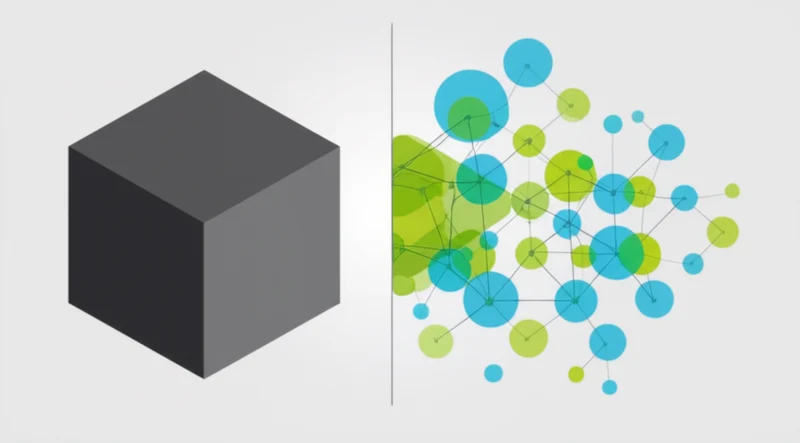
The most significant technical leap expected in GPT-5 is the introduction of AI agents. This functionality would allow the model to autonomously call other tools, services, and APIs to complete complex objectives. For example, a user could issue a high-level command like planning and booking a business trip, and the agent would handle the multi-step process of flight searches, hotel reservations, and calendar integration without further human intervention.
Altman’s Algorithmic Vision
This focus on agents is corroborated by public statements. In a recent Sam Altman GPT-5 update from an interview, the OpenAI CEO alluded to a forthcoming “giant” model, emphasizing the need for significant improvements in reasoning and reliability. In a separate interview with Bill Gates, he stressed that these capabilities are the essential ingredients for creating functional and trustworthy AI agents, signaling this as a primary development frontier for the company.
Computational Ceiling: The Physics of Progress
Developing a model “materially better” than GPT-4 and its rivals involves confronting fundamental research challenges and heightened safety responsibilities. GPT-5’s architecture and performance will serve as a major test case for the future of AI development.
Petaflops vs. Plateaus: The Scaling Question
The AI community is actively debating one of the key OpenAI GPT-5 development challenges: whether simply increasing model size and data—a principle known as “scaling laws”—can continue to yield significant intelligence leaps. Some experts, like NVIDIA senior AI scientist Jim Fan, have noted that while models are improving, “the low-hanging fruit has been picked.” He suggests future progress will rely more on “new algorithmic breakthroughs.” GPT-5’s performance will provide critical data on whether refined scaling still holds the key to more powerful AI.
Guardrails for Giants: Safety Architecture
With greater power comes greater risk. A more capable and autonomous GPT-5 elevates the importance of safety and alignment. Recognizing this, OpenAI has established a team dedicated to the governance of “superintelligence.” The company has committed 20% of its compute power over four years to solving the technical challenges of controlling AI systems that are smarter than humans, as stated on the OpenAI blog. The release of GPT-5 will be scrutinized as much for its safety guardrails as for its capabilities.
Trillion-Dollar Chess: The Market Battleground
The intense technical race is fueled by enormous financial stakes. GPT-5’s success will not be measured by its technical specifications alone, but by its performance on objective benchmarks and its ability to capture value in a rapidly expanding market.
Silicon Burn Rate: The Economics of Training
Training these advanced models is a monumental undertaking. Industry estimates place the training cost for GPT-4 at over $100 million, and the resources for GPT-5 are expected to be substantially higher. This immense cost concentrates development power in the hands of a few heavily funded companies, reinforcing the high-stakes nature of the competition between Microsoft-backed OpenAI, Google, and Amazon-backed Anthropic.
The AI Gold Rush: Market Projections
The economic incentive is clear. According to research from Bloomberg Intelligence, the generative AI market is projected to grow from $40 billion in 2022 to an astonishing $1.3 trillion by 2032. Capturing a dominant share of this market requires delivering a model that is not just incrementally better, but demonstrably superior. This financial context explains the urgency behind the GPT-5 vs competitors narrative.
Arena of Algorithms: Benchmark Battlegrounds
To validate its “materially better” claims, GPT-5 will need to establish a clear lead on independent benchmarks. The LMSYS Chatbot Arena Leaderboard, which ranks models on blind, head-to-head human evaluations, has become a respected industry metric. As of late May 2024, the top is a tight race between GPT-4o, Claude 3 Opus, and Gemini 1.5 Pro. A decisive and sustained lead on this leaderboard will be the ultimate proof of GPT-5’s advancement.
Silicon Crossroads: The Next AI Milestone
The pending arrival of GPT-5 represents more than just another model update; it is OpenAI’s strategic answer to a redefined competitive arena. Its success hinges on delivering a verifiable leap in reasoning and agent-like capabilities sufficient to outperform the new benchmarks set by Anthropic and Google. The model’s performance will provide a crucial data point in the debate on scaling laws and will be a bellwether for the industry’s approach to safety with increasingly powerful systems. As the industry awaits the official announcement, one question remains: will GPT-5 deliver the decisive advancement needed to once again pull ahead in the AI race?
Read More From AI Buzz

Vector DB Market Shifts: Qdrant, Chroma Challenge Milvus
The vector database market is splitting in two. On one side: enterprise-grade distributed systems built for billion-vector scale. On the other: developer-first tools designed so that spinning up semantic search is as easy as pip install. This month’s data makes clear which side developers are choosing — and the answer should concern anyone who bet […]

Anyscale Ray Adoption Trends Point to a New AI Standard
Ray just hit 49.1 million PyPI downloads in a single month — and it’s growing at 25.6% month-over-month. That’s not the headline. The headline is what that growth rate looks like next to the competition. According to data tracked on the AI-Buzz dashboard , Ray’s adoption velocity is more than double that of Weaviate (+11.4%) […]