
McDonald's Integrates AI to Enhance Restaurant Operations and Customer Experience
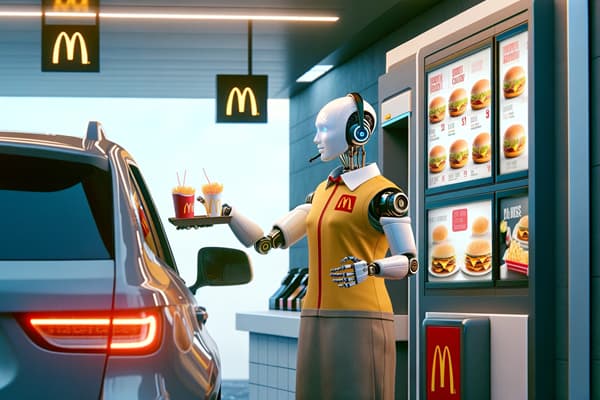
Behind the familiar golden arches, McDonald’s is cooking up something entirely new: a technology revolution. The global fast-food giant is rolling out an ambitious tech upgrade across its sprawling network of 43,000 restaurants worldwide, weaving together artificial intelligence, edge computing, and internet-connected equipment to transform how it serves customers and runs its kitchens.
In the bustling environment of a typical McDonald’s, where crew members juggle counter orders, drive-through customers, delivery couriers, and curbside pickups simultaneously, technology is becoming the secret sauce for a smoother operation.
“Our restaurants, frankly, can be very stressful,” explains Brian Rice, McDonald’s Chief Information Officer, in a recent interview. “We have customers at the counter, we have customers at our drive-through, couriers coming in for delivery, delivery at curbside. That’s a lot to deal with for our crew. Technology solutions will alleviate the stress.”
From Digital Strategy to Kitchen Reality
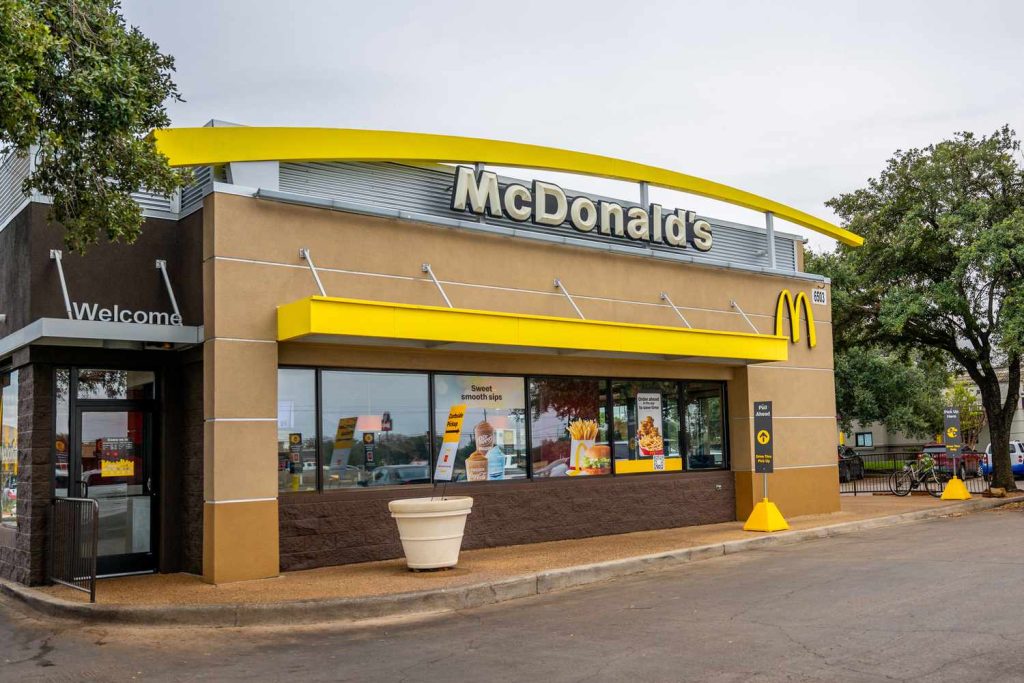
McDonald’s digital ambitions reflect a company betting big on tech-enabled customer connections. They’re aiming to boost their loyal digital customers from 175 million to an impressive 250 million by 2027 – a goal that’s becoming increasingly important amid recent sluggish U.S. sales and industry-wide challenges.
The scale is staggering. With 43,000 restaurants globally, implementing new technology isn’t just installing a few computers – it’s transforming an ecosystem. McDonald’s partnership with Google Cloud, announced in late 2023, underpins this massive effort to bring more computing power directly into each restaurant.
Smarter Kitchens: When AI Meets the Fryer
Perhaps nowhere is McDonald’s tech transformation more visible than in its kitchens. The company has begun installing sensors on essential equipment throughout its kitchens, connecting everything from grills to the occasionally temperamental McFlurry ice cream machines.
These sensors feed real-time data to an edge computing system, giving restaurant managers and franchisees immediate visibility into how their kitchens are operating. More importantly, AI algorithms analyze this data stream to detect early warning signs of potential equipment failures – potentially solving the infamous “ice cream machine is down” problem before it starts.
McDonald’s is also exploring computer vision – the same AI technology behind facial recognition – to verify order accuracy. Cameras mounted in stores could soon scan assembled orders to confirm everything’s correct before they reach customers, reducing a major pain point for both crews and diners.
The AI Drive-Through Revolution
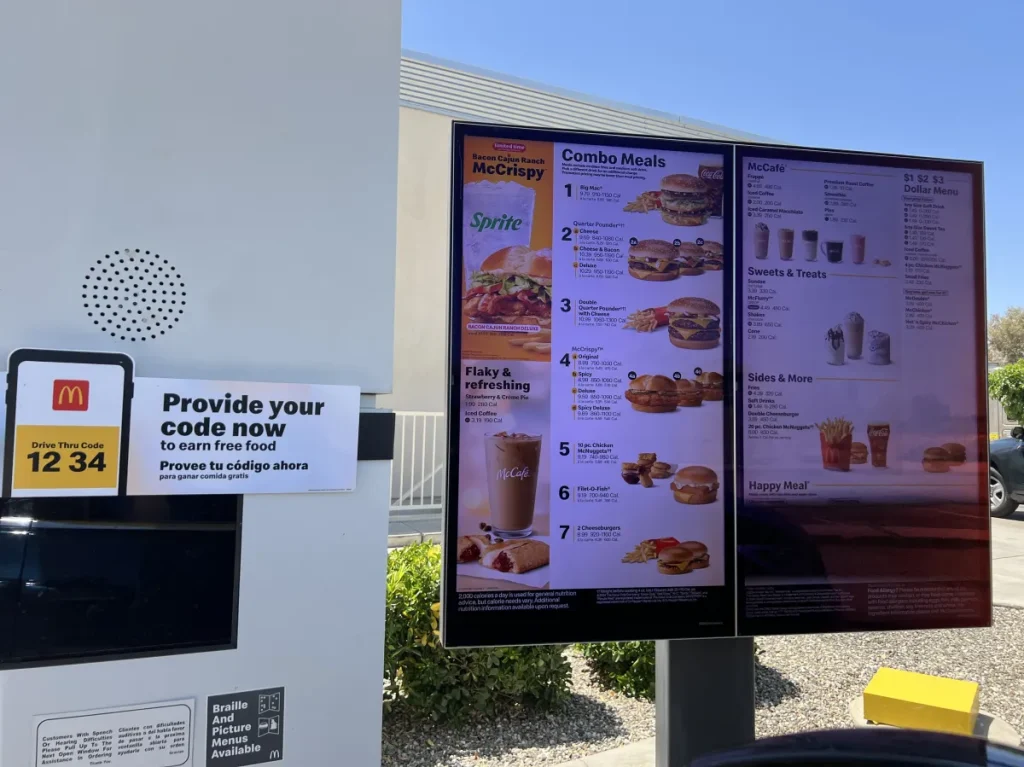
Since 2019, McDonald’s has been experimenting with voice-activated drive-throughs and even robotic deep fryers. Now, the company is deepening its tech integration by leveraging AI at the drive-through with Google Cloud’s help, after ending its previous partnership with IBM for automated order-taking in 2024.
The edge computing systems being installed in restaurants make these voice AI systems more responsive and reliable by processing voice data locally rather than sending everything to remote cloud servers. This reduces latency – the slight delay between a customer speaking and the system responding – creating a more natural ordering experience.
Restaurant Managers’ New AI Assistant
Beyond the kitchen and drive-through, McDonald’s is developing a generative AI-powered virtual assistant to help restaurant managers handle administrative tasks more efficiently. This AI helper can handle everything from shift scheduling to inventory management and report generation, freeing up managers to focus more on customers and crew.
McDonald’s isn’t alone in this approach. Competitors like Yum Brands’ Pizza Hut and Taco Bell have been exploring similar AI capabilities, showing how the fast-food industry is increasingly becoming a tech battleground.
Edge Computing: Processing Power Where It’s Needed
Central to McDonald’s tech strategy is bringing computing power directly into restaurants through edge computing. This approach processes data on-site rather than sending everything to distant cloud servers – a crucial advantage for a global chain with locations in areas with varying levels of internet connectivity.
“Edge computing can be a faster, cheaper option than sending data to the cloud, especially in more far-flung locations with less reliable cloud connections,” explains Rice.
Jose Gomes, a managing director of retail and consumer goods at Google Cloud, notes that McDonald’s is an early mover in applying edge computing to the restaurant industry, though the technology is expected to spread across many sectors with distributed physical locations.
Despite these advantages, implementing such technology across a mixture of franchised and corporate-owned locations presents significant challenges, according to Sandeep Unni, a retail analyst at market research firm Gartner. McDonald’s has declined to disclose how much it’s investing in these technology initiatives.
AI-Powered Personalization: McFlurries on Hot Days
Perhaps the most visible change for customers will be increasingly personalized offers through McDonald’s mobile app. The company’s AI systems will analyze customer purchasing history alongside external factors like weather data to deliver timely, relevant promotions.
“A customer who we know loves our sweet treats could get an offer through the app for a McFlurry on a hot summer day,” Rice explains, painting a picture of how McDonald’s plans to use AI to strengthen customer relationships.
These technological investments come at a crucial time for McDonald’s, whose U.S. sales were sluggish in January, reflecting broader challenges in the fast-food industry. The company hopes that creating a seamless, tech-enhanced experience will help attract and retain loyal customers despite economic pressures on low-income diners and families.
Rice, who joined McDonald’s in 2022 after serving as chief information officer at other major companies and holding senior technology positions across diverse industries, is well-positioned to guide this transformation.
“If we can proactively address those issues before they occur, that’s going to mean smoother operations in the future,” he concludes, summing up the promise of McDonald’s tech revolution – a less stressful environment for workers and a better experience for the millions of customers who visit the golden arches each day.
Read More From AI Buzz

Vector DB Market Shifts: Qdrant, Chroma Challenge Milvus
The vector database market is splitting in two. On one side: enterprise-grade distributed systems built for billion-vector scale. On the other: developer-first tools designed so that spinning up semantic search is as easy as pip install. This month’s data makes clear which side developers are choosing — and the answer should concern anyone who bet […]

Anyscale Ray Adoption Trends Point to a New AI Standard
Ray just hit 49.1 million PyPI downloads in a single month — and it’s growing at 25.6% month-over-month. That’s not the headline. The headline is what that growth rate looks like next to the competition. According to data tracked on the AI-Buzz dashboard , Ray’s adoption velocity is more than double that of Weaviate (+11.4%) […]