Meta's new AI framework teaches machines to collaborate
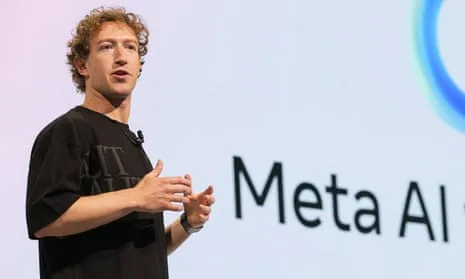
Facebook’s parent company is betting that the future of AI isn’t just about smarter machines, but more social ones. Meta AI has just unveiled CoRaL (Collaborative Reasoner), a framework designed to turn lone-wolf language models into team players. The company claims its CoRaL-boosted Llama 3 models can now outshine competitors like OpenAI’s GPT-4o in tasks requiring consensus-building – signaling a major pivot toward AI with actual social skills.
The Problem: Today’s AI Geniuses Are Terrible Teammates
Despite all their impressive capabilities, current top-tier LLMs have a glaring blindspot. While they can crunch data and spit out answers, they’re essentially solitary creatures, lacking the collaborative reasoning that drives human innovation.
Think about how we solve complex problems in the real world: we discuss, debate, challenge each other’s ideas, and eventually align on solutions. That’s the secret sauce missing from AI – until now, apparently.
The industry has been laser-focused on single-agent performance, overlooking the social dynamics that make human teams effective. Meta researchers highlight this gap as a major opportunity, linking it to developing an AI ‘theory-of-mind’ – the ability to understand that others have different perspectives and knowledge.
CoRaL: Teaching AI Models To Play Well With Others
Meta’s new Collaborative Reasoner framework tackles this problem head-on. Rather than evaluating AI on individual performance, CoRaL tests how well models can work together – a radically different approach from the industry standard.
CoRaL transforms traditional reasoning benchmarks into collaborative challenges across mathematics, science, and social understanding. Success isn’t just finding the right answer – it’s about two AI agents debating, persuading, and reaching consensus through conversation. It’s AI teamwork in action.
How It Works: AI Talking to Itself and Getting Smarter
The tech behind CoRaL is fascinatingly clever:
- Self-Collaboration: Meta’s solution to the lack of training data? Have the AI talk to itself. Using a “self-collaboration” technique, a single LLM plays both sides of a conversation to generate massive amounts of synthetic dialogue. It’s like AI role-playing with itself to get better at teamwork.
- Direct Preference Optimization (DPO): Using these synthetic conversations, Meta fine-tunes models via DPO, part of the emerging toolkit for AI alignment. This technique trains models to prefer paths leading to successful collaboration without needing separate reward models.
- New Metrics That Actually Matter: Recognizing that traditional accuracy scores miss the point, Meta created new evaluation metrics that measure collaborative success and social skills like persuasiveness.
- Industrial-Strength Infrastructure: All this synthetic dialogue generation requires serious computing power. Meta’s custom “Matrix” infrastructure delivers up to 1.87x higher throughput than competing systems like Hugging Face’s llm-swarm, enabling massive-scale training.
Bold Claims: Did Meta Just Leapfrog OpenAI?
Here’s where things get interesting. Meta is making some eyebrow-raising assertions about CoRaL’s performance. Their benchmarks show Llama-3.1-8B-Instruct achieving a jaw-dropping 47.8% improvement on ExploreToM after CoRaL training. Across various tasks, they’re claiming gains of up to 29.4% over baseline performance.
The bombshell claim? Meta says its Llama-3.1-70B model, when enhanced with CoRaL, actually beats GPT-4o on key collaborative reasoning benchmarks. This assertion appears in both their research publication and technical summaries.
There’s a catch, though. On traditional benchmarks for general knowledge, coding, and complex math, Llama 3.1 70B still lags behind GPT-4o in most comparisons (though results vary by test). Meta’s own data shows their CoRaL models still struggle with complex math – suggesting teamwork isn’t always the answer when deep, focused reasoning is required.
What’s particularly promising, though, is how CoRaL-trained models generalize to new tasks they weren’t specifically trained for – a key indicator that the collaborative skills they’re learning are genuinely useful.
The Big Picture: Meta’s Playing to Its Strengths
This isn’t just a technical flex – it’s Meta showing its hand in the AI race. While OpenAI and others battle for supremacy on standard benchmarks, Meta is carving out territory that aligns perfectly with its social media DNA and broader AI assistant ambitions.
The applications are potentially transformative: AI assistants that truly understand ongoing conversations, coding partners that debate design choices like human devs, scientific research tools that can actually collaborate with researchers, and more intuitive customer service systems. The potential for collaborative platforms is enormous.
In classic Meta fashion, they’re doubling down on their open-source strategy. By releasing the CoRaL framework and tools, they’re mobilizing a global community to advance collaborative AI – potentially turning their specialty into an industry-wide advantage.
As AI becomes increasingly woven into how we work, collaborative capabilities may well be the next frontier. Meta might be betting that the best AI isn’t the smartest solo performer, but the one that plays best with others – both human and machine.
Tags
Read More From AI Buzz

Vector DB Market Shifts: Qdrant, Chroma Challenge Milvus
The vector database market is splitting in two. On one side: enterprise-grade distributed systems built for billion-vector scale. On the other: developer-first tools designed so that spinning up semantic search is as easy as pip install. This month’s data makes clear which side developers are choosing — and the answer should concern anyone who bet […]

Anyscale Ray Adoption Trends Point to a New AI Standard
Ray just hit 49.1 million PyPI downloads in a single month — and it’s growing at 25.6% month-over-month. That’s not the headline. The headline is what that growth rate looks like next to the competition. According to data tracked on the AI-Buzz dashboard , Ray’s adoption velocity is more than double that of Weaviate (+11.4%) […]