
Microsoft Copilot Adds Claude for Advanced AI Model Choice

Microsoft has officially announced the integration of Anthropic’s Claude AI models into its Microsoft 365 Copilot ecosystem, a significant development that diversifies the AI powerhouse beyond its deep partnership with OpenAI. The move makes Anthropic’s Claude Sonnet 4 and Claude Opus 4.1 models available as selectable options for specific tasks within Copilot, directly alongside OpenAI’s offerings. This is more than a feature update; it represents a calculated strategic pivot, transforming Microsoft’s role from the primary promoter of a single AI partner to the operator of an agnostic, multi-model platform. The latest Microsoft Anthropic integration news signals a clear response to a rapidly maturing AI landscape, where de-risking dependencies and providing customer choice are becoming paramount for long-term market leadership.
Key Points
- Microsoft now offers Anthropic’s Claude Sonnet 4 and Opus 4.1 models as selectable options within M365 Copilot.
- This development marks a strategic diversification to reduce Microsoft’s deep reliance on its primary partner, OpenAI.
- Anthropic’s models are hosted outside Microsoft’s cloud, introducing new data governance considerations for enterprises.
- The move positions Microsoft Copilot as a competitive multi-model platform, not just a channel for OpenAI technology.
The New Players at Microsoft’s AI Table
Microsoft is fundamentally altering its Copilot architecture by introducing model choice directly into its enterprise products. The integration of Anthropic’s models is being rolled out in a targeted manner, initially focusing on high-value reasoning and development tasks within the Microsoft 365 ecosystem.
The primary models being added are Anthropic’s Claude Sonnet 4 and the more powerful Claude Opus 4.1. As reported by The Hindu, these models will be available as selectable options alongside OpenAI’s offerings in two key areas. First, the Researcher Agent in M365 Copilot, a reasoning agent for complex tasks, will allow users to select Claude Opus 4.1. Second, developers using Microsoft Copilot Studio can now choose Anthropic models for building custom agents and workflows.
Access is initially limited to customers in Microsoft’s Frontier Program, who must opt-in to use the new capabilities.
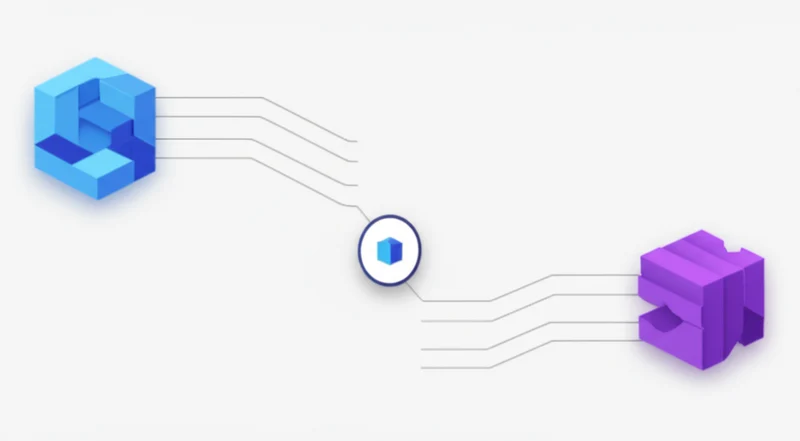
A crucial architectural detail, as the announcement clarifies, is that “Anthropic models will be hosted outside Microsoft-managed environments and subject to Anthropic’s terms and conditions.” This is a notable departure from the deep integration of OpenAI models on Azure. It indicates Microsoft is prioritizing model choice for its users over keeping all AI processing within its own cloud, a testament to the strategic importance of this diversification.
Breaking the Single-Partner Chain
The decision to integrate Anthropic is a cornerstone of a broader strategic realignment in Microsoft’s AI strategy beyond OpenAI. While the company’s multi-billion dollar investment in OpenAI was foundational, this move is a direct effort to de-risk its future by reducing dependence on a single partner.
This strategic hedge comes as the Microsoft-OpenAI relationship evolves, with some reports noting signs of “immense strain and tension” in the partnership as OpenAI itself seeks massive infrastructure deals with other partners. As Windows Central notes, this diversification is a hedge against potential future conflicts, technological plateaus, or shifts in OpenAI’s corporate strategy. By offering model choice, Microsoft is transforming its role from a primary reseller of OpenAI technology to a comprehensive AI platform. This “marketplace” approach, which includes plans to offer models from DeepSeek, xAI, and Meta through Azure, positions Copilot and Azure as the central hub for enterprise AI, regardless of the underlying model.
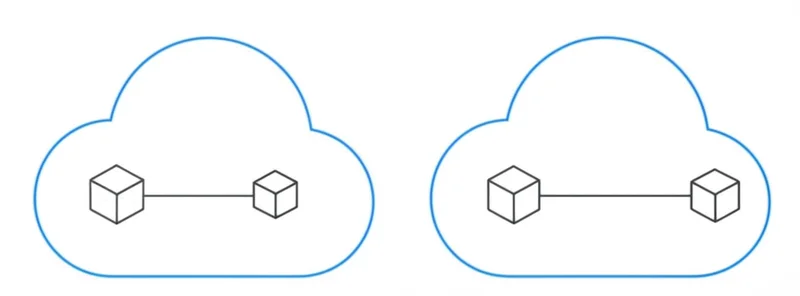
This strategy of Microsoft diversifying AI partners externally complements its internal AI development. The company is reportedly testing its own large-scale model, MAI-1-preview, creating a robust, three-pronged strategy: a core partnership with OpenAI, a broad ecosystem of third-party models, and the development of in-house capabilities.
The Multi-Model Governance Puzzle
For businesses using Microsoft 365 Copilot, this development offers both significant advantages and new operational considerations. The most immediate benefit is the ability to optimize tasks by selecting the best model for a specific job, a key reason why Microsoft Copilot adds Claude model options.
Enterprises can now choose an OpenAI model for creative text generation but switch to Anthropic’s Claude Opus 4.1 for a complex reasoning task requiring deep analysis. This also builds resilience, as dependence on a single provider is a risk. Model choice provides a fallback in case of performance issues or API outages. This move directly challenges competitors by turning Microsoft’s ecosystem into a one-stop shop for leading AI models.

However, the use of models hosted outside Microsoft’s environment introduces new governance hurdles. As reported by CNBC, organizations must be enrolled in this program and opt-in, and administrators will need to approve the use of the models. IT leaders must now carefully review Anthropic’s separate terms and conditions to understand the data processing and privacy implications of using a model hosted on a third-party cloud.
From AI Partner to Platform Orchestrator
Microsoft’s integration of Anthropic’s Claude models is a clear declaration of its strategy for the next phase of AI. The company is moving decisively from being the primary vehicle for OpenAI’s technology to becoming an indispensable platform that orchestrates the world’s leading AI models. This provides choice to customers while strategically securing its central role in the enterprise AI ecosystem. As stated by Charles Lamanna, Microsoft’s President of Business & Industry Copilot, “This is just the beginning—we’re committed to delivering model innovation at speed.” According to one analysis, this commitment to “model innovation” now clearly means embracing a multi-polar AI world .
How will enterprises balance the power of this new choice with the growing complexity of multi-vendor AI governance?
Read More From AI Buzz

Vector DB Market Shifts: Qdrant, Chroma Challenge Milvus
The vector database market is splitting in two. On one side: enterprise-grade distributed systems built for billion-vector scale. On the other: developer-first tools designed so that spinning up semantic search is as easy as pip install. This month’s data makes clear which side developers are choosing — and the answer should concern anyone who bet […]

Anyscale Ray Adoption Trends Point to a New AI Standard
Ray just hit 49.1 million PyPI downloads in a single month — and it’s growing at 25.6% month-over-month. That’s not the headline. The headline is what that growth rate looks like next to the competition. According to data tracked on the AI-Buzz dashboard , Ray’s adoption velocity is more than double that of Weaviate (+11.4%) […]