
Microsoft Maia 200: Custom Silicon to Cut Inference Cost

Microsoft has officially unveiled the Maia 200, a custom-designed AI accelerator poised to reshape the performance and economic landscape of AI inference within its Azure datacenters. This new Azure AI chip to reduce token costs directly targets the immense operational cost of token generation for large language models by integrating specialized low-precision compute and a sophisticated memory hierarchy. The release is a strategic maneuver reflecting a broader industry trend among hyperscalers to achieve vertical integration and control the full AI stack, from silicon to software, as part of Microsoft’s strategy to lower AI costs for its highest-volume services.
The chip is not just a hardware release but a calculated response to the burgeoning AI inference market. By focusing on the specific demands of running trained models at scale, Microsoft is aiming to improve both the performance-per-dollar and performance-per-watt for its flagship AI services, including Microsoft 365 Copilot and models from its partner, OpenAI.
Key Points
- Microsoft announced the Maia 200, a custom 3nm AI chip designed to optimize inference workloads in Azure datacenters.
- The accelerator delivers over 10 petaFLOPS of FP4 performance, emphasizing low-precision compute for cost-effective token generation.
- This development is part of a larger hyperscaler trend toward vertical integration to control performance and long-term operational costs.
- Maia 200 is already powering Microsoft 365 Copilot and OpenAI models, demonstrating its immediate integration into core services.
Dollars and Tokens: The Inference Cost Equation
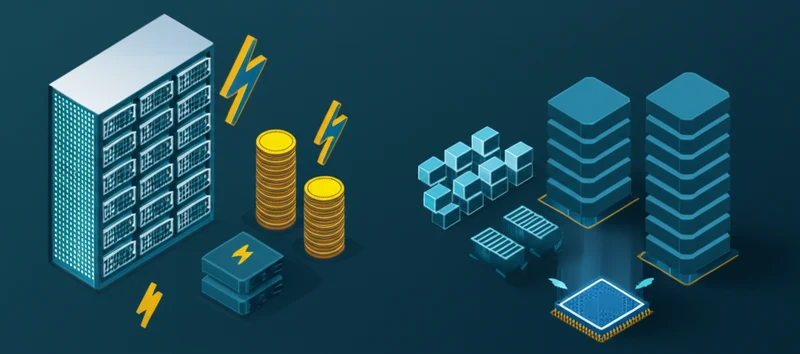
The core motivation behind Maia 200 lies in the fundamental economics of artificial intelligence. While training AI models is computationally intensive, it is the inference phase—using a model to generate content—that constitutes the vast majority of long-term operational costs. As one analysis from Windows Forum notes, inference is the “steady drumbeat that determines operating expense, energy use and scaling constraints” for services handling billions of daily queries.
The Maia 200 is purpose-built for inference economics, addressing a market projected by Data Center Knowledge to reach $349.5 billion by 2032, driven by enterprise demand for real-time AI. Matthew Kimball, an analyst at Moor Insights & Strategy, notes that Microsoft is playing a “longer game” by focusing on enterprise inference, which he predicts will be “embedded in everything you do.” Like Google’s TPUs and Amazon’s Inferentia chips, Maia 200 represents an investment in first-party silicon to gain granular control over performance, efficiency, and cost.
140 Billion Transistors: Architecting for Speed
In its official announcement, Microsoft describes the Maia 200 as its “most efficient inference system” ever, claiming a 30% improvement in performance per dollar over the previous generation of hardware in its fleet. The Maia 200 FP4 and FP8 cost efficiency is central to its architecture.
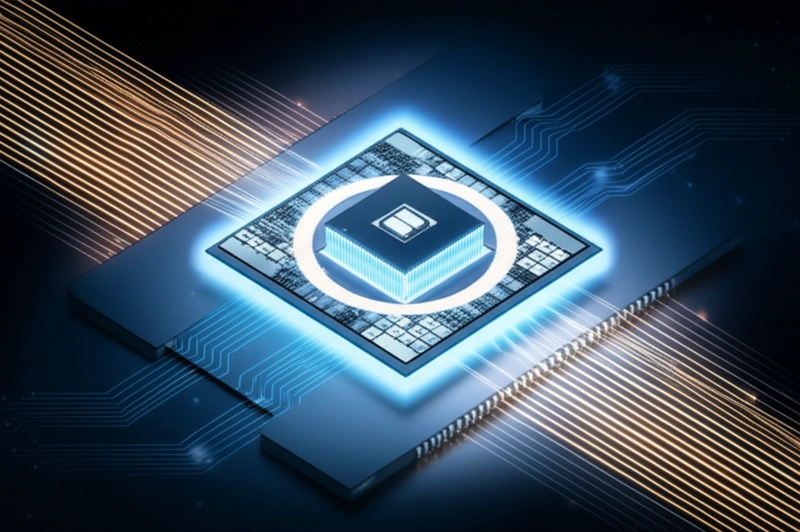
Built on TSMC’s 3-nanometer process, each chip contains over 140 billion transistors. Its core strength lies in native FP4 and FP8 tensor cores, delivering over 10 petaFLOPS of 4-bit performance and over 5 petaFLOPS of 8-bit performance. This focus on low-precision formats dramatically increases throughput for deployed models.
To prevent data bottlenecks, the chip features 216 GB of HBM3e memory providing approximately 7 TB/s of bandwidth, alongside a massive 272 MB of on-chip SRAM, according to a technical breakdown by Tom’s Hardware. The accelerator operates within a 750W Thermal Design Power (TDP) envelope, nearly half that of high-end training GPUs, highlighting its specialization for power-sensitive, at-scale deployment.
Complementary Silicon: Not a GPU Replacement
Microsoft positions Maia 200 as a highly specialized tool, not a universal GPU replacement. The company makes bold performance claims, asserting it is the “most performant, first-party silicon from any hyperscaler.” Specifically, Microsoft states Maia 200 delivers three times the FP4 performance of Amazon’s third-generation Trainium chip and FP8 performance that surpasses Google’s seventh-generation TPU, as reported by Data Center Knowledge.
However, it is crucial to understand that this Azure AI chip to reduce token costs is not intended to replace Nvidia GPUs across the board. As one analysis from Tom’s Hardware notes, a direct comparison is a “fool’s errand” because chips like Nvidia’s Blackwell are tuned for different use cases and benefit from a mature software stack. Instead, Maia 200 gives Microsoft a cost-effective tool for a specific and massive part of its workload, allowing it to offload inference tasks to more efficient, vertically integrated hardware while continuing to offer Nvidia GPUs for training and other workloads.
Vertical Integration: The Self-Sufficient Stack
The introduction of Maia 200 carries significant implications for Microsoft and its customers. The accelerator is already deployed in its US Central datacenter region and is slated for US West 3 next, with further expansion planned. Initially, it will power flagship services like Microsoft 365 Copilot and OpenAI’s latest GPT-5.2 models, directly improving the performance and profitability of these high-volume services.
Beyond immediate cost savings, Maia 200 will play a key role in Microsoft’s own research. The company’s Superintelligence team will use the chip for synthetic data generation and reinforcement learning pipelines, as detailed on the company’s blog . By accelerating the creation of training data, Microsoft is building a powerful feedback loop to improve its next-generation models more efficiently. Ultimately, the Maia 200 is a clear signal of Microsoft’s ambition to control its own destiny in the AI era, ensuring that as demand explodes, it has the optimized infrastructure to meet that demand profitably.
How will this push toward custom silicon by cloud providers reshape the broader AI hardware market?
Read More From AI Buzz

Vector DB Market Shifts: Qdrant, Chroma Challenge Milvus
The vector database market is splitting in two. On one side: enterprise-grade distributed systems built for billion-vector scale. On the other: developer-first tools designed so that spinning up semantic search is as easy as pip install. This month’s data makes clear which side developers are choosing — and the answer should concern anyone who bet […]

Anyscale Ray Adoption Trends Point to a New AI Standard
Ray just hit 49.1 million PyPI downloads in a single month — and it’s growing at 25.6% month-over-month. That’s not the headline. The headline is what that growth rate looks like next to the competition. According to data tracked on the AI-Buzz dashboard , Ray’s adoption velocity is more than double that of Weaviate (+11.4%) […]

Pydantic vs OpenAI Adoption: The Real AI Infrastructure
Pydantic, a data validation library most developers treat as background infrastructure, was downloaded over 614 million times from PyPI in the last 30 days — more than OpenAI, LangChain, and Hugging Face combined. That combined total sits at 507 million. The gap isn’t close. This single data point exposes one of the most persistent blind […]