
Musk's xAI Acquires X, Boosting Valuation to $80 Billion
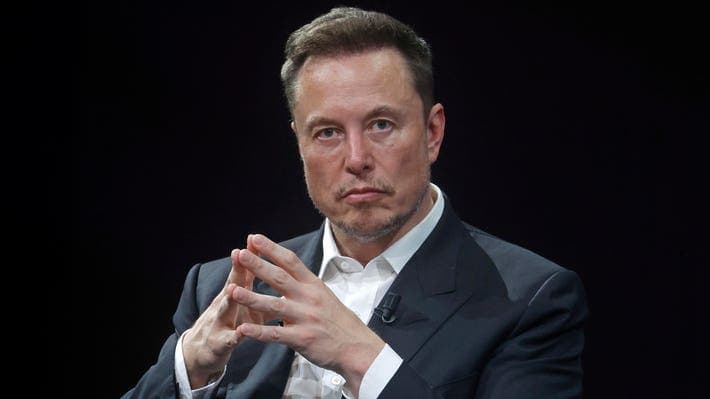
In a bold move reshaping his tech empire, Elon Musk has announced that xAI has acquired X (formerly Twitter) in an all-stock deal. Musk revealed the landmark transaction in a post on X Friday, formally binding the social media platform’s future to his artificial intelligence ambitions. The strategic merger aims to leverage X’s vast data resources and distribution network to accelerate xAI’s development against competitors in the AI space.
Deal Structure: Valuations Reveal Strategic Priorities
“xAI has acquired X in an all-stock transaction,” Musk confirmed, ending months of speculation about closer integration between his companies. The financial structure assigns xAI a substantial $80 billion valuation, reflecting strong investor confidence in Musk’s AI venture. Meanwhile, X is valued at $33 billion on an equity basis ($45 billion enterprise value including $12 billion in debt).
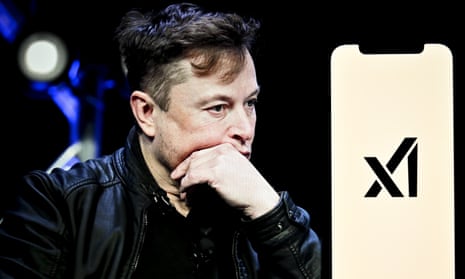
Describing the companies’ futures as “intertwined,” Musk emphasized that this merger goes beyond financial restructuring: “Today, we officially take the step to combine the data, models, compute, distribution and talent.” This integration creates a powerful synergy where xAI’s cutting-edge research can benefit directly from X’s real-world social data and rapidly deploy innovations to hundreds of millions of users.
X’s Evolution: From Twitter Acquisition to AI Platform
This acquisition brings X—which Musk purchased for $44 billion in October 2022 as Twitter—under the xAI umbrella, formalizing an already symbiotic relationship. Since founding xAI in 2023 to challenge established AI players, Musk has closely integrated its products with X, most notably the AI chatbot Grok.
X’s valuation has experienced significant volatility during its transformation under Musk’s leadership. After implementing major strategic changes—including substantial workforce reductions and controversial content moderation policy shifts—the platform’s perceived market value fluctuated dramatically. Investment firm Fidelity once valued X at less than $10 billion, highlighting the financial challenges.
However, following President Donald Trump’s inauguration—for whom Musk campaigned extensively and now serves as a special adviser leading the Department of Government Efficiency (DOGE)—X’s valuation has rebounded significantly. With over 600 million active users, X represents a crucial asset now fully integrated into Musk’s AI-focused vision.
xAI’s Meteoric Rise in the AI Race
Musk established xAI in 2023 with the ambitious goal to “understand the true nature of the universe.” Moving quickly, he assembled an elite team of AI researchers from leading organizations including Google DeepMind, Microsoft, and OpenAI (which he co-founded).
To support its intensive research and development, xAI has aggressively expanded its computing infrastructure, building massive AI data centers essential for competing with industry leaders. This expansion was fueled by successful fundraising, including a pivotal $6 billion round in December 2024 that valued the startup at $45 billion—a valuation that has now nearly doubled through the X acquisition.
The company has demonstrated impressive progress in its development timeline. In February 2025, xAI released Grok 3, a frontier AI model claiming competitive performance with industry-leading systems across key benchmarks in mathematics, science, and coding capabilities.
Strategic Advantages of the Merger
The xAI-X combination creates several powerful competitive advantages that could reshape both the AI landscape and social media ecosystem:
- Unrivaled Real-Time Data Access: X provides xAI with a continuous stream of diverse, real-time data—text, images, videos, and interactions from 600+ million users worldwide. This dynamic dataset offers superior training material for models like Grok, potentially giving xAI an edge over competitors relying on more static or limited datasets.
- Built-In Global Distribution: Instead of gradually building a user base, xAI gains immediate access to X’s massive audience. This allows rapid deployment of new AI features, accelerated user testing, and immediate feedback loops that can dramatically compress development cycles.
- Enhanced User Experience: X stands to benefit directly from advanced AI integration, with improved content personalization, more sophisticated recommendation systems, and AI-powered search capabilities potentially driving higher engagement and retention.
- Strategic Resource Alignment: The merger streamlines operations across Musk’s technology portfolio, concentrating resources behind his vision of transforming X into an “everything app” powered by cutting-edge AI.
Reshaping Competitive Dynamics
This acquisition significantly alters the competitive landscape in the AI sector. By integrating X, xAI secures two critical advantages—proprietary access to vast real-time data and a direct distribution channel to hundreds of millions of users—that rivals like OpenAI, Google DeepMind, and Anthropic currently lack.
The merger also reflects Musk’s ongoing rivalry with OpenAI, which he co-founded but later left due to disagreements over the organization’s direction and safety concerns. Despite xAI’s progress, Musk continues to challenge OpenAI directly, attempting to block its transition to a for-profit structure through legal action. In February 2025, he made headlines with a massive $97.4 billion bid to acquire OpenAI—though rejected, the move potentially complicated the company’s fundraising plans. The X-xAI merger represents Musk’s strategic counter-move, leveraging unique assets to compete directly in shaping the future of artificial intelligence.
Financial Implications and Expert Analysis
The financial details of the merger highlight contrasting trajectories for Musk’s companies. xAI’s remarkable $80 billion valuation—nearly doubling from $45 billion just months earlier—demonstrates extraordinary investor confidence and Musk’s fundraising prowess. Meanwhile, X’s $33 billion equity valuation represents a significant recovery from previous lows but remains below the original $44 billion acquisition price.
Industry analysts view the merger primarily through a strategic lens, noting that X’s real-time data and distribution network deliver value to xAI far beyond conventional financial metrics. The deal structure may also benefit X’s existing stakeholders by connecting them to xAI’s high-growth potential, potentially helping recover value through equity in the combined entity.
Challenges and Future Outlook
While the strategic rationale for merging xAI and X is clear, the integration faces substantial challenges:
- Technical Integration Complexity: Seamlessly combining xAI’s sophisticated models with X’s massive platform requires solving complex engineering challenges to ensure stable performance and effective data utilization.
- Data Privacy and Ethics: Leveraging X’s extensive user data for AI training raises important questions about privacy, consent, and ethical use of information—issues that will require robust safeguards to maintain user trust.
- AI Governance: Deeper integration of AI systems like Grok into X heightens concerns about algorithmic bias, content moderation, and misinformation management, demanding careful balance between automation and oversight.
- Regulatory Scrutiny: The high-profile combination of a leading AI developer with a major communication platform will likely attract intense regulatory attention across multiple jurisdictions.
This merger definitively positions X as more than just a social platform—it’s now a central component of Musk’s AI strategy, providing essential data, distribution capabilities, and real-world testing for his broader technological vision. How successfully the combined entity navigates technical hurdles, ethical considerations, and regulatory challenges while pursuing the AI-powered “everything app” concept will ultimately determine its impact on the future of both artificial intelligence and social media.
Read More From AI Buzz

Vector DB Market Shifts: Qdrant, Chroma Challenge Milvus
The vector database market is splitting in two. On one side: enterprise-grade distributed systems built for billion-vector scale. On the other: developer-first tools designed so that spinning up semantic search is as easy as pip install. This month’s data makes clear which side developers are choosing — and the answer should concern anyone who bet […]

Anyscale Ray Adoption Trends Point to a New AI Standard
Ray just hit 49.1 million PyPI downloads in a single month — and it’s growing at 25.6% month-over-month. That’s not the headline. The headline is what that growth rate looks like next to the competition. According to data tracked on the AI-Buzz dashboard , Ray’s adoption velocity is more than double that of Weaviate (+11.4%) […]