
Nextdoor's Algorithm Change Tackles Platform Toxicity

Nextdoor, the hyperlocal social network, is undertaking a significant strategic pivot in response to critical business headwinds. Faced with a decline in active users and a persistent reputation for negativity, the company has launched a platform overhaul centered on an algorithmic “For You” feed and a massive content partnership with over 3, 500 local news outlets. This development represents a deliberate shift away from a purely chronological, user-generated content model toward a curated experience common in modern social media. The core of this strategy is the Nextdoor algorithm change, an attempt to solve declining engagement by personalizing content. However, this move introduces a fundamental tension: whether an algorithm designed for engagement can successfully mitigate the very toxicity and sensationalism that has plagued the platform, or if it will inadvertently amplify it.
Key Points
• Nextdoor’s platform overhaul is driven by a documented decline in Weekly Active Users (WAUs), which, according to its investor filings, fell from 42.4 million in Q4 2023 to 41.8 million in Q1 2024.
• The redesign’s core components include an algorithmic “For You” feed, a real-time “Alerts” map, and a Nextdoor local news partnership integrating content from over 3, 500 outlets via the Associated Press.
• Expert analysis from sources like Nieman Lab indicates that while news integration adds credibility, it does not inherently solve the platform’s core issues of fear-mongering and racial profiling in user-generated content.
• The new algorithmic feed, a standard feature in engagement-focused platforms, introduces the documented risk of creating hyperlocal filter bubbles and amplifying sensationalist content, a known side effect of engagement-based algorithms, a key challenge for this redesign effort.
Digital Neighbors in Distress
Nextdoor’s revitalization is not a proactive choice but a strategic necessity. The company’s Q1 2024 earnings report painted a clear picture of a platform at a crossroads, revealing a decline in its most critical metric: Weekly Active Users (WAUs) dropped to 41.8 million from 42.4 million in the prior quarter. While revenue saw a modest 5% year-over-year increase to $57 million, the shrinking user base and a net loss of $34 million signal an urgent need for change.
This financial pressure is compounded by a long-standing reputational problem. The platform has been widely criticized for fostering petty disputes and racial profiling disguised as neighborhood safety concerns. Despite previous product interventions like a “Kindness Reminder,” the perception of Nextdoor as a hub for negativity has hampered growth. This environment of Nextdoor declining engagement is further exacerbated by intense competition from specialized apps like Citizen and Ring’s Neighbors, which have captured segments of the hyperlocal safety market, and from established giants like Facebook Groups and Reddit.
Code That Curates Community
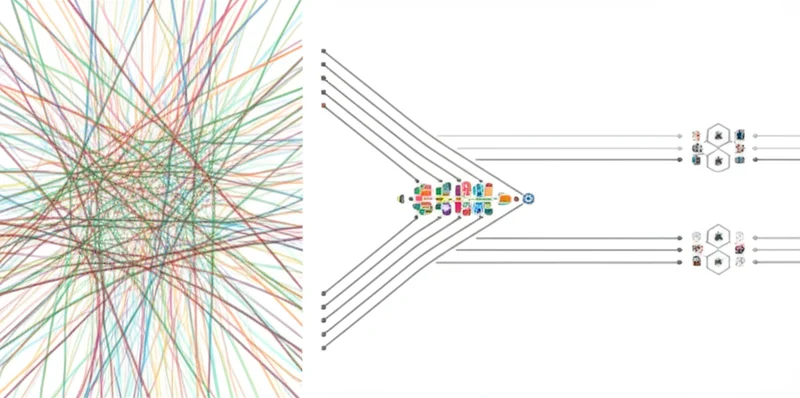
The Nextdoor app redesign latest introduces a suite of features engineered to address these challenges directly. The most significant architectural change is the replacement of the reverse-chronological feed with an algorithmic “For You” feed. This system personalizes content based on user interests and interactions, aiming to surface relevant posts over the “loudest voices” that often dominate chronological timelines.
This algorithmic curation is paired with a major content injection. The Nextdoor local news partnership, facilitated by the Associated Press, integrates professionally generated articles from over 3, 500 newsrooms, including major players like Axios and McClatchy. This provides a stream of credible information intended to balance user-generated posts. Complementing this is a new “Alerts” map, a feature that displays real-time, user-submitted safety reports. This is a direct competitive response to platforms like Citizen, with Nextdoor banking on its verified identity policy to foster more credible reporting.
When Algorithms Meet Anxious Neighbors
The central question facing this Nextdoor update to fix toxicity is whether an algorithm can solve a fundamentally human community problem. Media analysts, including Sarah Scire at Nieman Lab, note that layering reliable news on top of the platform doesn’t eliminate the underlying issues within user-generated content. The “Alerts” map, in particular, presents a new surface for the same fear-mongering and profiling if not rigorously governed.
Furthermore, the shift to a “For You” feed carries well-documented risks. Social media algorithms are typically optimized for engagement, a metric that often correlates with emotionally charged and controversial content. Research from institutions like Brookings has demonstrated how these attention-economy models can distort public discourse by prioritizing outrage. Applying this to a hyperlocal context is a significant gamble. An algorithm tuned for “community value” is a far more complex engineering challenge than one tuned for clicks and comments. The risk is that the algorithm could amplify a single, unverified “suspicious activity” post, making a neighborhood feel more contentious and dangerous than it actually is, thereby worsening the platform’s core problem.

The news partnership also exists within a challenging ecosystem. With only 15% of U. S.adults paying for local news, according to Pew Research, publishers are desperate for distribution. This desperation is fueled by an industry crisis where, according to Northwestern’s Medill School of Journalism, the U. S.is losing newspapers at a rate of more than two per week. Yet, past platform-publisher initiatives have often ended with platforms deprioritizing news, leaving publishers stranded. The success of this symbiotic relationship depends on Nextdoor’s ability to create a sustainable model that values journalistic contribution beyond its utility as an engagement driver, especially since about half of U. S.adults now get news from social media, making such platforms critical, if flawed, partners.
Balancing Bytes and Belonging
Nextdoor’s strategic overhaul is a direct and data-driven response to its declining user engagement and persistent brand challenges. The integration of professional news and the introduction of an algorithmic feed are logical moves based on the prevailing playbook of modern social media platforms. The company is betting that a more curated, information-rich experience will prove more valuable and less toxic for users.
Ultimately, the success of this pivot will not be determined by the elegance of the algorithm but by the nuance of its tuning and the strength of its governance. The platform’s future hinges on its ability to prove that its technology can foster genuine community connection rather than simply optimizing for attention. Can an algorithm be architected to value constructive dialogue over sensationalism, and what does that mean for the future of our digital neighborhoods?
Tags
Read More From AI Buzz

Vector DB Market Shifts: Qdrant, Chroma Challenge Milvus
The vector database market is splitting in two. On one side: enterprise-grade distributed systems built for billion-vector scale. On the other: developer-first tools designed so that spinning up semantic search is as easy as pip install. This month’s data makes clear which side developers are choosing — and the answer should concern anyone who bet […]

Anyscale Ray Adoption Trends Point to a New AI Standard
Ray just hit 49.1 million PyPI downloads in a single month — and it’s growing at 25.6% month-over-month. That’s not the headline. The headline is what that growth rate looks like next to the competition. According to data tracked on the AI-Buzz dashboard , Ray’s adoption velocity is more than double that of Weaviate (+11.4%) […]