
Notion AI Agents Revenue Surpasses $500M Amid Agent Launch

Notion has announced a significant evolution of its platform, launching customizable AI agents capable of executing complex, multi-step workflows while simultaneously revealing it has surpassed $500 million in annualized revenue. Unveiled at its “Make with Notion” conference, the dual announcement signals a strategic pivot from a collaborative documentation tool to an intelligent, automated work hub. This growth is directly fueled by accelerating enterprise adoption of its AI capabilities, positioning the company to challenge software giants with a fundamentally different, integrated approach to AI. The news of Notion’s $500 million revenue milestone underscores the market’s strong appetite for AI that is deeply embedded within core productivity systems.
Key Points
- Notion launched customizable AI agents designed to autonomously execute multi-step tasks across its platform.
- The company announced it has surpassed $500 million in annualized revenue, with growth accelerating after AI feature releases, according to CNBC.
- These new agents can draw context from a user’s entire workspace and connected apps like Slack and Google Drive, as reported by The Outpost.
- Enterprise demand is a key driver, with the percentage of customers paying for AI features surging from 10-20% to over 50%.
Digital Workers in Silicon
The newly launched Notion customizable AI agents represent a technical leap from passive assistants to active, autonomous “teammates.” Unlike tools that merely summarize or suggest, these agents are designed to execute complete, end-to-end workflows. They function as what Notion describes as “a teammate and Notion super user that can do everything a human can do in Notion,” according to a report from theoutpost.ai.
At their core, the agents can develop and carry out multi-step execution plans. For example, a user can assign the goal of creating a competitor analysis, and the agent will independently search the web, pull internal data, synthesize the information, and generate a structured document. These tasks can run for up to 20 minutes and interact with hundreds of pages. This capability is powered by models from providers like OpenAI and Anthropic, as noted by Jordan Novet for CNBC .
The power of these customizable AI agents is enhanced through dedicated “profile pages” that dictate behavior and a “memory” function that learns from interactions, as detailed by Trending Topics .
Canvas vs. Islands: The Integration Edge
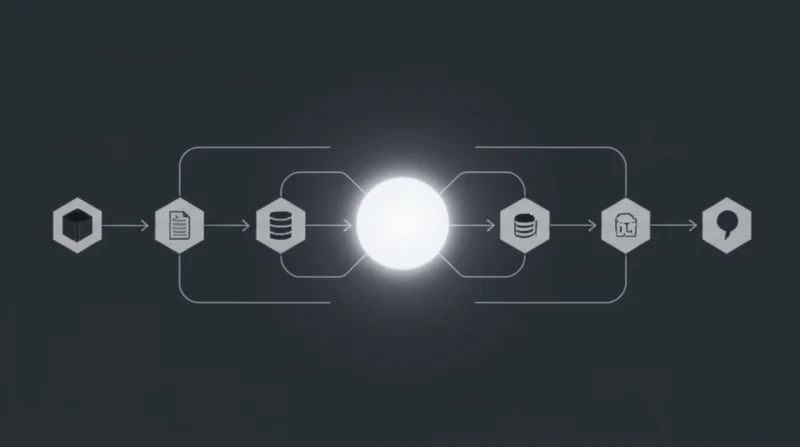
Notion’s strategy leverages a key structural difference against its competitors. While giants like Microsoft and Google are embedding AI into siloed applications like Word or Sheets, Notion’s agents operate within a single, interconnected environment. This Notion unified platform AI advantage allows for more complex and context-aware automations that span documents, databases, and projects seamlessly. The debate of Notion AI agent vs Microsoft Copilot often centers on this distinction: one operates across a unified canvas, while the other navigates a suite of separate apps.
This approach is gaining significant traction in the enterprise, where 90% of Notion’s business originates from team usage. The case of business credit card startup Ramp provides a powerful validation. Despite paying for Google’s Gemini AI, Ramp actively encouraged employees to migrate work to Notion. Now, with nine out of ten employees using Notion’s AI features monthly, the company is testing custom agents to connect sales feedback with product development—a sophisticated workflow that showcases the platform’s integrated power, as reported by CNBC.
AI Ignites Half-Billion Revenue Engine
The financial milestone of $500 million in annualized revenue is directly linked to the success of Notion’s AI strategy. Speaking with CNBC, co-founder Akshay Kothari stated that annual revenue growth has accelerated every month since the May introduction of its initial AI summarization tools. The company saw the percentage of customers paying for AI add-ons surge from a 10-20% range to over 50% recently. This strong market signal prompted Notion to bundle AI features into its core business and enterprise plans, cementing AI as a central revenue driver, not an optional extra.
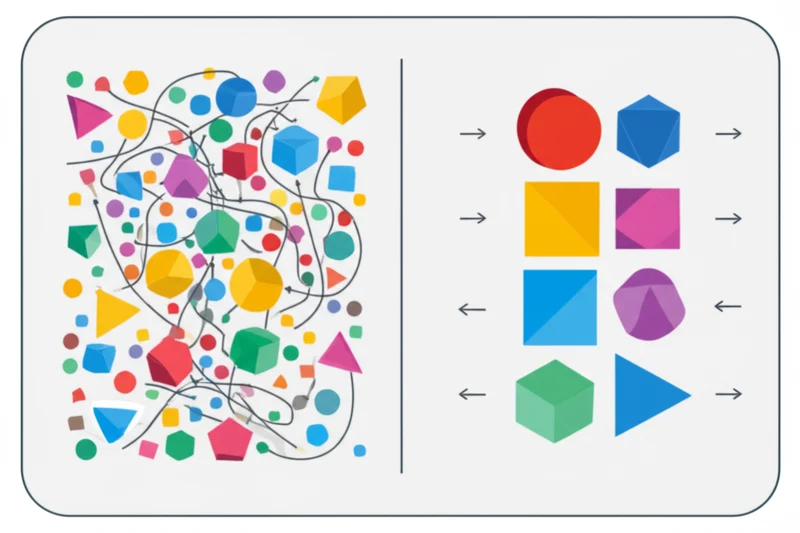
This demonstrates a successful transition from selling an AI feature to positioning the entire product as an AI-native platform. By embedding agents directly into the workspace, Notion addresses a common failure point for AI projects: poor integration. The focus is on providing AI that “actually completes tasks,” as highlighted by Trending Topics. This monetization of deeply integrated AI is proving to be a powerful engine for the growth of Notion AI agents revenue and its overall market position.
From Triggers to Autonomous Workflows
Notion’s introduction of agentic AI into its core platform is a notable development in the future of knowledge work. It signals a shift from users manually completing tasks to supervising autonomous agents that execute goals. While the initial launch requires manual triggers, Notion has confirmed that the ability to create agents that operate on a schedule or are activated by specific events is “coming soon,” a roadmap detail noted by The Outpost . This evolution from on-demand execution to proactive, background automation is a critical step.
By grounding its ambitious vision in a unified platform and a proven business model, Notion is setting a new standard for what businesses will expect from their software. How will competitors with siloed product suites adapt to this integrated automation challenge?
Read More From AI Buzz

Vector DB Market Shifts: Qdrant, Chroma Challenge Milvus
The vector database market is splitting in two. On one side: enterprise-grade distributed systems built for billion-vector scale. On the other: developer-first tools designed so that spinning up semantic search is as easy as pip install. This month’s data makes clear which side developers are choosing — and the answer should concern anyone who bet […]

Anyscale Ray Adoption Trends Point to a New AI Standard
Ray just hit 49.1 million PyPI downloads in a single month — and it’s growing at 25.6% month-over-month. That’s not the headline. The headline is what that growth rate looks like next to the competition. According to data tracked on the AI-Buzz dashboard , Ray’s adoption velocity is more than double that of Weaviate (+11.4%) […]