Nvidia Buys Run:ai for $700M, Plans Open Source
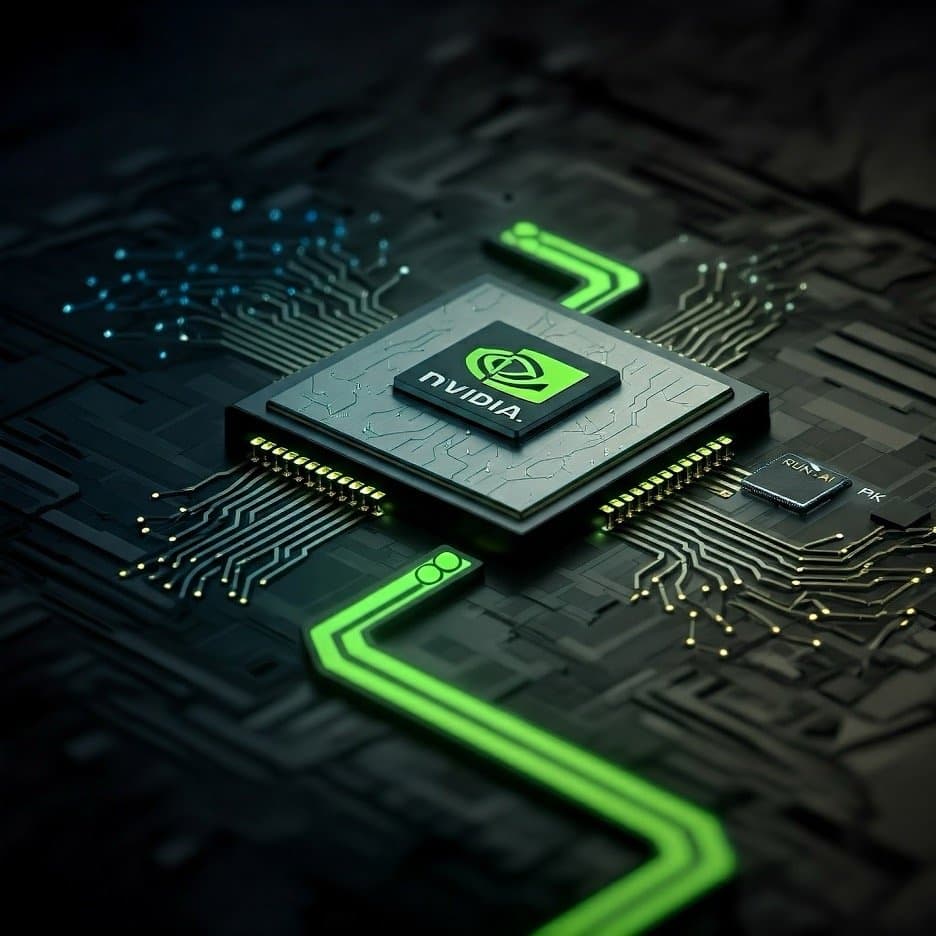
Tech giant Nvidia has completed its acquisition of Run:ai, an Israeli software company specializing in optimizing AI workloads in the cloud. Nvidia plans to open-source Run:ai’s software, a move that could have significant implications for the future of AI development and cloud computing.
Nvidia, a leading manufacturer of graphics processing units (GPUs) that power many AI applications, finalized the deal after initially announcing its intent to acquire Run:ai in April. While the official purchase price wasn’t disclosed by either company, reports have pegged it at approximately $700 million. This follows a report from Ctech, stating that the deal was finalized for $800 million, and that to retain Run:ai’s team, Nvidia has allocated $200 million in Nvidia shares.
Run:ai’s Technology: Making AI Infrastructure More Efficient
Founded in 2018, Run:ai aimed to simplify and optimize the complex world of AI infrastructure. The company’s core technology, built on the popular Kubernetes platform, allows organizations to manage and allocate their precious GPU resources more effectively. This is crucial because training and running AI models, particularly in the realm of deep learning, demands a massive amount of computational power.
Run:ai’s platform offers several key features designed to streamline AI workloads:
- Dynamic Resource Allocation: The software dynamically allocates GPU resources based on the specific needs of each AI workload, ensuring that resources are used efficiently and that no GPU sits idle. You can learn more about this feature on Nvidia’s Developer Page.
- GPU Virtualization: Run:ai allows for the creation of “fractional GPUs,” enabling multiple users to share a single GPU. This dramatically increases the utilization of expensive GPU resources, especially in environments like notebook farms and inference settings.
- Workload Prioritization: Administrators can prioritize different AI workloads according to their importance or urgency, ensuring that critical tasks receive the necessary resources. Oracle highlights the cloud-native approach of this feature.
- Preventing Bottlenecks and Optimizing Billing: Run:ai allows administrators to set guaranteed quotas of GPU resources for different teams and projects, helping prevent bottlenecks and optimizing billing. Run:ai provides further insight into this on their website.
- Improved Visibility and Control: The platform provides detailed insights into resource utilization and workload performance, giving administrators greater control over their AI infrastructure.
Run:ai further structures resource allocation using a three-tiered approach, involving departments, projects, and jobs, allowing for granular control over resource assignment, as explained in this Exxact Blog post.
Why Open Source? A Strategic Move by Nvidia
Nvidia’s decision to open-source Run:ai’s software is a significant development. While neither company has explicitly stated the reasons behind this move, it’s likely related to Nvidia’s growing dominance in the AI chip market. As Nvidia’s stock price has soared – making it one of the world’s most valuable companies – it faces increased antitrust scrutiny when making acquisitions.
Similar to how Microsoft licensed Activision’s “Call of Duty” to other platforms to appease regulators during its acquisition of Activision Blizzard, Nvidia’s open-sourcing of Run:ai’s platform could be seen as a way to demonstrate its commitment to a fair and open AI ecosystem. It will also foster innovation in the AI infrastructure management space, as highlighted by ITPro.
Run:ai’s founders, Omri Geller and Ronen Dar, expressed their enthusiasm for the open-source move in a joint statement, noting that it will empower the community to build better AI, faster. “While Run:ai currently supports only Nvidia GPUs, open-sourcing the software will enable it to extend its availability to the entire AI ecosystem,” they stated.
Rona Segev, managing director of TLV Partners, which led Run:ai’s seed round in 2018, shared her perspective on the founders’ early vision in a statement: “We met Omri and Ronen who painted a picture for us of what the future of AI would look like. In their vision of the future, AI was ubiquitous.” She further explained that Run:ai’s founders identified the lack of efficiency and high costs associated with training and running AI models on multiple GPU clusters as the main obstacles to realizing this vision. Their solution was to create an orchestration layer that would optimize the use of compute resources, leading to faster training times and reduced costs.
Implications for the AI Landscape
Nvidia’s acquisition of Run:ai has several key implications for the AI industry:
Enhanced AI Infrastructure
By integrating Run:ai’s technology, Nvidia can offer a more complete and optimized AI infrastructure solution, encompassing both hardware and software. This will likely lead to improved efficiency, scalability, and cost-effectiveness for organizations running AI workloads, according to Quantilus.
Broader Accessibility
The open-source nature of the platform means that developers and organizations of all sizes will have access to Run:ai’s powerful optimization tools. This could democratize access to advanced AI infrastructure management, fostering greater innovation. AutoGPT provides further analysis on the wider accessibility aspect of this acquisition.
Benefits to Various Sectors
Open-sourcing could particularly benefit sectors like fintech, improving fraud detection, personalization, and automation, as noted by OneSafe.
Increased Competition and Innovation
While Nvidia is a dominant force in the AI hardware market, competitors like AMD, Intel, Micron Technology, Graphcore, and Cerebras Systems are also vying for a share of the pie. The open-sourcing of Run:ai’s software will likely spur further innovation in AI workload management, potentially leveling the playing field and driving down costs. In the AI software space, companies like Domino Data Lab, Weights & Biases, and ClearML offer competing solutions, further contributing to a dynamic and evolving market.
Nvidia’s Growing Presence in Israel
This acquisition further solidifies Nvidia’s presence in Israel, a major hub for AI innovation, following its previous acquisition of Mellanox Technologies, as reported by Azat.tv.
The Future of AI and Cloud Computing
The acquisition of Run:ai comes at a pivotal time for both AI and cloud computing. The increasing adoption of AI across various industries, the continued growth of cloud computing, the rise of edge computing, and the emergence of generative AI are all shaping the future of these technologies. According to sources like Simplilearn, Jessup University, 31West, and Nvidia, these trends are expected to continue, and Run:ai’s technology is well-positioned to play a significant role in this evolution. Moreover, as noted by Purdue Global, the demand for cloud professionals is expected to rise, driven in part by the increasing adoption of cloud-based AI solutions, a trend that Run:ai’s technology will likely contribute to.
Ultimately, Nvidia’s acquisition of Run:ai represents a significant step forward in the evolution of AI infrastructure. By open-sourcing Run:ai’s powerful optimization software, Nvidia is not only strengthening its own position in the market but also contributing to a more open, efficient, and accessible AI ecosystem. This move could accelerate the development and deployment of AI applications across various industries, driving innovation and potentially transforming the way we live and work.
Read More From AI Buzz

Vector DB Market Shifts: Qdrant, Chroma Challenge Milvus
The vector database market is splitting in two. On one side: enterprise-grade distributed systems built for billion-vector scale. On the other: developer-first tools designed so that spinning up semantic search is as easy as pip install. This month’s data makes clear which side developers are choosing — and the answer should concern anyone who bet […]

Anyscale Ray Adoption Trends Point to a New AI Standard
Ray just hit 49.1 million PyPI downloads in a single month — and it’s growing at 25.6% month-over-month. That’s not the headline. The headline is what that growth rate looks like next to the competition. According to data tracked on the AI-Buzz dashboard , Ray’s adoption velocity is more than double that of Weaviate (+11.4%) […]