
OpenAI AgentKit: The End-to-End Agent Workflow Platform

At its annual DevDay 2025 conference, OpenAI announced AgentKit, a comprehensive toolkit designed to streamline how developers build, test, and deploy production-grade AI agents. The announcement signals a significant strategic pivot for the company, moving beyond foundational models to provide the essential infrastructure for the entire agent development lifecycle. This is more than just a new tool; it’s a calculated move to own the complete AI agent workflow, from initial concept to enterprise-scale deployment. By integrating a visual builder, embeddable UI components, a robust evaluation framework, and secure data connectors, the latest OpenAI Dev Day announcements position the company to become the central platform for its 4 million developers, fundamentally shaping the next wave of autonomous AI systems.
Key Points
- OpenAI’s AgentKit introduces a visual Agent Builder for workflow design and ChatKit for embedding custom UI components.
- The toolkit includes a model-agnostic evaluation framework and a Connector Registry for secure enterprise data integration.
- AgentKit serves OpenAI’s 4 million developers, powering applications for ChatGPT’s documented 800 million weekly users.
- The platform addresses the documented industry challenge of transitioning AI agents from experimental prototypes to reliable production systems.
The Canva of AI Agent Architecture
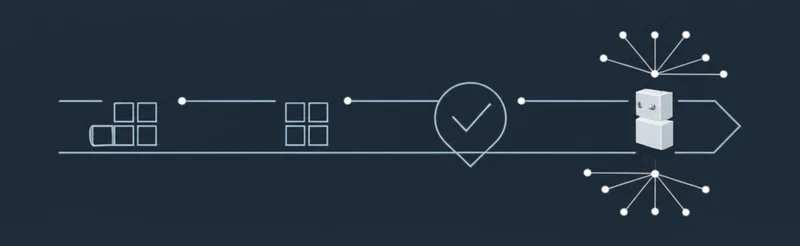
AgentKit is an integrated suite of four core components designed to replace fragmented, ad-hoc development processes. At its heart is the Agent Builder, a visual, drag-and-drop interface Sam Altman described as being “like Canva for building agents.” This tool allows developers to map out complex logic and multi-step workflows, a process demonstrated live on stage where an engineer built a workflow and two agents in under eight minutes.
While the builder handles backend logic, ChatKit provides the frontend user experience with ready-to-use blocks for embedding a customizable chat interface into apps and websites. Initial reports from early adopters like Ramp and LY Corporation indicate that AgentKit reduced project times from months to hours, and Canva successfully integrated a support agent in less than an hour. The suite is rounded out by Evals for Agents, a system for performance measurement, and the Connector Registry, which manages secure data access to services like Google Drive and Microsoft Teams.
Chess Moves on the AI Platform Board
The launch of AgentKit represents a strategic maneuver to solidify OpenAI’s position as the dominant force in the AI developer ecosystem. By lowering the barrier to entry for complex agent development, the OpenAI AgentKit strategy aims to expand its user base beyond core AI engineers to product teams and business analysts across its 4 million developers. This initiative directly supports the new “Apps in ChatGPT” feature, creating a powerful flywheel. AgentKit provides the tools for developers to build sophisticated automated processes, which can then be surfaced as apps to ChatGPT’s 800 million weekly active users.
More powerful apps attract more users, and a larger user base incentivizes more developers to build on the platform. The strategic importance of creating a reliable OpenAI agent workflow platform is underscored by the company’s recent $1.1 billion acquisition of product-testing startup Statsig, whose technology underpins the new evaluation framework. This acquisition demonstrates that robust testing is a core pillar of the strategy, not an afterthought.
Crossing the Production Chasm
AgentKit directly addresses a critical bottleneck in the industry: the difficult transition from a promising agent prototype to a reliable, production-ready system. The toolkit’s design reflects a deep understanding of how AgentKit changes AI development by focusing on both speed and safety. The Agent Builder accelerates iteration, while the Evals for Agents framework enables the necessary rigor for deployment. This component provides tools for step-by-step trace grading and automated prompt optimization, ensuring agents perform as expected.
A notable feature is the ability to run evaluations on external, third-party models directly from the OpenAI platform, giving developers flexibility and a comprehensive testing environment . For enterprise adoption, the Connector Registry provides essential governance through standardized Modular Connector Protocols (MCPs). This technical approach reportedly mirrors the protocol used to power “Apps in ChatGPT,” indicating a unified integration strategy across the ecosystem. This allows organizations to manage data flow and maintain security compliance, a non-negotiable requirement for integrating agents with sensitive corporate systems.
This focus on the full lifecycle is central to the OpenAI developer ecosystem news.
Architecting Tomorrow’s Agent Standards
OpenAI’s launch of AgentKit is more than a product release; it’s an assertive effort to define the standard for how the next generation of AI applications are built. By providing an integrated, end-to-end workflow solution, OpenAI is establishing itself as the authority on agent development best practices. This standardization benefits the ecosystem by creating consistency and reliability, while simultaneously cementing OpenAI’s central position in the developer workflow.
The technical architecture of AgentKit demonstrates OpenAI’s understanding of enterprise requirements. The Connector Registry’s implementation of Modular Connector Protocols creates a secure framework for data access that addresses the governance concerns that have previously limited agent adoption in regulated industries. By solving these technical challenges, OpenAI removes significant barriers to widespread agent deployment.
For developers, AgentKit represents a substantial productivity enhancement. The visual builder transforms complex coding tasks into intuitive workflow design, while the evaluation framework automates quality assurance processes that previously required manual testing. This acceleration in development cycles enables faster iteration and more sophisticated agent capabilities, potentially expanding the practical applications of AI in business contexts.
Beyond Tools: The Platform Play Unfolds
The introduction of AgentKit reveals OpenAI’s broader platform strategy. By offering tools that span the entire agent development lifecycle, the company is creating an ecosystem where developers become increasingly dependent on OpenAI’s infrastructure. This represents a significant evolution from OpenAI’s initial positioning as a model provider to becoming an end-to-end platform for AI application development.
The integration between AgentKit and the Apps in ChatGPT feature creates a distribution channel that rivals traditional app stores. Developers who build with AgentKit gain access to ChatGPT’s massive user base, while OpenAI benefits from the expanded capabilities these developers bring to the platform. This mutually reinforcing ecosystem establishes network effects that strengthen OpenAI’s market position.
As the agent development landscape matures, OpenAI’s comprehensive approach positions it to capture significant market share. By addressing both technical and organizational challenges in agent development, AgentKit demonstrates OpenAI’s understanding of enterprise needs beyond pure model capabilities. This holistic perspective on the AI development process suggests that OpenAI is evolving into a full-stack AI platform company rather than remaining solely a foundation model provider.
The New Rules of Agent Engineering
AgentKit establishes a framework that fundamentally changes how AI agents are conceived, built, and deployed. By providing standardized components and workflows, OpenAI is defining the architectural patterns that will likely become industry standards. This standardization benefits developers through reduced complexity but also creates potential lock-in effects that benefit OpenAI strategically.
The evaluation framework introduces rigorous testing methodologies that raise the bar for agent quality. This emphasis on reliability addresses a critical concern for enterprise adoption, where consistency and predictability are essential requirements. By making these tools accessible to developers, OpenAI is elevating the overall quality of agent implementations across the industry.
What questions remain about this strategic move? Will AgentKit’s standardized approach limit innovation in agent design patterns? How will competing platforms respond to OpenAI’s comprehensive toolkit? And perhaps most importantly, how will this shift from model provider to platform company affect OpenAI’s relationship with its developer community?
The answers will unfold as AgentKit adoption spreads throughout the AI ecosystem.
Read More From AI Buzz

Vector DB Market Shifts: Qdrant, Chroma Challenge Milvus
The vector database market is splitting in two. On one side: enterprise-grade distributed systems built for billion-vector scale. On the other: developer-first tools designed so that spinning up semantic search is as easy as pip install. This month’s data makes clear which side developers are choosing — and the answer should concern anyone who bet […]

Anyscale Ray Adoption Trends Point to a New AI Standard
Ray just hit 49.1 million PyPI downloads in a single month — and it’s growing at 25.6% month-over-month. That’s not the headline. The headline is what that growth rate looks like next to the competition. According to data tracked on the AI-Buzz dashboard , Ray’s adoption velocity is more than double that of Weaviate (+11.4%) […]