
OpenAI's 'Operator' AI: Your Tasks, Done 40% Faster
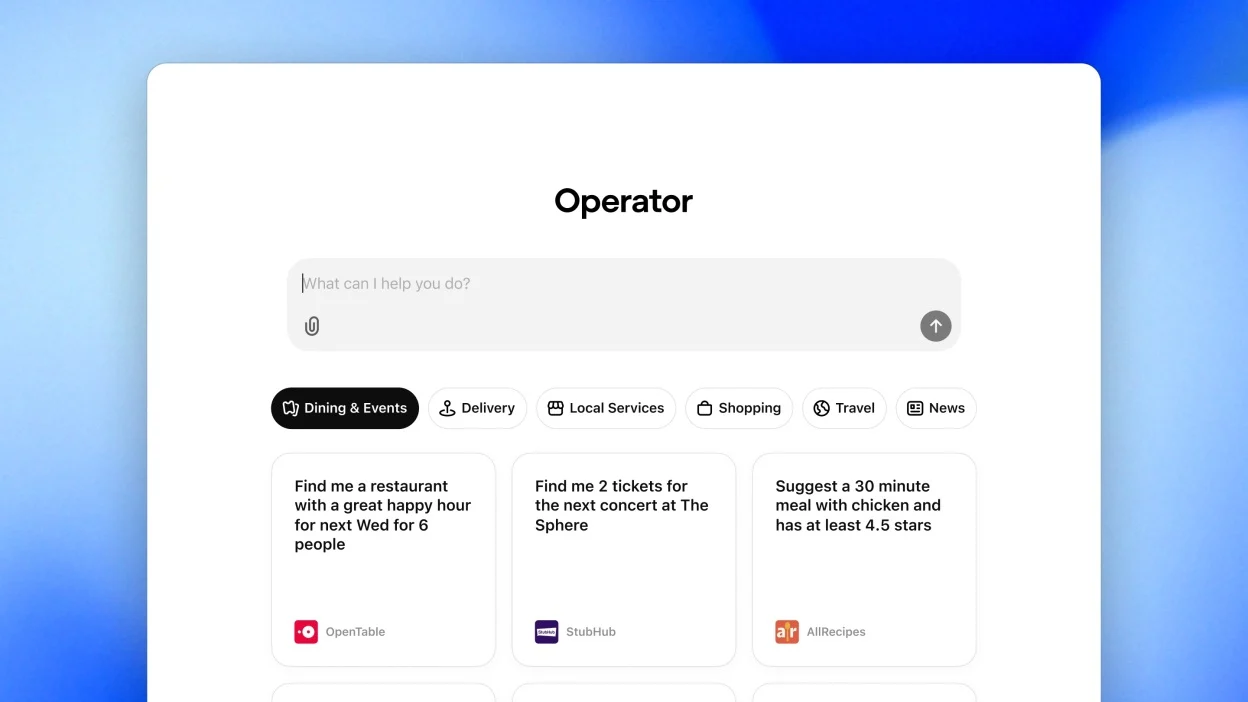
OpenAI’s Operator: A New Era of Autonomous Task Completion
Introducing Operator: Your AI Taskmaster
OpenAI’s Operator represents a significant advancement in AI technology, moving beyond the capabilities of previous AI models. This innovative system is designed to be an “AI Taskmaster,” capable of independently executing a variety of online tasks with minimal human input. The core of Operator’s functionality lies in its ability to interact with web browsers, enabling it to navigate websites, input data, and complete actions much like a human user would.
This development aligns with predictions from industry leaders. “2025 will be the year when agentic systems finally hit the mainstream,” says Kevin Weil, OpenAI’s chief product officer. This statement underscores the growing anticipation surrounding the widespread adoption of AI agents like Operator. The potential impact of such technology is vast, promising to streamline workflows and automate routine tasks across various sectors.
The introduction of Operator is a testament to the rapid progress in artificial intelligence and machine learning. “Every business will leverage AI agents, much like they use email or social media today,” says Jensen Huang, Nvidia CEO. This vision highlights the transformative potential of AI agents in reshaping business operations and daily life. As AI development continues to accelerate, driven by advancements in neural networks and other technologies, we can expect even more sophisticated AI agents to emerge in the near future.

What Can Operator Do?
Operator’s capabilities extend to a wide range of online activities, positioning it as a versatile tool for both individuals and businesses. The agent can perform tasks such as booking appointments, ordering groceries, and filling out complex forms, all through interactions with web browsers. This functionality has the potential to significantly reduce the time and effort required for these common online tasks.
The ability of Operator to understand and respond to natural language instructions further enhances its usability. This is made possible by advancements in natural language processing, a key area of AI development. Users can simply tell Operator what they want to achieve, and the agent will take the necessary steps to complete the task.
Looking ahead, the capabilities of AI agents like Operator are expected to expand rapidly. As AI technology continues to evolve, these agents will likely be able to handle increasingly complex and nuanced tasks, further integrating themselves into our digital lives. The potential for increased efficiency and productivity is immense, paving the way for a future where AI agents play a central role in managing our daily activities.
From Rule-Based Systems to Intelligent Agents: The Evolution of AI Task Automation
Early AI and the Rise of Machine Learning
The journey towards AI agents like Operator has been marked by significant shifts in artificial intelligence research. Initially, AI systems were predominantly rule-based, relying on pre-programmed instructions to execute tasks. However, the introduction of machine learning in the 1980s and 1990s revolutionized the field, enabling AI to learn from data and improve performance over time.
This era saw the rise of technologies like neural networks and decision trees, which allowed AI agents to tackle more complex problems. These advancements were crucial, as they enabled AI to adapt and make more informed decisions based on experience. This shift towards data-driven approaches laid the groundwork for the sophisticated AI systems we see today.
The development of these foundational AI technologies paved the way for more advanced applications. This period also marked the beginning of the global generative AI in automation market, which was valued at USD 7.07 billion in 2023. The market is now predicted to surpass USD 124.22 billion by the end of 2032, highlighting the rapid growth and increasing importance of AI in automation.
Deep Learning and the Emergence of Intelligent Automation
Deep learning, a subset of machine learning, further accelerated progress in AI development. These models, characterized by their multiple layers of neural networks, have driven breakthroughs in areas like image recognition and natural language processing. These advancements are crucial for AI agents to understand and interact with the world more effectively.
Concurrently, the evolution of Robotic Process Automation (RPA) played a significant role in automating business processes. RPA traditionally focused on automating repetitive, rule-based tasks. However, the integration of AI with RPA has led to the development of intelligent automation, where AI adds cognitive capabilities, enabling the handling of more complex and variable tasks.
These advancements are leading to a new generation of AI agents capable of performing tasks autonomously. This shift represents a significant leap in AI technology. As deep learning continues to evolve, we can anticipate even more sophisticated AI agents that can handle increasingly complex tasks, further transforming industries and daily life.
The Five Levels of AI Agent Development
The evolution of AI agents can be viewed through the lens of increasing autonomy, categorized into five distinct levels. These levels range from foundational models like ChatGPT, which act as general-purpose tools, to AI-first organizations where AI is fully integrated into all aspects of operations. Operator represents the “Agents” level, where AI can perform tasks autonomously, marking a significant milestone in this progression.
This framework highlights the increasing sophistication of AI technology. Each level represents a step towards greater autonomy and integration of AI into various domains. The progression through these levels indicates a trend towards more complex problem-solving and decision-making capabilities in AI agents.
As we move towards higher levels of AI agent development, the potential for innovation and transformation grows exponentially. This trajectory suggests a future where AI is not just a tool but a key partner in various aspects of business and daily life, driving efficiency and enabling new possibilities. The continued evolution of AI agents promises to further revolutionize industries and reshape our interaction with technology.
The AI Task Automation Landscape: Competition and Market Growth
Key Players in the AI Agent Market
OpenAI’s Operator is entering a dynamic and competitive market, with several key players also developing advanced AI agent technologies. Anthropic’s Claude and Google’s Gemini 2.0 are notable examples, each boasting unique capabilities in task automation and intelligent assistance. This competition is driving innovation, pushing the boundaries of what AI can achieve in real-world applications. The race to develop more sophisticated AI agents is expected to intensify, with each company striving to offer the most efficient and versatile solutions.
The presence of multiple strong contenders in the AI agent market highlights the growing importance of this technology. Companies like Anthropic and Google are investing heavily in research and development, aiming to capture a significant share of the rapidly expanding market. This competitive environment is beneficial for end-users, as it leads to faster advancements and a wider range of choices. As these AI agents continue to evolve, they are likely to become increasingly integrated into various industries, transforming workflows and enhancing productivity.
Market Size and Growth Projections
The overall AI market size is projected to reach USD 3,680.47 billion by 2034, reflecting the significant growth potential of AI technologies across various sectors. This expansion is driven by increasing adoption of AI solutions in industries ranging from healthcare to finance. The rapid growth underscores the transformative impact that AI is expected to have on the global economy. These figures indicate a strong positive outlook for the AI industry, with continuous advancements expected in the coming years.
This trend of rapid adoption is further emphasized by predictions regarding agentic AI. By 2027, at least half of companies are predicted to have launched some form of agentic AI, indicating a widespread integration of AI agents into business operations. This rapid uptake suggests that businesses are recognizing the value of AI in enhancing efficiency and streamlining processes. As more companies embrace agentic AI, we can expect to see a significant shift in how businesses operate, with AI playing a central role in various functions.
Factors Driving and Hindering Market Growth
Several factors are contributing to the rapid growth of the AI task automation market. These include the increasing need for automation, rising labor costs, and continuous advancements in AI and machine learning technologies. Businesses are seeking ways to enhance efficiency and reduce operational costs, making AI-driven automation an attractive solution. The convergence of these factors is creating a favorable environment for the expansion of the AI market.
However, challenges such as the lack of a skilled workforce and concerns about data privacy could hinder market growth. Addressing these challenges through education, training, and responsible AI development will be crucial for realizing the full potential of AI task automation. Overcoming these obstacles is essential to ensure that the benefits of AI are accessible to all and that the technology is deployed ethically and responsibly. As the market continues to mature, we can expect to see increased efforts to mitigate these challenges, paving the way for sustained growth and innovation in the AI sector.
AI’s Impact on Productivity, Efficiency, and the Workforce
Quantifying the Benefits of AI Task Automation
The integration of AI technology into various industries has demonstrated significant improvements in productivity and efficiency. Notably, AI has been shown to improve employee productivity by up to 40%. This boost in productivity is a testament to the power of artificial intelligence and machine learning in streamlining operations. As businesses increasingly adopt AI solutions, these gains are expected to become even more pronounced, driving further advancements across sectors.
Specific examples highlight the tangible benefits of AI in task automation. For instance, programmers using AI were able to code 126% more projects per week. This remarkable increase in output underscores the potential of AI to enhance performance in specialized fields. Moreover, in IT, 73% of leaders believe automation saves about 50% of time. This substantial time savings allows professionals to focus on more strategic initiatives, further amplifying the impact of AI development on overall efficiency.
AI and the Future of Work: Augmentation vs. Replacement
The increasing prevalence of AI in the workplace has sparked a critical debate about its impact on the future of work. While some express concerns about AI replacing human jobs, many experts argue that AI is more likely to augment human capabilities rather than replace them entirely. The key lies in understanding how AI can automate specific tasks, freeing up human workers to focus on more complex and creative endeavors. This augmentation approach can lead to enhanced job satisfaction and innovation.
The distinction between job automation and job augmentation is crucial for navigating the evolving landscape of work. By leveraging AI to handle routine tasks, companies can empower their employees to engage in higher-value activities that require uniquely human skills like critical thinking and emotional intelligence. This collaborative model, where humans and AI work in tandem, is likely to define the future of many industries. As AI technology, including neural networks, continues to advance, the potential for synergistic human-AI partnerships will only grow.
The Need for Workforce Adaptation
As AI becomes more integrated into the workplace, workforce adaptation becomes increasingly critical. To ensure a smooth transition, investments in education and training programs are essential. These initiatives will equip workers with the skills needed to collaborate effectively with AI systems. By proactively addressing the changing demands of the labor market, businesses and individuals can harness the full potential of AI while mitigating potential risks.
The future of work will likely involve continuous learning and adaptation. As AI technology evolves, so too must the skills of the workforce. Emphasizing lifelong learning and providing opportunities for upskilling and reskilling will be crucial for ensuring that workers remain relevant and adaptable in an AI-driven economy. This proactive approach to workforce development will be key to fostering a future where humans and AI can thrive together, driving innovation and creating new opportunities.
Navigating the Future: Regulatory Frameworks and Responsible AI Development
The Need for AI Governance
As AI technology becomes increasingly integrated into various aspects of society, the need for robust governance frameworks has become paramount. These frameworks are essential to ensure that artificial intelligence is developed and deployed responsibly, mitigating potential risks and maximizing benefits. Without proper oversight, the rapid advancement of AI, including complex neural networks, could lead to unintended consequences, exacerbating existing societal challenges.
Effective AI governance requires a multi-faceted approach, addressing issues such as data privacy, algorithmic bias, and the potential for job displacement. Establishing clear guidelines and standards is crucial for fostering trust in AI systems and ensuring their ethical use. This need for comprehensive regulation is underscored by the growing complexity of AI development and its potential impact on individuals and society as a whole.
Furthermore, international collaboration is vital in developing effective AI governance. As AI systems operate across borders, harmonizing regulations and standards globally is essential to prevent fragmentation and ensure consistency in the development of AI technology. Such collaborative efforts can pave the way for responsible AI innovation that benefits all members of society, addressing concerns related to machine learning and its application across various industries.
Key Regulatory Frameworks and Standards
Several key frameworks have emerged to address the challenges of AI governance, providing guidelines for responsible AI development and deployment. The NIST AI Risk Management Framework (AI RMF), the EU AI Act, and the AI Bill of Rights are notable examples. These frameworks emphasize the importance of incorporating trustworthiness considerations into the design, development, use, and evaluation of AI systems. By adhering to these guidelines, organizations can proactively manage AI risks and build trust with users.
These regulatory frameworks address a range of critical issues, including data privacy, bias mitigation, and transparency in AI decision-making. For instance, the NIST AI RMF provides a comprehensive approach to managing risks associated with artificial intelligence, including machine learning, throughout the AI lifecycle. These efforts are crucial in ensuring that AI development aligns with ethical principles and societal values, paving the way for more responsible AI innovation.
Ensuring Ethical and Equitable AI Deployment
Responsible AI development goes beyond technical considerations, encompassing broader ethical and societal implications. Ensuring that AI systems are developed and deployed in a manner that is fair, transparent, and accountable is crucial. This includes addressing potential biases in algorithms and data sets, as well as promoting inclusivity and diversity in the AI field itself.
Moreover, ongoing monitoring and evaluation of AI systems are essential to identify and mitigate any unintended consequences. Establishing mechanisms for accountability and redress is crucial in cases where AI systems may cause harm or perpetuate existing inequalities. By prioritizing ethical considerations throughout the AI lifecycle, we can harness the transformative potential of artificial intelligence while safeguarding against potential risks, ensuring that advancements in machine learning and neural networks benefit society as a whole.
Looking ahead, a proactive and adaptive approach to AI governance will be essential. As AI technology continues to evolve, regulatory frameworks must also adapt to address emerging challenges and opportunities. This ongoing commitment to responsible AI development will be crucial in shaping a future where AI serves as a force for good, driving innovation and improving the lives of people around the world.
Read More From AI Buzz

Vector DB Market Shifts: Qdrant, Chroma Challenge Milvus
The vector database market is splitting in two. On one side: enterprise-grade distributed systems built for billion-vector scale. On the other: developer-first tools designed so that spinning up semantic search is as easy as pip install. This month’s data makes clear which side developers are choosing — and the answer should concern anyone who bet […]

Anyscale Ray Adoption Trends Point to a New AI Standard
Ray just hit 49.1 million PyPI downloads in a single month — and it’s growing at 25.6% month-over-month. That’s not the headline. The headline is what that growth rate looks like next to the competition. According to data tracked on the AI-Buzz dashboard , Ray’s adoption velocity is more than double that of Weaviate (+11.4%) […]