OpenAI makes GPT-4o image generator free for all ChatGPT users
In a game-changing announcement, OpenAI has removed the paywall from its powerful GPT-4o image generator, making it freely available to all ChatGPT users. CEO Sam Altman shared the news on X (formerly Twitter), effectively democratizing access to what many consider the most advanced AI image creation technology available today. This strategic move puts professional-grade creative tools into millions of hands while raising important questions about the future of visual content creation, copyright, and potential misuse. But what does this mean for you, and how might it transform your creative workflow?
Power to the People
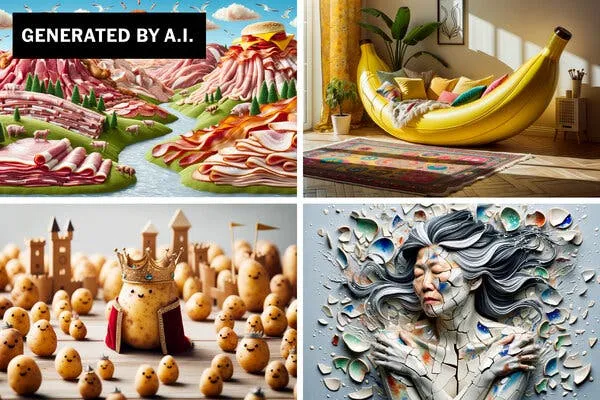
Until now, OpenAI’s cutting-edge multimodal model, GPT-4o, was exclusively available to paying ChatGPT subscribers. As announced by CEO Sam Altman, this free access represents a significant shift in AI accessibility. GPT-4o processes text, images, and audio simultaneously, with three standout capabilities that differentiate it from previous models:
- Seamless text integration within images
- Following complex, multi-turn visual prompts
- Generating photorealistic content across various styles
The model builds upon OpenAI’s previous image generation tools (DALL-E through DALL-E 3), as detailed in their official introduction and system card addendum. Early users report significant improvements in detail, consistency, and the ability to incorporate visual elements from uploaded reference images.
While OpenAI hasn’t officially confirmed the image generation limits for free users, Altman previously suggested a cap of three images per day – likely a necessary compromise to manage computational resources after the viral “Ghibli style” trend temporarily strained the company’s GPU infrastructure.
Ethical Implications
The widespread availability of such powerful image generation raises significant ethical questions. GPT-4o’s ability to create remarkably realistic images – including fake receipts and documents – introduces potential avenues for misuse.
OpenAI has implemented two primary safeguards:
- Embedding metadata in all generated images to indicate AI origin
- Active monitoring and removal of content violating usage guidelines
However, legal frameworks around AI-generated content remain largely underdeveloped. The recent viral trend of creating Studio Ghibli-style images highlighted copyright concerns that continue to challenge the industry. Key unresolved questions include:
- Who owns rights to AI-generated imagery?
- What constitutes fair use of copyrighted styles?
- How should bias in AI models be addressed?
These questions will shape how professionals can legitimately use these tools in commercial projects going forward.
Strategic Business Move
OpenAI’s decision to offer free GPT-4o access follows its recent $40 billion funding round led by SoftBank, valuing the company at $300 billion. This massive investment enables OpenAI to absorb the costs of free tier access while funding critical infrastructure projects like the Stargate Project with Oracle.
The strategy serves multiple business objectives:
- Market expansion beyond ChatGPT’s estimated 700 million monthly active users
- Data acquisition to improve future models through user interactions
- Positioning as the dominant player in generative AI ahead of competitors
- Creating an onramp for potential paid subscribers by showcasing premium features
Analysts project the AI image generation market to reach $1,880.3 million by 2033, highlighting the significant economic potential of this technology.
What This Means For You
For developers, designers, marketers, and content creators, the free availability of GPT-4o represents both opportunity and disruption:Opportunities:
- Rapid prototyping of visual concepts without specialized skills
- Generating custom illustrations for presentations and documentation
- Creating consistent visual assets across marketing campaigns
- Exploring creative directions with minimal resource investment
Challenges:
- Navigating uncertain copyright waters for commercial use
- Differentiating your work in a market flooded with AI-generated content
- Potential client expectations for faster, cheaper visual deliverables
- Ensuring ethical use within your organization
The technology’s impact on creative industries continues to evolve, as explored in articles examining the broader implications for professional creatives.
Looking Forward
OpenAI’s democratization of GPT-4o represents more than just a product release – it signals a fundamental shift in how visual content will be created in the years ahead. The most successful professionals will likely be those who leverage these AI tools as collaborators rather than replacements, focusing on the uniquely human elements of creativity that AI still struggles to replicate: conceptual thinking, emotional resonance, and cultural context.
As the technology evolves, ongoing dialogue between developers, artists, and policymakers – coupled with clear legal frameworks – will be essential to responsibly harness the transformative potential of AI-generated imagery. The question isn’t whether AI will transform visual creation, but how you’ll adapt your workflow to thrive in this new creative landscape.
Tags
Read More From AI Buzz
Vector DB Market Shifts: Qdrant, Chroma Challenge Milvus
The vector database market is splitting in two. On one side: enterprise-grade distributed systems built for billion-vector scale. On the other: developer-first tools designed so that spinning up semantic search is as easy as pip install. This month’s data makes clear which side developers are choosing — and the answer should concern anyone who bet […]

Anyscale Ray Adoption Trends Point to a New AI Standard
Ray just hit 49.1 million PyPI downloads in a single month — and it’s growing at 25.6% month-over-month. That’s not the headline. The headline is what that growth rate looks like next to the competition. According to data tracked on the AI-Buzz dashboard , Ray’s adoption velocity is more than double that of Weaviate (+11.4%) […]