
OpenAI Releases Agent Platform and SDK to Streamline Enterprise AI Development
OpenAI dramatically reshaped the enterprise AI landscape Tuesday with the release of its comprehensive agent-building platform – a powerful combination of a revamped Responses API, built-in tools, and an open-source Agents SDK. This release marks a significant strategic shift, as OpenAI moves beyond providing foundation models to offering a complete ecosystem for building and deploying AI agents in production environments.
This bold move positions OpenAI not just as a provider of powerful AI models, but as the central hub for enterprise AI agent development and deployment.
While the announcement competed for attention with Google’s impressive open-source Gemma 3 model and the emergence of Manus, a Chinese startup whose autonomous agent platform stunned industry observers, its significance shouldn’t be underestimated. OpenAI has consolidated what was previously a fragmented API ecosystem into a unified, production-ready framework.
For enterprise AI teams, the implications are profound: projects that previously required multiple frameworks, specialized vector databases, and complex orchestration logic can now be accomplished through a single, standardized platform. Perhaps most revealing is OpenAI’s implicit acknowledgment that solving enterprise AI agent reliability issues requires outside expertise.
This shift comes amid growing evidence that external developers are finding innovative solutions to agent reliability challenges – as the impressive Manus release demonstrated. By releasing the open-source Agents SDK, OpenAI is embracing the power of community-driven innovation.
This strategic concession represents a critical turning point: OpenAI recognizes that even with its vast resources, the path to truly reliable agents requires opening up to outside developers who can discover innovative solutions that OpenAI’s internal teams might miss. This collaborative approach is crucial for accelerating progress in AI agents and addressing the challenges hindering their widespread adoption.
A Unified Approach to Agent Development: Simplifying the Complex
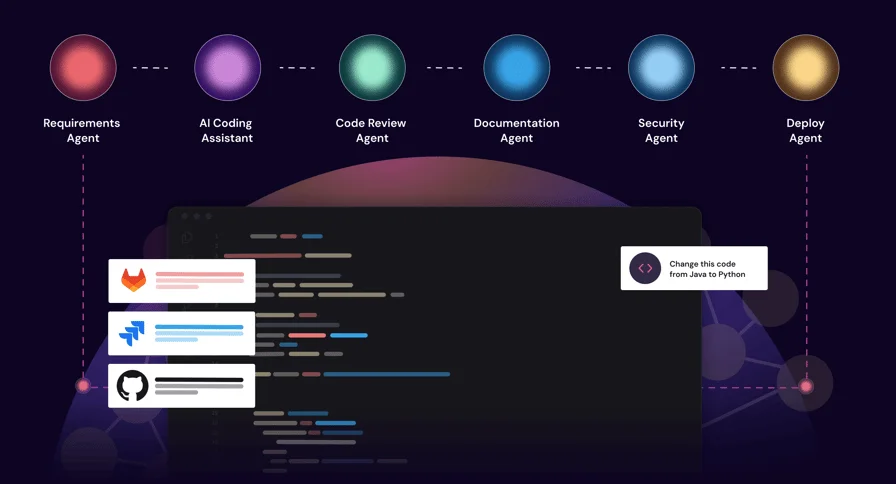
At its core, the announcement represents OpenAI’s comprehensive strategy to provide a complete, production-ready stack for building AI agents. The OpenAI Agents SDK release brings several key capabilities into a unified framework:
- The Responses API builds on the Chat Completions API with seamless tool integration and improved interface design for creating agents. It streamlines the process of incorporating tools and multiple model turns within a single API call, simplifying complex agent interactions.
- Built-in tools include web search, file search, and computer use (the technology behind OpenAI’s Operator feature). These tools empower agents to interact with the real world, access up-to-date information, and perform tasks within computer systems.
- An open-source Agents SDK for orchestrating single-agent and multi-agent workflows with handoffs. This SDK provides modular building blocks for constructing robust AI systems, including features like intelligent handoffs between specialized agents and configurable safety guardrails.
What makes this announcement truly transformative is how it addresses the fragmentation that has plagued enterprise AI development. Companies standardizing on OpenAI’s API format and open SDK will no longer need to cobble together different frameworks, manage complex prompt engineering, or struggle with unreliable agents.
“The word ‘reliable’ is so key,” Sam Witteveen, co-founder of Red Dragon, an independent developer of AI agents, said in a recent conversation on a video podcast deep dive on the release. “We’ve talked about it many times…most agents are just not reliable. And so OpenAI is looking at like, ‘Okay, how do we bring this sort of reliability in?'”
After the announcement, Jeff Weinstein, product lead at payments company Stripe, took to X to share that Stripe had already demonstrated the practical application of OpenAI’s new Agents SDK by releasing a toolkit that enables developers to integrate Stripe’s financial services into agentic workflows. This integration creates AI agents capable of automating payments to contractors, handling billing, and processing other transactions.
Strategic Implications for OpenAI and the Market: A Calculated Consolidation
This release reveals a significant shift in OpenAI’s strategy. Having established leadership with foundation models, the company is now consolidating its position in the agent ecosystem through several calculated moves:
1. Opening Up to External Innovation: Embracing the Power of the Community
OpenAI acknowledges that even its extensive resources aren’t enough to outpace community innovation. The launch of tools and an open-source SDK represents a major strategic concession.
The timing coincided with the emergence of Manus, which impressed the AI community with a highly capable autonomous agent platform – demonstrating that clever integration and prompt engineering could achieve reliability that even major AI labs were struggling with.
“Maybe even OpenAI are not the best at making Operator,” Witteveen noted, referring to the web-browsing tool that OpenAI shipped in late January, but which had bugs and was inferior to competitor Proxy. “Maybe the Chinese startup has some nice hacks in their prompt, or in whatever, that they’re able to use these sort of open-source tools.”
The lesson is clear: OpenAI needs the community’s innovation to improve reliability. No team, regardless of resources, can explore as many possibilities as the open-source community can.

2. Securing the Enterprise Market through API Standardization: Creating a Powerful Network Effect
OpenAI’s API format has emerged as the de facto standard for large language model interfaces, supported by multiple vendors including Google’s Gemini and Meta’s Llama. OpenAI’s API changes are significant because many third-party players will likely adopt these changes as well.
By controlling the API standard while making it more extensible, OpenAI is creating a powerful network effect. Enterprise customers can adopt the Agents SDK knowing it works with multiple models, while OpenAI maintains its position at the center of the ecosystem.
3. Consolidating the RAG Pipeline: Challenging the Database Landscape
The file search tool directly challenges database companies like Pinecone, Chroma, and Weaviate. OpenAI now offers a complete retrieval-augmented generation (RAG) tool out-of-the-box.
The question now is what happens to the long list of RAG vendors and agent orchestration companies that secured substantial funding to pursue enterprise AI opportunities – when customers can access similar capabilities through a single standard API from OpenAI.
Enterprises may now consider consolidating multiple vendor relationships into a single API provider. Companies can upload data documents to use with OpenAI’s leading foundation models and search it all within the API. While there may be limitations compared to dedicated RAG databases, OpenAI’s built-in file and web search tools offer clear citations and URLs – critical for enterprises prioritizing transparency and accuracy.
The Enterprise Decision-Making Calculus: Balancing Opportunity and Risk
For enterprise decision-makers, this announcement offers opportunities to streamline AI agent development but requires careful assessment of potential vendor lock-in and integration challenges.
1. The Reliability Imperative: Addressing a Key Barrier to Adoption
Enterprise adoption of AI agents has been slowed by reliability concerns. OpenAI’s computer use tool achieves 87% on the WebVoyager benchmark for browser-based tasks but only 38.1% on OSWorld for operating system tasks.
Even OpenAI acknowledges this limitation, recommending human oversight. However, by providing tools and observability features to track and debug agent performance, enterprises can now more confidently deploy agents with appropriate guardrails.
2. The Lock-In Question: Navigating the Trade-offs of Standardization
While adopting OpenAI’s agent ecosystem offers immediate advantages, it raises concerns about vendor lock-in. As Ashpreet Bedi, founder of AgnoAGI, pointed out: “The Responses API is intentionally designed to prevent developers from switching providers by changing the base_url.”
However, OpenAI has made a significant concession by allowing its Agents SDK to work with models from other providers, provided they offer a Chat Completions-style API endpoint. This multi-model approach provides enterprises with some flexibility while still keeping OpenAI at the center.
3. The Competitive Advantage of the Full Stack: A Compelling Proposition
The comprehensive nature of the release – from tools to API to SDK – creates a compelling advantage for OpenAI compared to competitors like Anthropic or Google, which have taken more piecemeal approaches to agent development.
Google, in particular, has struggled in this area. Despite multiple attempts to integrate similar capabilities into their cloud offerings, they haven’t yet provided a streamlined way for users to upload PDFs and use Google Gemini for RAG applications.
Impact on the Agent Ecosystem: Consolidation and Competition
This announcement significantly reshapes the landscape for companies in the agent space. Players like LangChain and CrewAI, which have built frameworks for agent development, now face direct competition from OpenAI’s Agents SDK. Unlike OpenAI, these companies don’t have a growing foundation LLM business to support their frameworks, potentially accelerating consolidation as developers gravitate toward OpenAI’s production-ready solution.
Meanwhile, OpenAI monetizes developer usage, charging $0.03 per call for GPT-4o and $0.025 for GPT-4o-mini for web searches, with prices rising to $0.05 per call for high-context searches – making it competitively priced.
By providing built-in orchestration through the Agents SDK, OpenAI enters direct competition with platforms focused on agent coordination. The SDK’s support for multi-agent workflows with handoffs, guardrails, and tracing creates a complete solution for enterprise needs.
Is Production Readiness Just Around the Corner? Addressing Past Shortcomings
It’s too early to evaluate how well the new solutions work in practice. Despite the comprehensive nature of the release, questions remain because OpenAI’s previous attempts at agent frameworks, like the experimental Swarm and the Assistants API, didn’t fully meet enterprise needs.
For the open-source offering, it’s unclear whether OpenAI will accept pull requests and code contributions from external developers, raising questions about the extent of their commitment to open-source collaboration.
The planned deprecation of the Assistants API (mid-2026) signals OpenAI’s confidence in the new approach. Unlike the Assistants API, which wasn’t widely adopted, the new Responses API and Agents SDK appear more thoughtfully designed based on developer feedback.
A True Strategic Pivot: Capturing the Enterprise Value
While OpenAI has long led foundation model development, this announcement represents a strategic pivot toward becoming the central platform for agent development and deployment.
By providing a complete stack from tools to orchestration, OpenAI is positioning itself to capture the enterprise value created atop its models. The open-source approach with Agents SDK simultaneously acknowledges that OpenAI cannot innovate quickly enough in isolation.
For enterprise decision-makers, the message is clear: OpenAI is going all-in on agents as the next frontier of AI development. Whether building custom agents in-house or working with partners, enterprises now have a more cohesive, production-ready path forward – albeit one that places OpenAI at the center of their AI strategy.
The AI wars have entered a new phase. What began as a race to build the most powerful foundation models has evolved into a battle for control of the agent ecosystem – and with this comprehensive release, OpenAI has made its most decisive move yet to ensure that all roads to enterprise AI agents run through its platform.
Read More From AI Buzz

Vector DB Market Shifts: Qdrant, Chroma Challenge Milvus
The vector database market is splitting in two. On one side: enterprise-grade distributed systems built for billion-vector scale. On the other: developer-first tools designed so that spinning up semantic search is as easy as pip install. This month’s data makes clear which side developers are choosing — and the answer should concern anyone who bet […]

Anyscale Ray Adoption Trends Point to a New AI Standard
Ray just hit 49.1 million PyPI downloads in a single month — and it’s growing at 25.6% month-over-month. That’s not the headline. The headline is what that growth rate looks like next to the competition. According to data tracked on the AI-Buzz dashboard , Ray’s adoption velocity is more than double that of Weaviate (+11.4%) […]