
OpenAI's $300B Oracle Deal Fuels Next-Generation Models

In a development that signals a seismic shift in the AI infrastructure landscape, Oracle has reportedly secured a landmark agreement to provide OpenAI with $300 billion worth of cloud compute power. The arrangement, structured over approximately five years starting in 2027, represents one of the largest cloud contracts ever reported. This news follows Oracle’s recent announcements of multiple multi-billion-dollar deals that caused its shares to soar, with a majority of the new revenue reportedly coming from the OpenAI agreement. The agreement underscores OpenAI’s critical need to secure a vast, long-term supply of computational resources for its next-generation models. It also marks a definitive step in OpenAI diversifying from Microsoft Azure, a move that validates Oracle’s cloud strategy and significantly alters the competitive dynamics of the AI cloud market.
Key Points
- A reported agreement commits OpenAI to purchase $300 billion in compute from Oracle over five years, starting in 2027.
- The deal is a core component of OpenAI’s multi-cloud strategy, reducing its dependency on Microsoft Azure.
- Oracle’s cloud infrastructure (OCI) gains significant validation for its high-performance architecture tailored for AI workloads.
- This contract establishes a new financial scale for AI infrastructure investment, impacting the entire cloud market.
The $300 Billion Computing Chessboard
The sheer scale of the commitment reveals OpenAI’s primary strategic imperative: securing a massive, durable supply of computational power. As AI models grow exponentially in complexity, the demand for processing power for both training and inference has become the central bottleneck. This agreement is a strategic maneuver to guarantee the resources needed to develop future models, building a competitive advantage in a resource-constrained industry. This latest update to OpenAI’s multi-cloud strategy shows a clear pattern of risk mitigation. While its partnership with Microsoft remains, this move confirms OpenAI is operating as a powerful, independent entity pursuing its own interests. This diversification began with OpenAI starting to use Oracle’s compute in mid-2024 and officially moving away from Azure as its exclusive provider in early 2025. By adding Oracle and Google Cloud to its portfolio, OpenAI gains access to a wider pool of AI accelerators, increases its negotiating leverage, and achieves greater technical flexibility for different AI workloads.
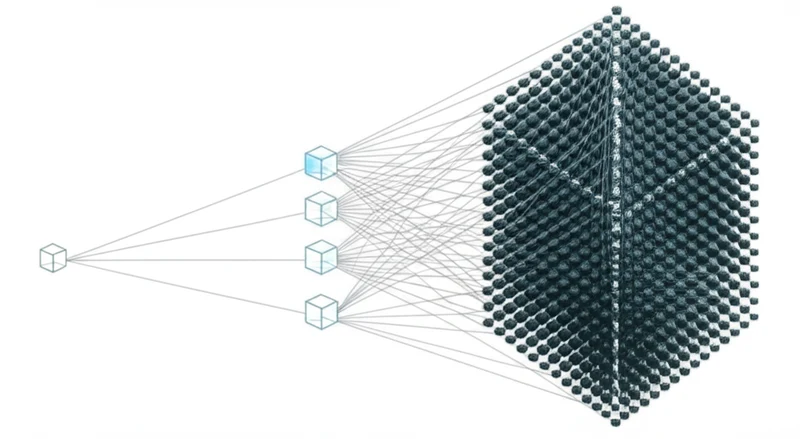
Oracle’s Silicon Symphony
For Oracle, this agreement is a transformative victory, catapulting its Oracle Cloud Infrastructure (OCI) into the top tier of AI cloud providers. The positive market reaction, with Oracle shares jumping after its contract announcements as noted in market reports, reflects investor confidence that its long-term focus on high-performance infrastructure is paying off. This deal validates OCI’s technical approach, which emphasizes the performance of its bare-metal servers and high-speed RDMA cluster networking. For the massive, distributed training workloads that leading AI models require, low-latency and high-throughput connections between thousands of GPUs are critical. Securing the world’s premier AI company as a flagship customer provides Oracle with the ultimate proof point for its architecture. The success of Oracle high-performance compute AI deals like this one creates an undeniable halo effect, poised to attract other AI developers and enterprises seeking to deploy AI at scale.

Trillion-Dollar Poker: AI’s New Ante
The OpenAI Oracle $300B compute deal redefines the financial scale required to compete at the frontier of artificial intelligence. It sets a new benchmark for the level of investment necessary to build and operate future foundation models, raising the barrier to entry for all but the most well-capitalized players. This development in AI cloud market competition is also directly linked to the ambitious “Stargate Project,” a $500 billion initiative where OpenAI, SoftBank, and Oracle plan to invest in domestic data centers. The compute purchase acts as the anchor tenancy for this infrastructure, providing the guaranteed demand needed to justify such a massive capital expenditure. The deal sends ripples across the cloud landscape, placing pressure on Microsoft Azure to remain competitive and highlighting Amazon AWS’s notable absence from OpenAI’s major public partnerships. This signals that specialized performance may be winning out over incumbency in the critical AI market.
Digital Bedrock for AI Titans
This reported agreement is more than a massive commercial contract; it is a defining moment for the AI industry. It codifies computational power as the most critical resource for AI advancement, demonstrating that securing this resource through diversified, resilient infrastructure is paramount. For OpenAI, it is a calculated move to fuel its ambitions. For Oracle, it is a crowning achievement that reshapes its identity as a premier destination for high-performance computing. As the industry digests this news, it raises a fundamental question: will the future of AI be built by single cloud providers or by strategic, hyper-scale consortiums?
Read More From AI Buzz

Vector DB Market Shifts: Qdrant, Chroma Challenge Milvus
The vector database market is splitting in two. On one side: enterprise-grade distributed systems built for billion-vector scale. On the other: developer-first tools designed so that spinning up semantic search is as easy as pip install. This month’s data makes clear which side developers are choosing — and the answer should concern anyone who bet […]

Anyscale Ray Adoption Trends Point to a New AI Standard
Ray just hit 49.1 million PyPI downloads in a single month — and it’s growing at 25.6% month-over-month. That’s not the headline. The headline is what that growth rate looks like next to the competition. According to data tracked on the AI-Buzz dashboard , Ray’s adoption velocity is more than double that of Weaviate (+11.4%) […]