
Polychrome AI Creates Presets, But Misses Artistic Nuance
New AI tools that generate Adobe Lightroom presets directly from text prompts are now available, marking a new step in integrating generative AI into creative workflows. A prime example, the web-based Polychrome LR Preset Generator, translates descriptive language like “Moody Film Noir” into functional .xmp preset files. However, a hands-on PetaPixel analysis reveals a critical ‘interpretation gap’ between a user’s artistic intent and the AI’s output. While the technology functions as a rapid starting point, its struggle with subjective language highlights a central debate in the photography community: the balance between AI-driven efficiency and the nuanced control of human creativity.
Key Points
- The Polychrome LR Preset Generator creates Lightroom presets from text prompts in approximately 15 seconds.
- Hands-on testing demonstrates the AI interprets concrete color instructions more effectively than abstract terms like “moody.”
- Testing reveals a measurable gap between artistic intent and AI execution, with most presets requiring manual refinement for professional use.
- This technology disrupts the traditional preset market by offering customized, on-demand aesthetics without cost barriers.
Words to Parameters: The Translation Challenge
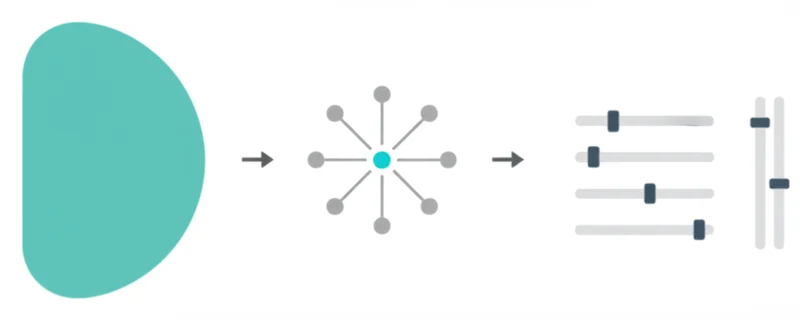
The Polychrome LR Preset Generator functions as a translation layer, converting natural language into the specific numerical adjustments that define a Lightroom preset. The user interface is straightforward: a photographer inputs a desired aesthetic, selects an OpenAI model such as GPT-4o, and receives a downloadable .xmp file. The entire process takes approximately 15 seconds.
This system codifies aesthetic concepts by manipulating dozens of sliders within Lightroom’s Develop module, including exposure, contrast, color grading, and tone curves. The technology’s value proposition, as noted by The Phoblographer, is to “Quickly Create Lightroom Presets From Text,” offering speed and accessibility to photographers who may not have the expertise to build complex looks from scratch.
The Subjective-Objective Divide
While technically functional, the generator’s performance exposes the inherent difficulties of an AI interpreting artistic nuance. The PetaPixel review documented several tests that reveal core limitations in the text-to-preset translation process. A prompt for “moody colors with low contrast” produced a result described as “not quite what I had in mind,” demonstrating a fundamental disconnect between the user’s vision and the machine’s interpretation.
Results improved with more concrete language. A prompt for “muted blues and vibrant oranges low contrast” was more successful, suggesting that effective use requires a degree of prompt engineering skill. However, a more complex request for “high contrast monochrome with warm highlights and film grain” yielded a preset that was “a bit too high contrast” and incorrectly applied warmth to the shadows as well as the highlights. These documented issues demonstrate that while the tool identifies the correct parameters to adjust, its execution lacks the finesse required for professional work and typically requires manual correction.
Automation vs. Artistry: The Editing Equation
This text-to-preset tool enters the market as part of a broader trend of AI integration in photography. Its existence raises a philosophical question for creators, captured by the PetaPixel article’s title, “…if That’s Really What You Want.” For beginners, the generator serves as an accessible entry point to photo editing, allowing experimentation with styles without deep technical knowledge. It functions effectively as a learning aid by exposing the underlying parameters of different looks.
For professionals, the value proposition becomes more complex. While it offers a quick creative starting point, the need for subsequent refinement often offsets the time saved. The sentiment that many professionals “do not want to suck the human element out of my post-processing” underscores the view of editing as an integral part of artistic expression. This development also disrupts the traditional preset pack economy by offering infinite, personalized options without cost, challenging the one-size-fits-all model of pre-packaged looks.
Inspiration Engines: AI as Creative Catalyst
The Polychrome LR Preset Generator demonstrates generative AI’s application to specialized creative tasks. The current implementation works “reasonably well” but falls short of replicating a human artist’s nuanced intent, making it more of a “fun experiment” than a comprehensive solution. Its primary value lies in providing rapid inspiration or a foundational layer for further editing, not as a replacement for manual craftsmanship.
As the underlying AI models improve their interpretation of language and artistic concepts, the gap between prompt and result will likely narrow. For now, the tool represents a choice: embrace the efficiency of AI-generated aesthetics, or, as the PetaPixel author suggests, “learn how to build your own creative presets in Lightroom.” Does the future of photo editing lie in refining algorithmic interpretation or in mastering the craft itself?
Read More From AI Buzz

Vector DB Market Shifts: Qdrant, Chroma Challenge Milvus
The vector database market is splitting in two. On one side: enterprise-grade distributed systems built for billion-vector scale. On the other: developer-first tools designed so that spinning up semantic search is as easy as pip install. This month’s data makes clear which side developers are choosing — and the answer should concern anyone who bet […]

Anyscale Ray Adoption Trends Point to a New AI Standard
Ray just hit 49.1 million PyPI downloads in a single month — and it’s growing at 25.6% month-over-month. That’s not the headline. The headline is what that growth rate looks like next to the competition. According to data tracked on the AI-Buzz dashboard , Ray’s adoption velocity is more than double that of Weaviate (+11.4%) […]