
Tesla Onshores AI Chips with $16.5B Samsung Deal in Texas
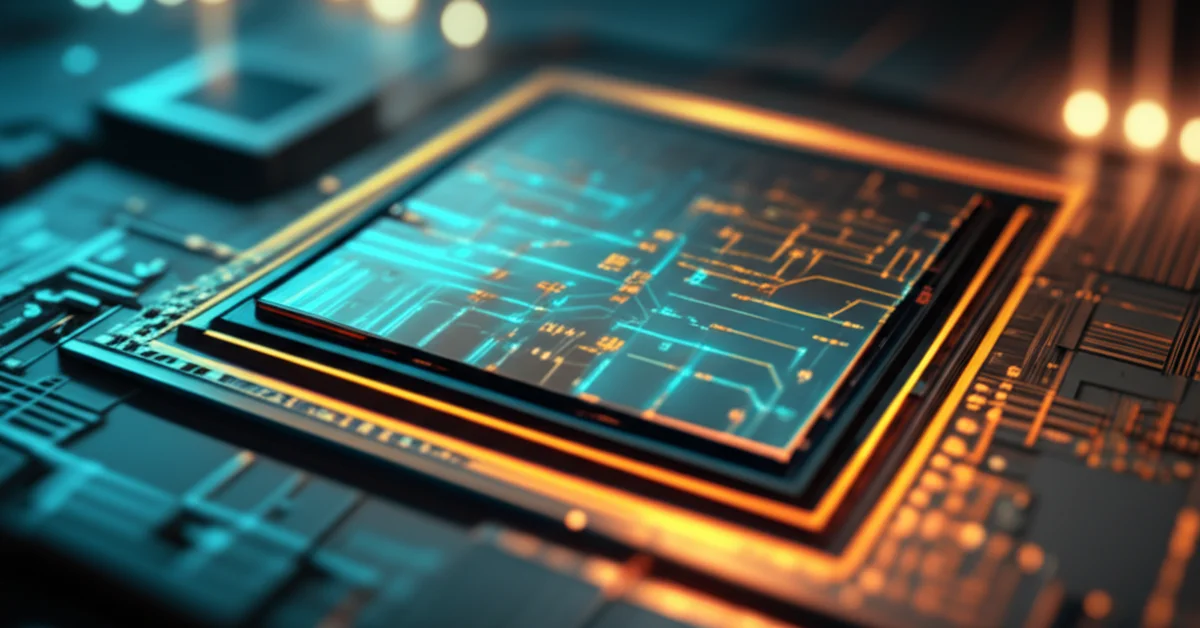
Samsung Electronics has solidified its role as a cornerstone of Tesla’s future, securing a monumental $16.5 billion contract, according to Bloomberg, to manufacture the automaker’s next-generation AI chips through 2033. The deal centers on producing the forthcoming “AI6” chip, the brain of Tesla’s Hardware 5, at Samsung’s new state-of-the-art foundry in Taylor, Texas. This long-term agreement represents a pivotal moment for both companies, simultaneously de-risking Tesla’s AI roadmap by establishing a domestic supply chain and providing a critical anchor client for Samsung’s multi-billion-dollar U. S.manufacturing investments. The partnership signals a significant consolidation of Tesla’s custom silicon strategy and delivers major validation for the burgeoning American semiconductor ecosystem.
Key Points
• Samsung secured a $16.5 billion deal to manufacture Tesla’s “AI6” chips at its new Taylor, Texas facility through 2033.
• The AI6 chip, powering Tesla’s Hardware 5, will be produced on Samsung’s advanced 4-nanometer (4nm) process, enabling substantial performance and efficiency gains.
• This agreement marks a strategic consolidation for Tesla, which previously used both Samsung and TSMC for its AI hardware, now centralizing with a single U. S.-based partner.
• The deal provides a critical anchor client for Samsung’s $40 billion Texas investment, aligning with the goals of the U. S. CHIPS and Science Act to bolster domestic manufacturing.
Silicon Shrink: Tesla’s 4nm Revolution
The core of the new agreement is the production of the “AI6” chip, the engine for Tesla’s anticipated “Hardware 5” (HW5) self-driving computer. This represents the next major architectural leap for Tesla’s in-vehicle artificial intelligence, building on the capabilities of previous hardware generations. The most significant technical advancement is the move to Samsung’s 4-nanometer (4nm) process technology.
This shift from the 7nm process used for Hardware 4 allows for much greater transistor density. The direct results, as analyzed by AnandTech, are notable improvements in computational performance and power efficiency—both critical factors for complex systems operating within a vehicle’s thermal and energy constraints. While specific performance metrics for HW5 are not yet public, the architecture enables processing for more sophisticated neural network models required for higher levels of autonomous driving. Some industry analysis suggests the partnership could eventually leverage Samsung’s 3nm Gate-All-Around (GAA) technology for even greater gains.
From Dual Supply to Digital Marriage
While this deal makes Samsung the official Tesla AI6 chip manufacturer, the partnership has a deep history. Samsung has been the manufacturing partner for Tesla’s Full Self-Driving (FSD) chips since Hardware 3 (HW3) was introduced in 2019, which used a 14nm process manufactured in Austin, Texas, as reported by Tom’s Hardware. The collaboration continued with the current Hardware 4, which is built on a more advanced 7nm process according to NotebookCheck.
However, Tesla has not been exclusive. For its “Dojo” AI training supercomputer, Tesla initially worked with rival foundry TSMC to produce its D1 training tiles. This new, decade-long deal indicates a strategic consolidation. By shifting its next-generation Dojo chip production to Samsung, as Reuters reported, and locking in the AI6 production, Tesla is centralizing its AI hardware manufacturing. This move streamlines its supply chain and deepens the technological integration with a single, trusted foundry partner for both its in-car and data center AI hardware.
$40 Billion Bet Meets $16 Billion Validation
The decision to base this production in Taylor, Texas, is a strategic masterstroke with wide-ranging implications. The $16.5 billion, decade-long commitment from a high-profile customer like Tesla provides a powerful validation for Samsung’s massive U. S.investment. The South Korean giant is investing over $40 billion in its Texas operations, with the new Taylor fab expected to begin mass production in the second half of 2024, according to a company announcement.
This deal provides Samsung with a crucial, long-term anchor client, de-risking the enormous capital expenditure required for such an advanced facility. For Tesla, sourcing from a U. S.plant mitigates geopolitical risks tied to East Asian supply chains and creates a more predictable production pipeline for its most critical component. The arrangement exemplifies the goals of the U. S. CHIPS and Science Act in action, strengthening the domestic semiconductor ecosystem. The Samsung-Taylor foundry partnership with Tesla now stands as a flagship case for onshoring advanced manufacturing.
Silicon Sovereignty in the Foundry Wars
This agreement sends ripples across both the automotive and semiconductor industries. It reinforces Tesla’s commitment to vertical integration—designing its own custom silicon—which contrasts sharply with legacy automakers who rely on off-the-shelf solutions from suppliers like NVIDIA or Qualcomm. By securing a manufacturing pipeline for its bespoke chips, Tesla maintains tight control over its hardware and software stack, enabling faster innovation.
In the intense competition between semiconductor foundries, this is a significant victory for Samsung in its battle with market leader TSMC. As noted by analysis from TrendForce, securing a long-term, high-volume contract from Tesla enhances Samsung’s credibility in the advanced node segment. This development demonstrates that Samsung’s 4nm process is competitive for high-performance computing and solidifies its position as a key player in the rapidly growing automotive semiconductor market. According to analysis from McKinsey & Company, this market is a primary growth driver for the industry, projected to exceed $129 billion by 2029.
Lone Star Silicon: A Decade of Digital Destiny
The Samsung-Tesla deal is far more than a simple supply agreement; it’s a symbiotic, decade-long strategic alignment. It provides Tesla with a secure, domestic supply of the custom silicon fundamental to its robotaxi ambitions, while simultaneously anchoring Samsung’s massive bet on American manufacturing. This partnership not only reshapes the competitive landscape for foundries and automakers but also serves as a powerful testament to the strategic importance of a resilient, localized AI supply chain. As the Taylor, Texas, facility spins up, the industry will be watching closely. How will competitors in both the automotive and semiconductor sectors respond to this deeply integrated partnership?
Read More From AI Buzz

Vector DB Market Shifts: Qdrant, Chroma Challenge Milvus
The vector database market is splitting in two. On one side: enterprise-grade distributed systems built for billion-vector scale. On the other: developer-first tools designed so that spinning up semantic search is as easy as pip install. This month’s data makes clear which side developers are choosing — and the answer should concern anyone who bet […]

Anyscale Ray Adoption Trends Point to a New AI Standard
Ray just hit 49.1 million PyPI downloads in a single month — and it’s growing at 25.6% month-over-month. That’s not the headline. The headline is what that growth rate looks like next to the competition. According to data tracked on the AI-Buzz dashboard , Ray’s adoption velocity is more than double that of Weaviate (+11.4%) […]