
US and UK Reject Global AI Accord at Paris Summit as EU Announces €200B Investment Plan
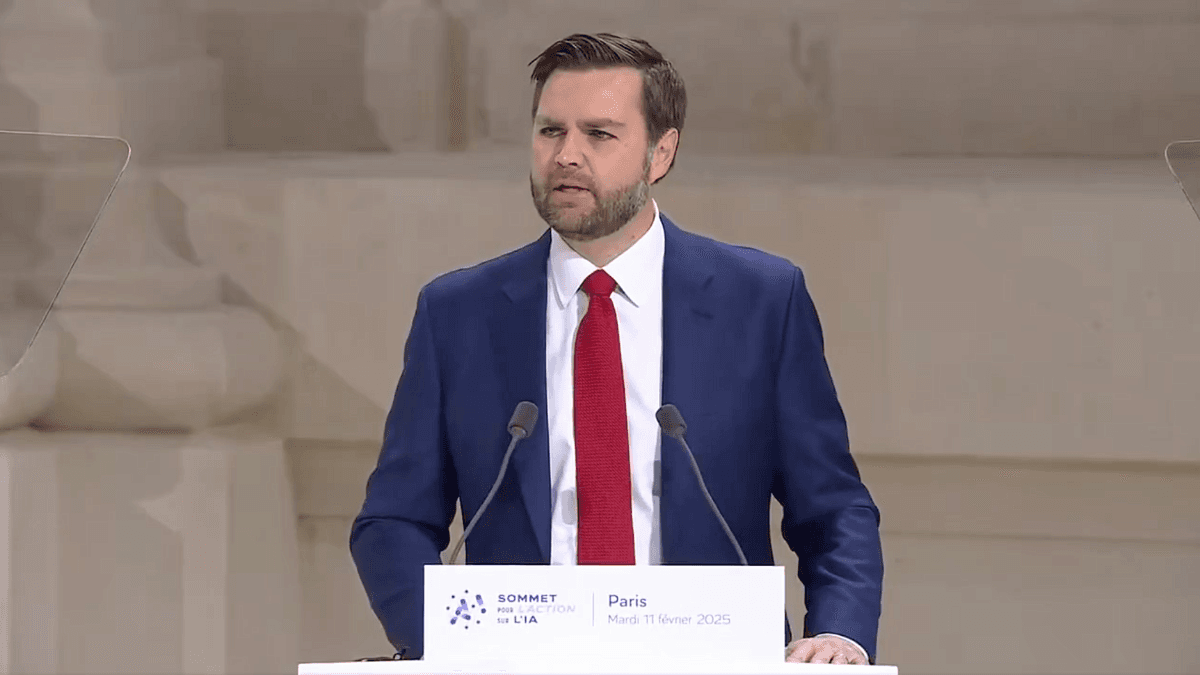
The US and UK declined to sign a global accord on artificial intelligence (AI) at a Paris summit, specifically the recent paris ai summit, this week, raising concerns about a fractured regulatory landscape. The agreement focused on inclusive and sustainable AI.
According to Silicon UK, the UK cited a lack of “practical clarity” on global governance and insufficient attention to national security as reasons for not signing. Time magazine reports that a spokesperson for UK Prime Minister Keir Starmer said the agreement didn’t sufficiently resolve critical elements linked to security.
The Times of India reports that US Vice President JD Vance expressed concerns that over-regulation could stifle AI innovation. He emphasized AI’s potential for economic growth and job creation.
“The Trump administration believes that AI will have countless revolutionary applications in economic innovation, job creation, national security, health care, free expression and beyond, and to restrict its development now will not only unfairly benefit incumbents in this space, it would mean paralyzing one of the most promising technologies we have seen in generations,” he said.
In an interview with Time, Vance strongly criticized the EU’s approach, particularly the AI Act and Digital Services Act. He warned against restricting US tech companies.
ITPro revealed that Vance stated, “The Trump administration is troubled by reports that some foreign governments are considering tightening screws on US tech companies with international footprints. America cannot and will not accept that, and we think it’s a terrible mistake.”
Rights groups have criticized the US and UK stance. Alexandra Reeve Givens, CEO of the Center for Democracy and Technology (CDT), stressed the need for robust safeguards and accountability in AI.
“When AI is being used to determine who gets a job, who gets a loan, who gets access to government services, the stakes are too high to shrug off the risks.” The CDT has consistently highlighted the risk of bias and discrimination without proper regulation.
Dr. Andrew Bolster, senior research and development manager for data science at Black Duck, warned that this disagreement creates uncertainty for organizations deploying AI globally.
“This growing Atlantic AI rift is a wake-up call for any organization looking to deploy or operate global AI solutions,” he said. “The regulatory landscape is not as settled as it may seem…”
Bolster added that while alignment with existing privacy regulations like GDPR, the California Consumer Privacy Act (CCPA) (and its amendment, the CPRA), and Australia’s Privacy Act might help, it’s no guarantee of continued operations.

61 Nations Sign, Highlighting Divide
Despite the US and UK’s refusal, 61 other nations, including Canada, Japan, India, China, and European countries, signed the agreement. They pledged to ensure AI is “open, inclusive, transparent, ethical, safe, secure and trustworthy”.
The agreement also emphasizes strengthening international coordination in AI governance and preventing market monopolization. It also highlights the importance of AI sustainability.
European Commission President Ursula von der Leyen announced a €200 billion initiative, InvestAI, to boost AI research and infrastructure across the EU.

The plan includes funding for four AI “gigafactories” focused on training models for complex applications. Von der Leyen described it as a “CERN for AI”.
“This unique public-private partnership, akin to a CERN for AI, will enable all our scientists and companies – not just the biggest – to develop the most advanced very large models needed to make Europe an AI continent,” she said.
According to White & Case and Pearl Cohen, organizations like the OECD and the G7, along with the newer Framework Convention on Artificial Intelligence, will likely play a key role in fostering collaboration. The World Economic Forum suggests alternative approaches are being examined, such as outcomes-based regulation, and Silicon Angle reports that France is combining public funding with regulation.
Tags
Read More From AI Buzz

Vector DB Market Shifts: Qdrant, Chroma Challenge Milvus
The vector database market is splitting in two. On one side: enterprise-grade distributed systems built for billion-vector scale. On the other: developer-first tools designed so that spinning up semantic search is as easy as pip install. This month’s data makes clear which side developers are choosing — and the answer should concern anyone who bet […]

Anyscale Ray Adoption Trends Point to a New AI Standard
Ray just hit 49.1 million PyPI downloads in a single month — and it’s growing at 25.6% month-over-month. That’s not the headline. The headline is what that growth rate looks like next to the competition. According to data tracked on the AI-Buzz dashboard , Ray’s adoption velocity is more than double that of Weaviate (+11.4%) […]