
YouTube's AI Lip Sync Tool Enables Natural Global Dubbing

YouTube has announced a significant advancement for its automated translation services: an AI-powered lip-syncing feature designed to make dubbed videos more natural for global audiences. Unveiled at the ‘Made on YouTube’ event, the new technology addresses the long-standing issue of mismatched mouth movements in translated content, a common distraction that, according to TechSpot, breaks viewer immersion. This development, which leverages Google’s proprietary AI models like Gemini and technology from its Aloud incubator, is part of a much larger strategic push. Introduced alongside a suite of over 30 new AI-powered creator tools, the YouTube new AI lip sync tool signals a clear intent to embed artificial intelligence across the entire production workflow and deepen creator reliance on its platform.
Key Points
- YouTube announced a new AI lip-sync feature for its auto-dubbing service, powered by Gemini and Aloud models.
- The tool is part of a larger suite of over 30 new AI features for creators announced at the ‘Made on YouTube’ event.
- The technology addresses audio-visual dissonance, a documented distraction in traditionally dubbed video content.
- The underlying auto-dubbing service faces ongoing challenges regarding translation quality and user control options.
Digital Ventriloquism: The Multi-Stage AI Pipeline
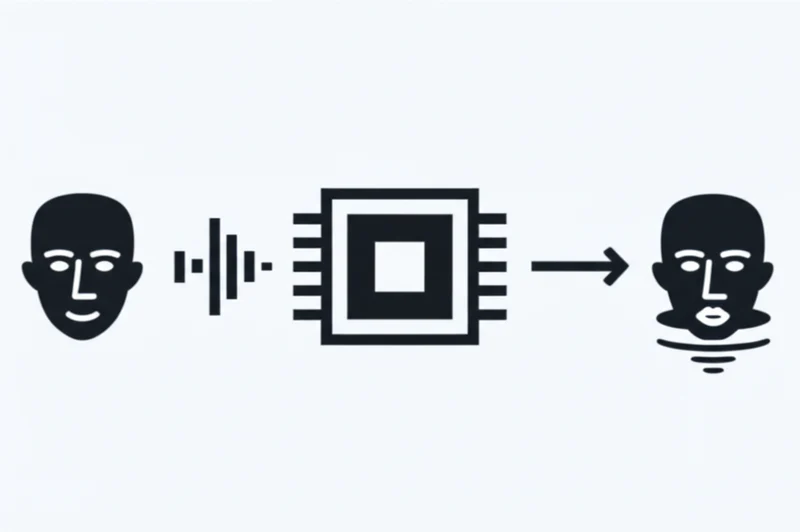
YouTube’s new lip-sync capability is an enhancement to its existing multi-language dubbing initiative, built on a sophisticated, multi-stage AI process. The system relies on a combination of proprietary AI models, reported to include Google’s Gemini and technology from Aloud, a Google-incubated project, as reported by TechSpot. This process explains how YouTube AI lip sync works to create a more seamless viewing experience across 20 initial languages, including English, French, and Spanish.
The AI first isolates the speaker’s vocal track from background audio. It then transcribes the original speech, translates it into the target language, and synthesizes a new audio track that attempts to replicate the speaker’s tone. The crucial new step involves the AI analyzing this new audio and modifying the speaker’s lip movements in the video to match the phonemes of the translated speech, a process detailed by ForkLog. This directly addresses the cognitive dissonance created by asynchronous audio and video, a key flaw that reduces the perceived quality of dubbed content.
Building Digital Dependency: YouTube’s Creator Ecosystem
This feature is not an isolated tool but a calculated component of YouTube’s strategy to become an indispensable, AI-powered creative partner. The primary business driver is expanding content reach and monetization; for YouTube, more global views translate to what ghacks.net describes as “more clicks and eyes on ads.” Early tests of multi-language audio have already shown significant results, with some channels tripling their viewership from non-native language speakers.
The announcement of the latest AI video dubbing and lip sync technology was part of a sweeping YouTube AI tools for creators update at the “Made on YouTube 2025” event, which Netinfluencer provided a detailed breakdown of. Other tools include Veo 3 for text-to-video Shorts generation, “Edit with AI” for automated first drafts, and “Ask Studio,” a conversational AI assistant for analytics. This integrated suite demonstrates a clear objective: to lower production barriers and position the YouTube creator AI ecosystem as the central hub for every stage of content creation, from ideation to global distribution.
When Artificial Meets Authentic: The Translation Dilemma
Despite the technical advancements, the implementation of automated localization tools on YouTube remains divisive. The underlying auto-translation features have long been a source of frustration for multilingual users who find the AI-generated translations to be of “subpar quality.” The lack of a global setting to disable these features has led users to rely on third-party browser extensions to restore the original viewing experience, a workaround noted by multiple outlets.
The new lip-sync feature magnifies the tension between authenticity and artificial realism. While it makes dubbed video appear more realistic, it also turns the speaker into a digital puppet whose mouth moves to words they never spoke. Furthermore, some experts express concern that the proliferation of easy-to-use AI tools could lead to users, as one expert warned Social Media Today, “flooding YouTube with AI-generated garbage.” The feature could allow low-effort, poorly translated content to appear more professional than it is, potentially devaluing high-quality, human-led localization efforts. This skepticism is not unfounded, as some analysts have previously expressed disappointment with the results from similar AI technologies.
Pixels, Phonemes, and Platform Power
YouTube’s introduction of AI lip-syncing is a technically impressive and strategically significant move. It represents a sophisticated application of generative AI to solve a real-world problem in content consumption, pushing the boundaries of automated localization. By integrating this into a comprehensive suite of AI tools, YouTube solidifies its strategy to become an essential creative partner. However, the technology also highlights existing tensions between accessibility and authenticity.
The ultimate success of this feature will depend on whether creators and audiences find that the increased reach and polished appearance outweigh the potential loss of the original content’s soul.
Read More From AI Buzz

Vector DB Market Shifts: Qdrant, Chroma Challenge Milvus
The vector database market is splitting in two. On one side: enterprise-grade distributed systems built for billion-vector scale. On the other: developer-first tools designed so that spinning up semantic search is as easy as pip install. This month’s data makes clear which side developers are choosing — and the answer should concern anyone who bet […]

Anyscale Ray Adoption Trends Point to a New AI Standard
Ray just hit 49.1 million PyPI downloads in a single month — and it’s growing at 25.6% month-over-month. That’s not the headline. The headline is what that growth rate looks like next to the competition. According to data tracked on the AI-Buzz dashboard , Ray’s adoption velocity is more than double that of Weaviate (+11.4%) […]