
Telit, NVIDIA AI Tools Boost Factory Output 30%
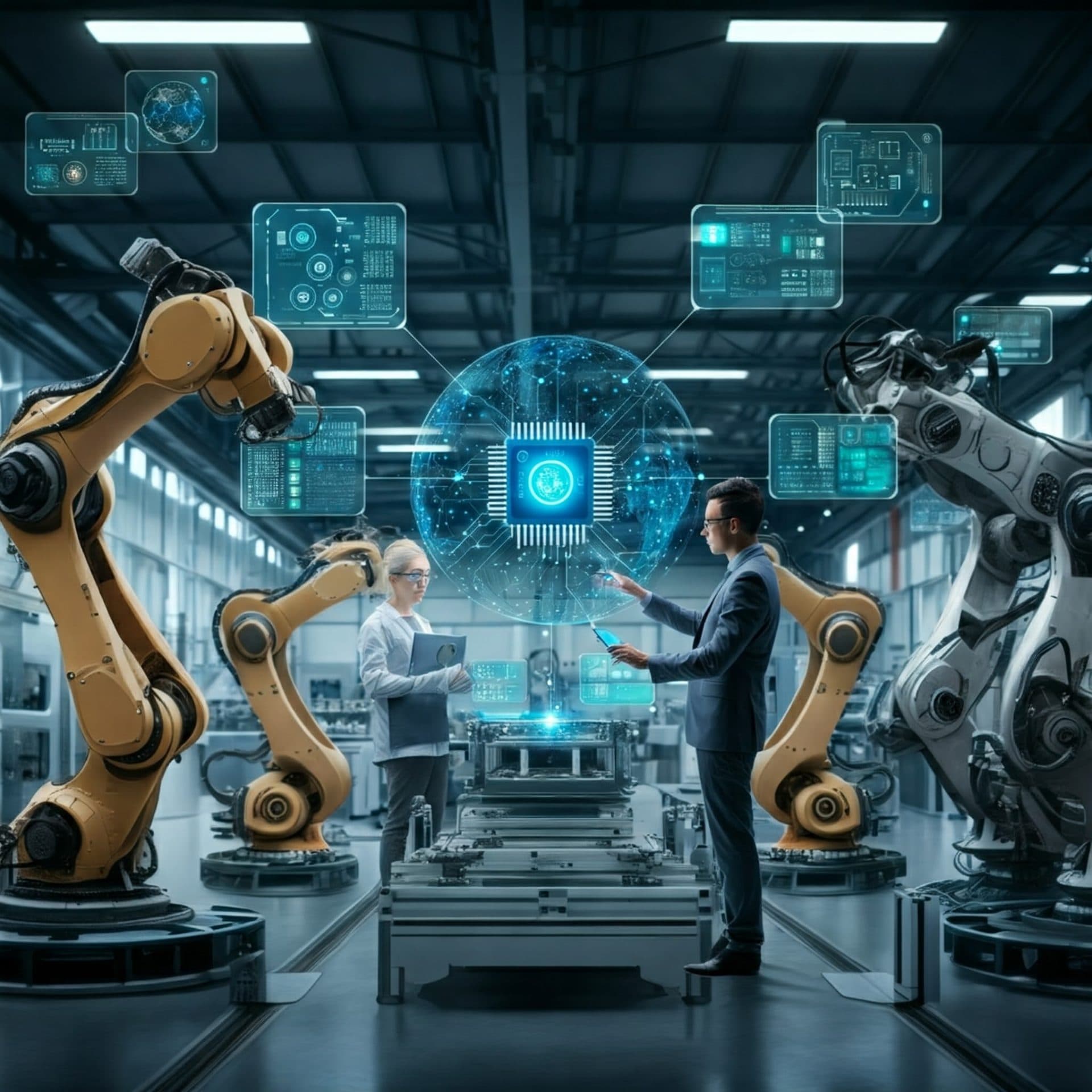
The manufacturing industry is undergoing a significant transformation, driven by the integration of artificial intelligence (AI) and the Internet of Things (IoT). Two major players, Telit Cinterion, a leading IoT solutions provider, and NVIDIA, a global leader in AI technology, are at the forefront of this revolution, offering innovative solutions that promise to reshape how factories operate.
A Powerful Partnership for Smart Manufacturing
Telit Cinterion and NVIDIA have joined forces to develop cutting-edge AI tools tailored for the manufacturing sector. This collaboration leverages Telit Cinterion’s extensive experience in industrial machine integration and data orchestration with NVIDIA’s advanced AI capabilities. The primary goal is to empower manufacturers with state-of-the-art AI tools, enabling them to significantly enhance efficiency, productivity, and quality control across their operations.
deviceWISE: The Core of Telit Cinterion’s AI Solutions
At the heart of Telit Cinterion’s AI offerings lies deviceWISE, a scalable and integrated Industrial IoT (IIoT) platform. This powerful platform provides manufacturers with comprehensive visibility and control over their connected machines and data. By integrating with NVIDIA’s AI technologies, deviceWISE enables factories to streamline operations and optimize processes in unprecedented ways.
deviceWISE plays a crucial role by facilitating data collection and transformation. It seamlessly integrates machines and systems, executes edge logic, and provides clear data visualization. One of its standout features is deviceWISE AI Visual Inspection, which simplifies the identification and resolution of production issues in real-time. According to the company, this solution minimizes downtime and reduces the impact on production by leveraging Telit Cinterion’s expertise in industrial machine integration and data orchestration.
NVIDIA’s Role in Enhancing deviceWISE
NVIDIA’s AI Enterprise software platform significantly enhances the capabilities of deviceWISE. This platform includes advanced tools like NVIDIA NIM microservices, NVIDIA AI Blueprints, and CUDA tools, which accelerate data processing and provide natural language AI capabilities. Integrating NVIDIA AI Enterprise allows manufacturers to leverage the latest AI tools without needing coding or data science expertise.
NVIDIA also offers Project DIGITS, a developer-focused desktop computer designed for AI development. This powerful tool can be used with deviceWISE to further enhance its AI capabilities, enabling manufacturers to develop and deploy custom AI solutions tailored to their specific needs.
Furthermore, NVIDIA provides Cosmos, a foundation model that generates photorealistic videos for training robots and autonomous vehicles. Integrating Cosmos with deviceWISE can significantly enhance the platform’s capabilities by providing realistic simulations for training and optimizing AI models. This integration can lead to more robust and reliable AI solutions, improving efficiency and accuracy in various manufacturing tasks. This is especially relevant considering that Cosmos was unveiled at CES 2025, one of the most influential tech events in the world.
Another powerful tool from NVIDIA is the Metropolis AI blueprint for video analysis. This blueprint provides a framework for building AI agents that can analyze video streams from cameras and other sources. When used with deviceWISE, it can enhance visual inspection capabilities, enabling more sophisticated and accurate defect detection, anomaly identification, and process optimization. This technology allows for real-time insights and automation in manufacturing environments, a major step forward in factory automation.
The Benefits of AI in Manufacturing
The integration of AI into manufacturing and industrial IoT offers a multitude of benefits:
- Enhanced Product Quality: AI-powered visual inspection tools can identify defects with greater accuracy and speed, leading to improved product quality and reduced waste.
- Minimized Inspection Errors: AI algorithms minimize human error in visual inspections, ensuring consistent and reliable quality control.
- Increased Efficiency and Productivity: AI-powered automation streamlines processes, optimizes resource allocation, and improves overall productivity.
- Reduced Downtime: AI-driven predictive maintenance identifies potential equipment failures, allowing for proactive maintenance and minimizing costly downtime.
- Improved Decision-Making: AI analyzes vast amounts of data, providing valuable insights for informed decisions and operational optimization.
Real-World Applications and Industry Impact
Telit Cinterion’s deviceWISE AI Visual Inspection is already being deployed in real-world manufacturing environments. This solution enables real-time quality control across the factory floor, helping manufacturers quickly identify and address issues involving employee workstations, industrial robots, and CNC machines. By integrating with various industrial equipment and platforms like AWS, Azure IoT, IBM Maximo, SAP, and Siemens, deviceWISE AI Visual Inspection offers a comprehensive solution for optimizing quality control.
Addressing the Challenges of AI and IoT Integration
While the benefits of AI in manufacturing are clear, integrating AI and IoT technologies effectively presents some challenges. One key challenge is the need for commonality—a single IoT management system that can seamlessly connect and communicate with various machines and IT systems. deviceWISE addresses this by offering a wide range of equipment connectors and languages, enabling seamless communication and data exchange.
Another challenge is clonability, which refers to the ability to reuse programming and easily replicate AI solutions across different manufacturing lines. deviceWISE addresses this by allowing manufacturers to develop and deploy solutions with plug-and-play modules, enabling scalability and integration without extensive custom coding.
Industry Trends and the Future of AI in Manufacturing
The use of AI in manufacturing is rapidly growing. Industry reports highlight its transformative potential. According to Accenture, businesses applying AI in factories could increase profit margins by an average of 38 percent by 2035, leading to an economic boost of up to US$14 trillion across 16 industries. AI is also expected to automate tasks that currently consume 60% to 70% of employee time, significantly increasing productivity. Generative AI, in particular, is expected to add trillions of dollars in value to the global economy.
Conclusion
The partnership between Telit Cinterion and NVIDIA represents a major leap forward for the manufacturing industry. By combining their expertise, these companies are providing manufacturers with powerful AI tools to optimize operations, enhance product quality, and boost efficiency. As AI technology continues to evolve, we can expect even more innovative solutions to emerge, further revolutionizing the manufacturing landscape and paving the way for smarter, more efficient, and sustainable manufacturing practices in the era of Industry 4.0.
Read More From AI Buzz

Perplexity pplx-embed: SOTA Open-Source Models for RAG
Perplexity AI has released pplx-embed, a new suite of state-of-the-art multilingual embedding models, making a significant contribution to the open-source community and revealing a key aspect of its corporate strategy. This Perplexity pplx-embed open source release, built on the Qwen3 architecture and distributed under a permissive MIT License, provides developers with a powerful new tool […]

New AI Agent Benchmark: LangGraph vs CrewAI for Production
A comprehensive new benchmark analysis of leading AI agent frameworks has crystallized a fundamental challenge for developers: choosing between the rapid development speed ideal for prototyping and the high-consistency output required for production. The data-driven study by Lukasz Grochal evaluates prominent tools like LangGraph, CrewAI, and Microsoft’s new Agent Framework, revealing stark tradeoffs in performance, […]