
Alibaba's Qwen3 AI Challenges GPT-4o for Enterprise Use

Alibaba has unveiled Qwen3-Max-Thinking, its new flagship reasoning model, marking a significant advancement in the capabilities of large language models and intensifying the global AI competition. The Alibaba latest AI model release is not an incremental upgrade; it introduces sophisticated techniques like test-time scaling and native tool use designed to power complex, agentic workloads. Built on a trillion-parameter Mixture-of-Experts (MoE) architecture and pretrained on an extensive 36 trillion token dataset, this model is positioned as a direct challenger to leading systems from OpenAI, Google, and Anthropic. This development signals a maturation of China’s AI ecosystem and introduces new strategic considerations for enterprises regarding vendor diversification and digital sovereignty.
Key Points
- Alibaba’s Qwen3-Max-Thinking implements test-time scaling to dynamically deepen its reasoning on complex tasks.
- The model features native, built-in tools for search, memory, and code execution that enhance its agentic capabilities.
- Its release expands enterprise AI options, enabling multi-vendor strategies and addressing digital sovereignty requirements.
- Benchmark performance data positions the model as competitive with top-tier Western counterparts, reflecting a narrowing AI development gap.
Computational Depth: Qwen3’s Dynamic Reasoning Engine
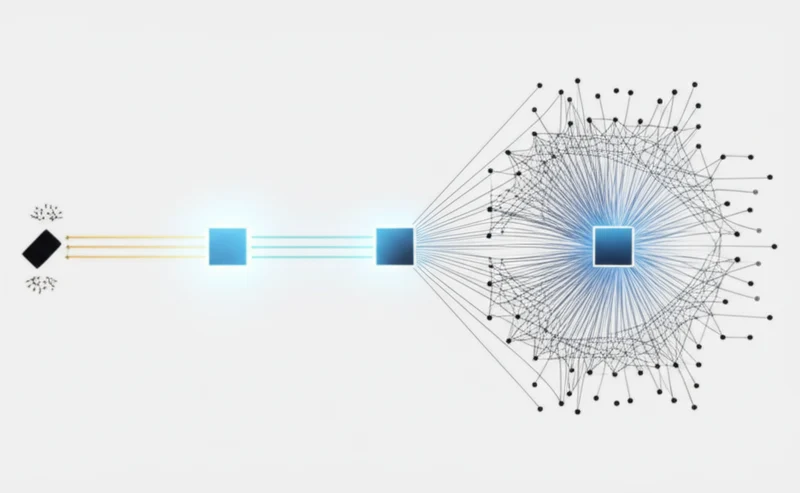
The significance of Qwen3-Max-Thinking lies in its architectural and inferential innovations, which focus on enhancing reasoning and autonomous task completion. A core feature is “test-time scaling,” a technique allowing the model to allocate more computational resources during inference to solve difficult problems. This contrasts with traditional models where inference computation is relatively fixed. Alibaba claims these techniques deliver stronger reasoning performance than even Google’s Gemini 3 Pro on certain benchmarks.
This “explicit control over thinking depth” enables the model to adjust its effort based on task complexity, leading to more robust reasoning. Furthermore, the model is designed for Qwen3-Max-Thinking agentic workloads through its native, built-in tools for search, memory, and code execution. Alibaba highlights this as “adaptive tool use,” which improves efficiency and reliability compared to systems where tool use is an add-on to a base model.
Benchmark Battles: East Meets West
Alibaba has positioned its new model directly against the industry’s best, claiming that on a suite of 19 established benchmarks, Qwen3-Max-Thinking demonstrates performance comparable to models like GPT-5.2-Thinking, Claude-Opus-4.5, and Gemini 3 Pro. This places the model in the highest echelon of AI reasoning engines, according to the company’s own evaluation. This assertion is part of a broader trend where Chinese AI firms are increasingly challenging their US counterparts, signaling a narrowing of the perceived gap in AI development.
However, industry experts advise a cautious interpretation of benchmark scores. Lian Jye Su, chief analyst at Omdia, notes that benchmarks evaluate performance under specific, controlled conditions. He emphasizes that “enterprise IT leaders may be deploying foundation models across various use cases under different IT environments.” Therefore, Su suggests that the model’s performance still needs to be evaluated in domain-specific tasks, along with its adaptability and customization capabilities.
Digital Sovereignty: The Multi-Vendor Advantage
The introduction of a competitive model like Qwen3-Max-Thinking has significant Alibaba AI enterprise strategy implications, particularly regarding vendor choice and data governance. The arrival of another high-performing model expands the pool of viable AI suppliers, making diversification more attractive. Charlie Dai, principal analyst at Forrester, states that “rising model parity increases the viability of mixed portfolios that balance sovereignty, compliance, and innovation speed.” This means CIOs are no longer limited to a few Western providers and can select models based on specific use cases, cost, and regional requirements. Omdia’s Lian Jye Su concurs, suggesting that CIOs should also consider Qwen models when evaluating the pricing, licensing, and total cost of ownership of their AI projects.
This development also directly addresses the growing importance of digital sovereignty. For global companies operating in Asia or those navigating complex international data regulations, China’s new AI model for business presents a distinct advantage when hosted on Alibaba Cloud. As Su points out, the total cost of ownership is likely more efficient on Alibaba Cloud, especially in the Asia Pacific region, strengthening regional AI ecosystems.
China’s AI Renaissance: New Contenders Emerge
Alibaba’s announcement does not exist in a vacuum. It is part of a wave of advanced AI models emerging from China that are challenging the dominance of Western tech giants.
- Moonshot AI: This Chinese start-up recently released Kimi K2.5, which it calls the world’s most powerful open-source model. Analysts note that this release narrows the US-China AI model development gap and raises questions about the effectiveness of US controls on advanced chips designed to constrain China’s AI progress.
- DeepSeek AI: Another Chinese start-up, DeepSeek, has developed a model, V3.2-Speciale, that it claims equals Google’s Gemini 3 Pro in reasoning capabilities. The company has also leveraged Alibaba’s open-source technology to enhance other models, underscoring the collaborative nature of China’s growing AI ecosystem.
- Tencent and Kuaishou: Other major Chinese tech firms are also making strides. Tencent is teasing new AI features for its apps, while Kuaishou’s video generator, Kling, is seen as a strong challenger to OpenAI’s Sora and Google’s Veo.
Multipolar Innovation: Redrawing the AI Map
Alibaba’s Qwen3-Max-Thinking is more than a powerful new model; it is a statement of intent reflecting a shifting global AI landscape. Its technical innovations in reasoning and agentic capabilities position it as a formidable competitor to the world’s leading AI systems. For enterprises, its arrival provides greater choice, a pathway for managing regional data governance, and an opportunity to optimize the total cost of ownership. As high-performance models continue to emerge from diverse geographical regions, the era of a few dominant players is giving way to a more multipolar and competitive market.
How will this expanded field of top-tier models accelerate innovation and reshape enterprise AI deployments worldwide?
Read More From AI Buzz

Perplexity pplx-embed: SOTA Open-Source Models for RAG
Perplexity AI has released pplx-embed, a new suite of state-of-the-art multilingual embedding models, making a significant contribution to the open-source community and revealing a key aspect of its corporate strategy. This Perplexity pplx-embed open source release, built on the Qwen3 architecture and distributed under a permissive MIT License, provides developers with a powerful new tool […]

New AI Agent Benchmark: LangGraph vs CrewAI for Production
A comprehensive new benchmark analysis of leading AI agent frameworks has crystallized a fundamental challenge for developers: choosing between the rapid development speed ideal for prototyping and the high-consistency output required for production. The data-driven study by Lukasz Grochal evaluates prominent tools like LangGraph, CrewAI, and Microsoft’s new Agent Framework, revealing stark tradeoffs in performance, […]

Vector DB Market Shifts: Qdrant, Chroma Challenge Milvus
The vector database market is splitting in two. On one side: enterprise-grade distributed systems built for billion-vector scale. On the other: developer-first tools designed so that spinning up semantic search is as easy as pip install. This month’s data makes clear which side developers are choosing — and the answer should concern anyone who bet […]