
Apple AI Model: High-Accuracy Pregnancy Detection via Watch
A landmark study backed by Apple and published in npj Digital Medicine details a new AI model that can predict pregnancy with high accuracy using passively collected data from the Apple Watch. The research leverages a sophisticated transformer-based AI, the Wearable Behavior Model (WBM), which analyzed longitudinal data from nearly 18, 000 participants in the Apple Women’s Health Study. By processing physiological signals like heart rate and wrist temperature, the model achieved an Area Under the Receiver Operating Characteristic Curve (AUROC) of 0.92, indicating an excellent ability to distinguish between pregnant and non-pregnant cycles. This development is the Apple Watch pregnancy detection, signifying a technical shift from reactive, test-based events to proactive, passive monitoring, and demonstrating a core component of Apple’s predictive health strategy.
Key Points
• The Apple Wearable Behavior Model accuracy achieved a 0.92 AUROC score, a strong statistical measure of its ability to differentiate pregnant from non-pregnant cycles using Apple Watch data from 17, 992 participants.
• This advancement intensifies competition in the global femtech market, valued at approximately USD 60 billion in 2022 and projected to grow significantly, according to Grand View Research. Competitors like Oura and WHOOP have also published research on pregnancy detection using their wearables.
• The study’s authors acknowledge documented limitations, including a training dataset that skews toward individuals with higher education and income levels. This, along with major privacy questions, presents challenges for algorithmic bias and generalizability, with privacy advocates highlighting the sensitivity of such data, as outlined by the Electronic Frontier Foundation (EFF).
Decoding Conception Through Digital Signals
The core of this innovation is the Wearable Behavior Model (WBM), a transformer-based architecture applied to a massive, longitudinal dataset. The model’s success is rooted in its ability to detect well-documented physiological shifts that occur shortly after conception as the body begins to prepare for pregnancy, leading to measurable changes in the autonomic nervous system.
Biometric Blueprints of Early Pregnancy
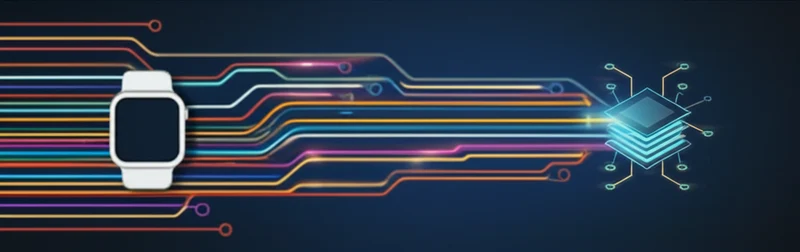
The WBM identifies pregnancy by tracking subtle but significant changes in key biometrics:
• Resting Heart Rate (RHR): RHR typically increases around the time of implantation due to rising blood volume and hormonal changes. This causes the heart to work harder, a well-documented symptom noted by the Cleveland Clinic.
• Heart Rate Variability (HRV): As a key indicator of autonomic nervous system function, HRV patterns often show a decrease in early pregnancy as the body adapts to new physiological demands, according to analysis by wearable company WHOOP.
• Wrist Temperature: The Apple Watch Series 8 and later models can track nightly temperature shifts. This is crucial because basal body temperature rises after ovulation and remains elevated if conception occurs, providing another key data stream as detailed in Apple’s product announcements.
Transformers: Beyond Text to Physiology
The researchers developed a transformer-based model, an architecture effective at processing sequential data like daily physiological measurements. These models use an “attention mechanism” to weigh the importance of different data points, allowing the AI to identify which subtle, long-term changes are most predictive of pregnancy, a concept pioneered by Google Research. The model’s headline result is an Area Under the Receiver Operating Characteristic Curve (AUROC) of 0.92. An AUROC score measures a model’s ability to correctly distinguish between two classes; a score of 0.92 indicates excellent discriminative ability, far better than random chance (0.5), according to Google’s Machine Learning Crash Course.
Wrist-Worn Warfare in Femtech
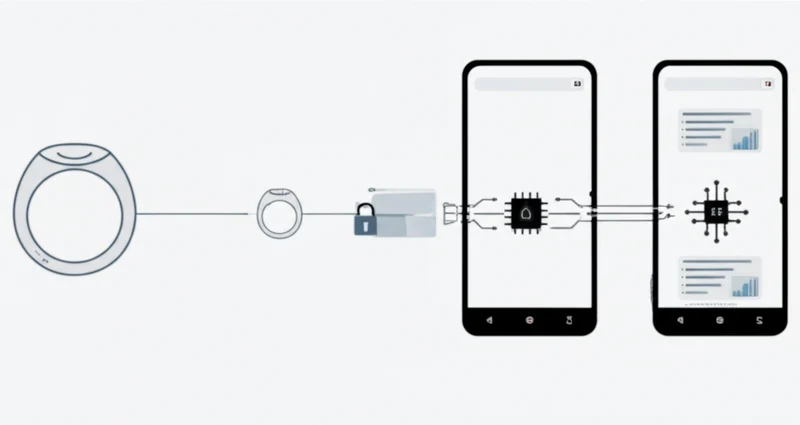
Apple’s breakthrough intensifies an already competitive landscape. Other major players have also been leveraging their technology for women’s health insights:
• WHOOP: A 2021 study using WHOOP data successfully characterized changes in RHR, HRV, and respiratory rate throughout pregnancy, as published in npj Digital Medicine.
• Oura:Research from the University of California San Diego demonstrated the Oura Ring’s ability to detect pregnancy by using its continuous temperature monitoring to spot the sustained temperature increase associated with conception.
• Google (Fitbit): A large-scale study using Fitbit data was among the first to show that sustained increases in resting heart rate are associated with the onset of pregnancy, as described in a 2020 npj Digital Medicine paper.
Algorithms at the Ethical Crossroads
While the clinical potential for earlier prenatal care is substantial, this advancement also raises critical questions about data privacy and ethics. Receiving a notification about a potential pregnancy can be emotionally charged and could cause significant anxiety, as discussed in an analysis by WIRED. Furthermore, the model was trained on a dataset that was not fully diverse, creating a risk that the algorithm may perform less accurately for underrepresented demographic groups and potentially worsen existing health disparities. Realizing the future of predictive health, which may one day include biosensors for glucose or cortisol, will require robust ethical frameworks to ensure these powerful tools are used safely and equitably, according to analysis from Rock Health.
Read More From AI Buzz

Perplexity pplx-embed: SOTA Open-Source Models for RAG
Perplexity AI has released pplx-embed, a new suite of state-of-the-art multilingual embedding models, making a significant contribution to the open-source community and revealing a key aspect of its corporate strategy. This Perplexity pplx-embed open source release, built on the Qwen3 architecture and distributed under a permissive MIT License, provides developers with a powerful new tool […]

New AI Agent Benchmark: LangGraph vs CrewAI for Production
A comprehensive new benchmark analysis of leading AI agent frameworks has crystallized a fundamental challenge for developers: choosing between the rapid development speed ideal for prototyping and the high-consistency output required for production. The data-driven study by Lukasz Grochal evaluates prominent tools like LangGraph, CrewAI, and Microsoft’s new Agent Framework, revealing stark tradeoffs in performance, […]