
ARPA-H AI Sprint: Google & OpenAI Tapped for VA Health Data

The White House has launched a targeted public-private partnership, enlisting tech giants including Google, Microsoft, OpenAI, and Amazon to apply advanced artificial intelligence to vast federal health databases. The initiative, led by the Advanced Research Projects Agency for Health (ARPA-H), is structured as a “sprint” program designed to accelerate breakthroughs in cancer and women’s health, according to the official announcement from the U. S. Department of Health and Human Services (HHS). This White House AI healthcare partnership aims to solve one of healthcare’s most persistent challenges: unlocking the value of unstructured clinical data. By deploying powerful large language models (LLMs) on unique, large-scale federal datasets, such as the Department of Veterans Affairs’ (VA) extensive patient archives, the project represents a significant move to translate AI research into practical tools for clinicians and scientists. The initial focus is on the Biden-Harris Administration’s Cancer Moonshot and the ARPA-H Sprint for Women’s Health, using de-identified data to maintain patient privacy.
Key Points
• The White House’s ARPA-H has established a collaboration with Google, OpenAI, Microsoft, and other tech leaders to apply AI to federal health data.
• The program utilizes LLMs to analyze unstructured clinical notes from massive datasets, including the VA’s records on over 24 million patients.
• An initial project involves OpenAI building an open-source tool to standardize VA cancer pathology reports, converting narrative text into a machine-readable format.
• This development operates under strict regulatory frameworks like HIPAA and FDA oversight to address critical challenges in data privacy, model accuracy, and algorithmic bias.
Silicon Valley Meets Federal Medicine
This initiative formalizes a strategic alliance between the federal government and the world’s leading AI developers to tackle specific healthcare grand challenges. The ARPA-H program brings together a formidable group—Google, Microsoft, OpenAI, Amazon, Anthropic, Palantir, and Oracle—to work alongside federal agencies like the National Institutes of Health (NIH) and the Department of Veterans Affairs. The stated goal is to “responsibly leverage AI and enhance data usability to improve health outcomes for all Americans.”
The scale of the data involved is a key differentiator. The VA’s Corporate Data Warehouse, for instance, contains longitudinal health data on over 24 million patients, offering a uniquely valuable resource for initiatives using Big Tech LLMs VA health records for training and validation. This effort is set against the backdrop of a booming AI in healthcare market. According to a report by Grand View Research, the market was valued at approximately USD 20.9 billion in 2023 and is projected to grow at a compound annual growth rate of 36.4% through 2030. By focusing this technological firepower on the Cancer Moonshot and a dedicated sprint for women’s health, the administration is directing innovation toward areas of high national priority.

Decoding Healthcare’s Dark Data
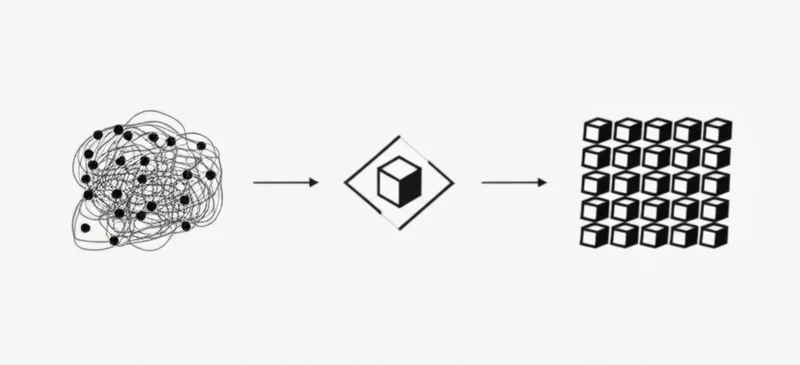
The core technical challenge this ARPA-H AI sprint addresses is the overwhelming volume of unstructured health data. An estimated 80% of clinical information exists as so-called “dark data” —physicians’ narrative notes, pathology reports, and lab descriptions that are rich with insight but difficult to analyze systematically. LLMs are uniquely suited to process this natural language, and the initiative provides a high-impact testbed for their application.
A prime example is the announced collaboration between OpenAI and the VA. As reported by Reuters, OpenAI is tasked with building an open-source tool to improve cancer screening by processing unstructured pathology reports. The model will convert narrative text into a standardized, machine-readable format like the International Classification of Diseases for Oncology (ICD-O). This standardization is crucial for aggregating research data and identifying patient cohorts for clinical trials, a process that is currently manual and slow. By making the tool open-source, the project aims to create a reusable asset for the entire healthcare community, a significant step in addressing long-standing data interoperability problems with the latest on AI analyzing VA patient data.
Navigating AI’s Clinical Minefield
Deploying powerful AI on sensitive health data necessitates navigating a complex landscape of technical and ethical hurdles. While the potential is immense, the initiative’s success hinges on addressing three critical areas: accuracy, privacy, and bias. LLMs are known to “hallucinate,” or generate incorrect information, an unacceptable risk in a clinical setting. A guide in Nature Medicine emphasizes the need for rigorous validation and “human-in-the-loop” systems where experts verify AI outputs.
Even high-performing models like Google’s Med-PaLM 2, which demonstrated “expert” level performance on medical board exams in a study published in Nature, require such oversight. Furthermore, all projects must adhere strictly to HIPAA for data privacy and security. While the use of de-identified data is a primary safeguard, the risk of re-identification remains a concern. Finally, as researchers at Stanford’s Institute for Human-Centered AI (HAI) warn, models trained on historical data can amplify existing biases, potentially worsening health disparities. The FDA’s existing framework for AI/ML-enabled medical devices, which has already cleared hundreds of tools, provides a regulatory precedent for ensuring safety and effectiveness.
Breaking Down Bureaucratic Barriers
The ARPA-H AI sprint health data initiative represents a notable development in the application of AI to healthcare. It moves beyond general research by creating a focused framework for translating AI capabilities into practical clinical tools. By bringing together federal datasets with cutting-edge AI models, the program addresses the critical bottleneck of unstructured data that has long hampered healthcare analytics. This approach demonstrates how public-private partnerships can accelerate innovation in regulated domains, potentially establishing a model for future collaborations across other sectors.
The initiative’s emphasis on open-source tools and standardization represents a strategic investment in healthcare infrastructure that extends beyond any single project. As these tools mature, they have the potential to enhance research efficiency, improve clinical decision-making, and ultimately deliver more personalized care. The success of this program will be measured not just by technical achievements but by its ability to navigate the complex regulatory, ethical, and implementation challenges inherent in healthcare AI—turning promising algorithms into tangible improvements in patient outcomes.
Tags
Read More From AI Buzz

Perplexity pplx-embed: SOTA Open-Source Models for RAG
Perplexity AI has released pplx-embed, a new suite of state-of-the-art multilingual embedding models, making a significant contribution to the open-source community and revealing a key aspect of its corporate strategy. This Perplexity pplx-embed open source release, built on the Qwen3 architecture and distributed under a permissive MIT License, provides developers with a powerful new tool […]

New AI Agent Benchmark: LangGraph vs CrewAI for Production
A comprehensive new benchmark analysis of leading AI agent frameworks has crystallized a fundamental challenge for developers: choosing between the rapid development speed ideal for prototyping and the high-consistency output required for production. The data-driven study by Lukasz Grochal evaluates prominent tools like LangGraph, CrewAI, and Microsoft’s new Agent Framework, revealing stark tradeoffs in performance, […]