
China's Manus AI Redefines Autonomous Agents and Challenges Western Tech Dominance
The global artificial intelligence landscape is undergoing a dramatic transformation, and China is rapidly emerging as a major force. A new Chinese artificial intelligence agent, Manus, has rapidly captured the attention of the AI community with its ability to handle complex, real-world tasks.
Developed by a low-profile team and backed by Chinese investors and developers, Manus, a potential Manus AI agent China, is currently available as an invitation-only web preview. A demonstration video on its website, manus.im, showcases its ability to create a custom website through a step-by-step process.
Why It Matters: China’s AI Ascendancy
China has been at the helm of several AI breakthroughs in 2025. The launch of DeepSeek in January, described as a “Sputnik moment” for U.S. AI development, showed that China was able to produce functional Large Language Models (LLMs) for a fraction of the cost of American industry leaders, and Manus shows that this kind of progress can be repeated.
Manus is not just another LLM; it’s an agent, capable of taking action, not just generating text. This distinction is crucial.
What To Know: Manus’ Capabilities and Applications
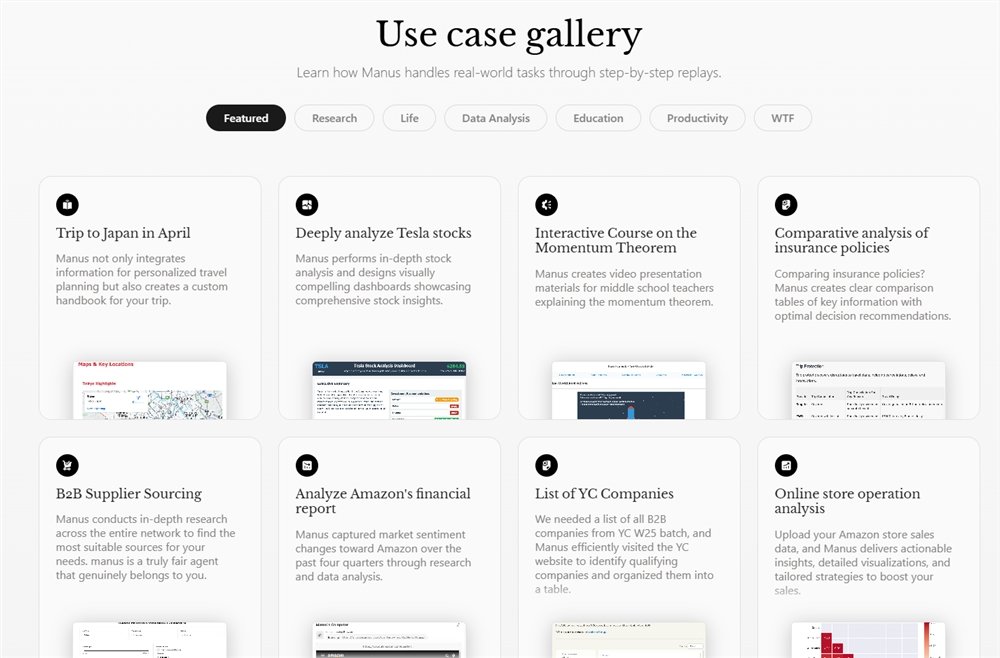
Manus’ website says it is focused on real-world complex tasks, giving the examples of devising an itinerary for a trip to Japan, providing an in-depth analysis of Tesla‘s stock, creating interactive courses for middle-school teachers, comparing different insurance policies, and assisting in business-to-business supplier sourcing.
The key differentiator for Manus lies in its autonomous nature. It’s not simply responding to prompts; it’s actively engaging with the digital environment, gathering information, and making decisions to achieve a predefined goal.
Manus also claims to outperform OpenAI‘s Deep Research based on the GAIA benchmark, a third-party measure of general AI assistants. This is a bold claim, and if substantiated, it positions Manus, a possible example of a Chinese general AI agent, as a direct competitor to one of the leading AI research organizations in the world.
Despite limited information about its corporate structure, team, and underlying models, Manus has generated significant interest. A demo video, published on X (formerly Twitter), showcasing Manus’ capabilities, garnered over 200,000 views within a day of its release.
This surge in popularity mirrors the buzz following the launch of DeepSeek’s R1 reasoning model in January. General-purpose AI agents, capable of interacting with their environment, collecting data, and autonomously handling tasks to achieve predetermined goals, are widely regarded as the future of AI applications.
According to the demo, Manus can autonomously browse websites, leverage various capabilities, and display its workflow in real time. The developers describe it as “a general AI agent that bridges minds and actions: it doesn’t just think, it delivers results.”
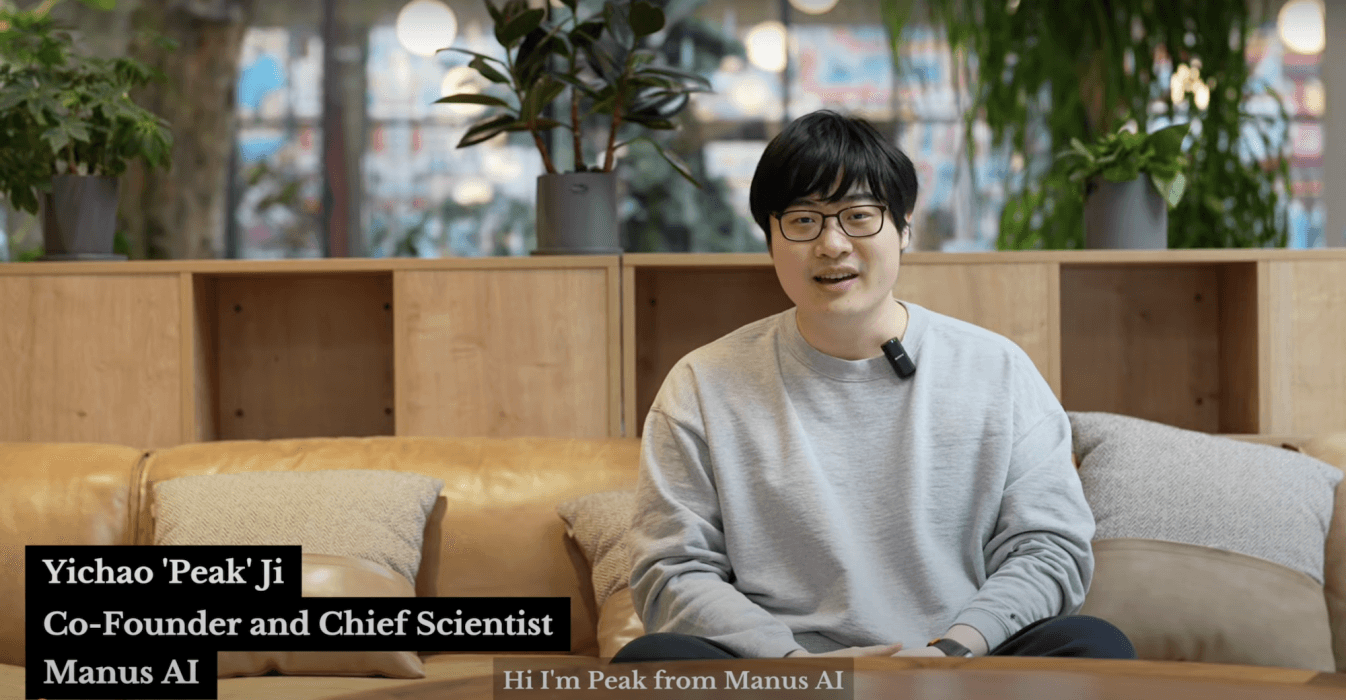
The demo video is hosted by Ji Yichao, a 33-year-old Chinese entrepreneur and tech enthusiast known for creating the mobile browser Mammoth and founding Peak Labs in the U.S. Many might search for Ji Yichao Manus AI to learn more.
What People Are Saying
In the demonstration, presenter Ji Yichao said: “This isn’t just another chatbot or workflow. It’s a truly autonomous agent that bridges that gap between conception and execution. While other AIs stop at generating ideas, Manus delivers results.”
Industry experts are also taking notice. Dr. Emily Carter, a leading AI researcher at Stanford University, commented, “The emergence of Manus is a significant development.”
The public reaction has been overwhelmingly positive, with many expressing excitement and anticipation for the potential applications of Manus.
What Happens Next
Manus is continuing to operate on an invite-only system for the time being, though it is expected to switch to free use at some point in the future.
The development of Manus also raises important ethical and societal considerations. As AI agents become more autonomous and capable, questions arise about accountability, bias, and the potential for misuse.
Manus represents a significant milestone in the evolution of AI. It’s a glimpse into a future where AI agents are not just tools but partners, capable of independent action and complex problem-solving.
Read More From AI Buzz

Perplexity pplx-embed: SOTA Open-Source Models for RAG
Perplexity AI has released pplx-embed, a new suite of state-of-the-art multilingual embedding models, making a significant contribution to the open-source community and revealing a key aspect of its corporate strategy. This Perplexity pplx-embed open source release, built on the Qwen3 architecture and distributed under a permissive MIT License, provides developers with a powerful new tool […]

New AI Agent Benchmark: LangGraph vs CrewAI for Production
A comprehensive new benchmark analysis of leading AI agent frameworks has crystallized a fundamental challenge for developers: choosing between the rapid development speed ideal for prototyping and the high-consistency output required for production. The data-driven study by Lukasz Grochal evaluates prominent tools like LangGraph, CrewAI, and Microsoft’s new Agent Framework, revealing stark tradeoffs in performance, […]