
Google slips new flagship AI model into changelog
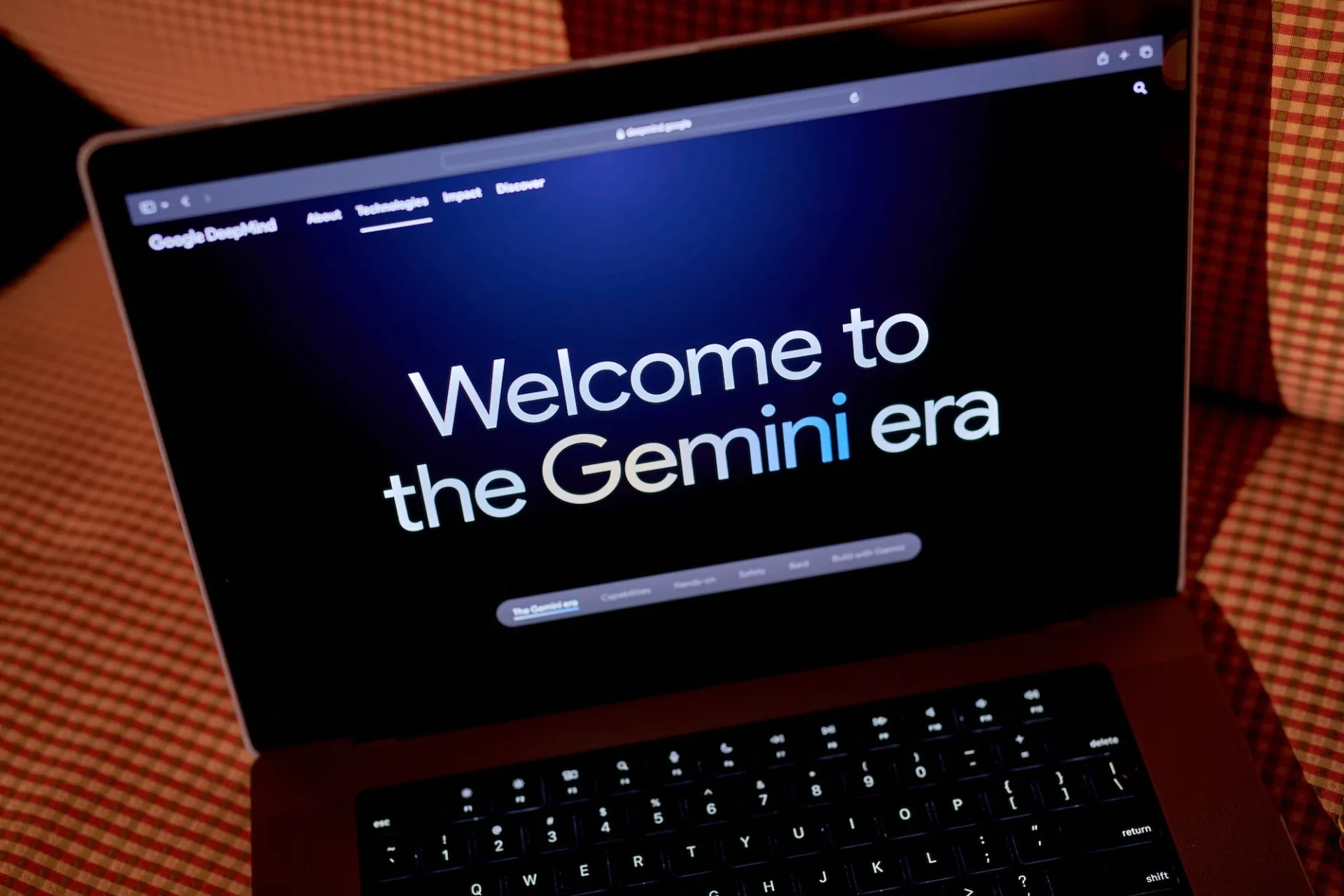
Google’s latest AI model, Gemini 2.0 Pro Experimental, has achieved a groundbreaking 90% score on the Massive Multitask Language Understanding (MMLU) test, marking the first time an AI has outperformed human experts. The model was quietly unveiled through a changelog update in the Gemini chatbot app, eschewing the usual fanfare associated with major AI releases.
The release comes at a pivotal moment in the AI landscape, as Chinese AI startup DeepSeek has captured industry attention with models that rival or exceed those from leading American tech companies. This has sparked significant discussion both in Silicon Valley and Washington.
Gemini 2.0 Pro Experimental is now accessible to Gemini Advanced users, representing the pinnacle of Google’s AI capabilities. The company states it delivers “better factuality” and “stronger performance” particularly in coding and mathematics-related tasks.
“Whether you’re tackling advanced coding challenges, like generating a specific program from scratch, or solving mathematical problems, like developing complex statistical models or quantum algorithms, 2.0 Pro Experimental will help you navigate even the most complex tasks with greater ease and accuracy,” Google explains in its changelog.
The model is available through Google One AI Premium subscription and Gemini for Google Workspace add-ons. However, Google emphasizes that as an “early preview” release, users may encounter “unexpected behaviors” and occasional errors.
Notably, unlike other Gemini variants in the app, the 2.0 Pro Experimental version lacks access to real-time information and isn’t compatible with certain app features. “We believe in rapid iteration and bringing the best of Gemini to the world, and we want to give Gemini Advanced subscribers priority access to our latest AI innovations,” Google states, adding that user feedback helps refine these models over time.
The growth trajectory of the Large Language Model (LLM) market underscores the significance of these developments. In 2023, the market size reached USD 2.85 billion, with projections showing a rise to USD 30.0 billion by 2032, representing a compound annual growth rate (CAGR) of 29.9%.
Alongside the 2.0 Pro Experimental release, Google has made the Gemini 2.0 Flash model announced in December available to all Gemini app users, cementing its position as the default model for the immediate future.
Industry surveys reveal growing enterprise interest in LLMs, with a Datanami survey from August 2023 indicating that 58% of companies are actively experimenting with these technologies. This trend suggests accelerating adoption of advanced AI models across various sectors.
Looking ahead, Gemini’s evolution continues through experimental projects like Project Astra, Project Mariner, and Jules – each exploring different aspects of AI’s potential in real-world applications. As these developments unfold, they promise to reshape how we interact with AI technology while raising important questions about ethical implementation and industry impact.
Read More From AI Buzz

Perplexity pplx-embed: SOTA Open-Source Models for RAG
Perplexity AI has released pplx-embed, a new suite of state-of-the-art multilingual embedding models, making a significant contribution to the open-source community and revealing a key aspect of its corporate strategy. This Perplexity pplx-embed open source release, built on the Qwen3 architecture and distributed under a permissive MIT License, provides developers with a powerful new tool […]

New AI Agent Benchmark: LangGraph vs CrewAI for Production
A comprehensive new benchmark analysis of leading AI agent frameworks has crystallized a fundamental challenge for developers: choosing between the rapid development speed ideal for prototyping and the high-consistency output required for production. The data-driven study by Lukasz Grochal evaluates prominent tools like LangGraph, CrewAI, and Microsoft’s new Agent Framework, revealing stark tradeoffs in performance, […]