
Google Introduces TxGemma, Open AI Models for Drug Discovery

In a move that could reshape pharmaceutical research, Google has unveiled TxGemma, a collection of open AI models specifically designed to accelerate drug discovery. The announcement came during a health-focused event in New York on Tuesday, highlighting the tech giant’s commitment to addressing the pharmaceutical industry’s notoriously lengthy development timelines and astronomical costs.
A New Foundation for Health AI Development
TxGemma represents a cornerstone of Google’s strategy to integrate artificial intelligence into pharmaceutical research. Researchers will gain access to these models through Google’s Health AI Developer Foundations program, set to launch later this month. The initiative aims to equip scientists with powerful tools to sift through complex biological data and potentially fast-track early-stage drug discovery.
By making TxGemma “open,” Google appears to be democratizing access to cutting-edge AI capabilities—potentially fostering unprecedented collaboration within the scientific community and paving the way for breakthroughs in AI-driven drug development.
Karen DeSalvo, Google’s chief health officer, explained in a blog post: “The development of therapeutic drugs from concept to approved use is a long and expensive process, so we’re working with the wider research community to find new ways to make this development more efficient. Researchers can ask TxGemma questions to help predict important properties of potential new therapies, like how safe or effective they might be.”
Bridging Text and Structure
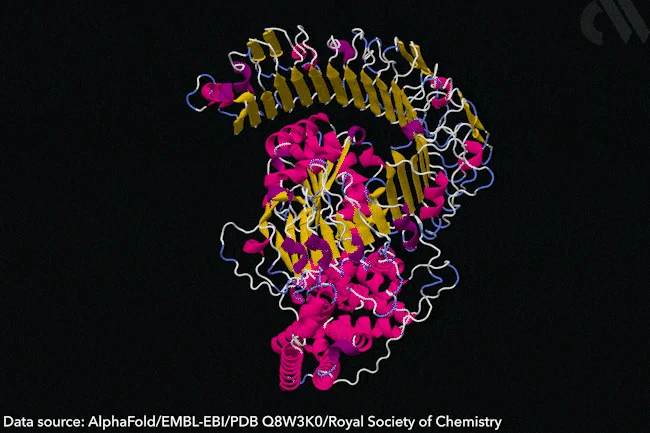
What sets TxGemma apart is its dual capability—understanding both traditional text and the complex structural information of therapeutic entities like chemicals, molecules, and proteins. This unique approach allows the models to interpret intricate structural information and predict crucial properties of potential drug candidates, including safety profiles and efficacy.
This focus on domain-specific AI reflects a growing industry trend. Increasingly, specialized AI models are recognized as more effective than general-purpose alternatives for tasks like drug discovery. The vibrant landscape in this field is evidenced by over 460 AI startups currently working on drug discovery solutions, collectively attracting an impressive $60 billion in investment.
The global AI in drug discovery market, valued between $1.39 billion and $2.6 billion in 2023-2024, is projected to explode to $35.42 billion by 2034—a testament to the transformative potential investors see in this technology.
Transforming Drug Development
AI’s Revolutionary Potential
Artificial intelligence is fundamentally changing how researchers approach drug discovery. Today’s AI algorithms can process vast and complex biological datasets to identify potential disease targets with unprecedented speed and accuracy.
Machine learning models then predict how these targets might interact with drug molecules, drastically reducing the need for physical laboratory experiments through virtual screening and molecular dynamics simulations.
Large language models (LLMs) have emerged as particularly valuable tools in this domain. They excel at processing scientific literature and biomedical data, designing novel molecules, and predicting their efficacy and safety profiles—often with promising results compared to traditional methods.
Challenges and Setbacks
Despite the optimism, the path hasn’t been without obstacles. Several companies pioneering AI for drug discovery, including Exscientia, have faced significant setbacks in recent years.
Fundamental challenges persist: the quality of input data remains critical to AI success, the “black box” nature of many algorithms makes their reasoning difficult to interpret, and regulatory frameworks for AI in drug development are still evolving. Even the accuracy of leading systems like Google DeepMind’s AlphaFold continues to spark debate among researchers.

From Lab to Clinical Trials
Isomorphic Labs Leads the Charge
While many companies have promised AI-driven revolutions in drug discovery, Isomorphic Labs—an Alphabet-owned startup that spun out from Google’s DeepMind in 2021—is positioning itself at the forefront of translating these promises into reality.
The company has established partnerships with pharmaceutical giants Eli Lilly and Novartis, focusing on developing treatments for cancer and neurodegeneration. These collaborations merge Isomorphic’s AI expertise with the resources and industry knowledge of established pharma companies.
Perhaps most notably, Isomorphic Labs anticipates commencing human clinical trials for its first AI-designed drug candidate by the end of this year—a potentially historic milestone for the field. In January, the company confirmed its expectation that testing on AI-designed drugs would begin sometime in 2024.
Inside TxGemma
Built on Gemma’s Foundation
TxGemma builds upon Google’s existing Gemma family of models, tailoring their capabilities specifically for pharmaceutical applications. The suite emphasizes predicting properties of potential drug candidates—a crucial function in streamlining the discovery process.
Questions About Access
While Google has announced plans to release TxGemma through its Health AI Developer Foundations program, some questions remain unanswered. The company hasn’t clarified whether the models’ licensing will permit commercial use, customization, or fine-tuning—details that could significantly impact their adoption and utility.
The Competitive Landscape
TxGemma enters a diverse ecosystem that includes technology giants providing foundational AI technologies and a growing cohort of “AI-first” biotech companies. Major pharmaceutical companies are increasingly investing in internal AI capabilities while forming strategic collaborations with specialized partners.
The enthusiasm from both big pharma and investors continues to fuel growth in this sector, with billions flowing into AI-focused biotech ventures.
Beyond Drug Discovery
AI’s impact on healthcare extends far beyond identifying new medications. These technologies are improving diagnostic accuracy, personalizing treatment plans, enhancing healthcare operations, analyzing medical images, and even revolutionizing preventative medicine by identifying high-risk patients before symptoms appear.
However, significant challenges remain. The field needs large, high-quality datasets, greater transparency in AI decision-making, and robust regulatory frameworks to ensure safety, efficacy, and ethical use.
As Google’s TxGemma and similar initiatives continue to evolve, they signal a fundamental transformation in pharmaceutical research—potentially ushering in a more efficient, collaborative era of drug discovery powered by artificial intelligence.
Tags
Read More From AI Buzz

Perplexity pplx-embed: SOTA Open-Source Models for RAG
Perplexity AI has released pplx-embed, a new suite of state-of-the-art multilingual embedding models, making a significant contribution to the open-source community and revealing a key aspect of its corporate strategy. This Perplexity pplx-embed open source release, built on the Qwen3 architecture and distributed under a permissive MIT License, provides developers with a powerful new tool […]

New AI Agent Benchmark: LangGraph vs CrewAI for Production
A comprehensive new benchmark analysis of leading AI agent frameworks has crystallized a fundamental challenge for developers: choosing between the rapid development speed ideal for prototyping and the high-consistency output required for production. The data-driven study by Lukasz Grochal evaluates prominent tools like LangGraph, CrewAI, and Microsoft’s new Agent Framework, revealing stark tradeoffs in performance, […]