
Hume AI Lands $50M to Launch EVI Voice Interface
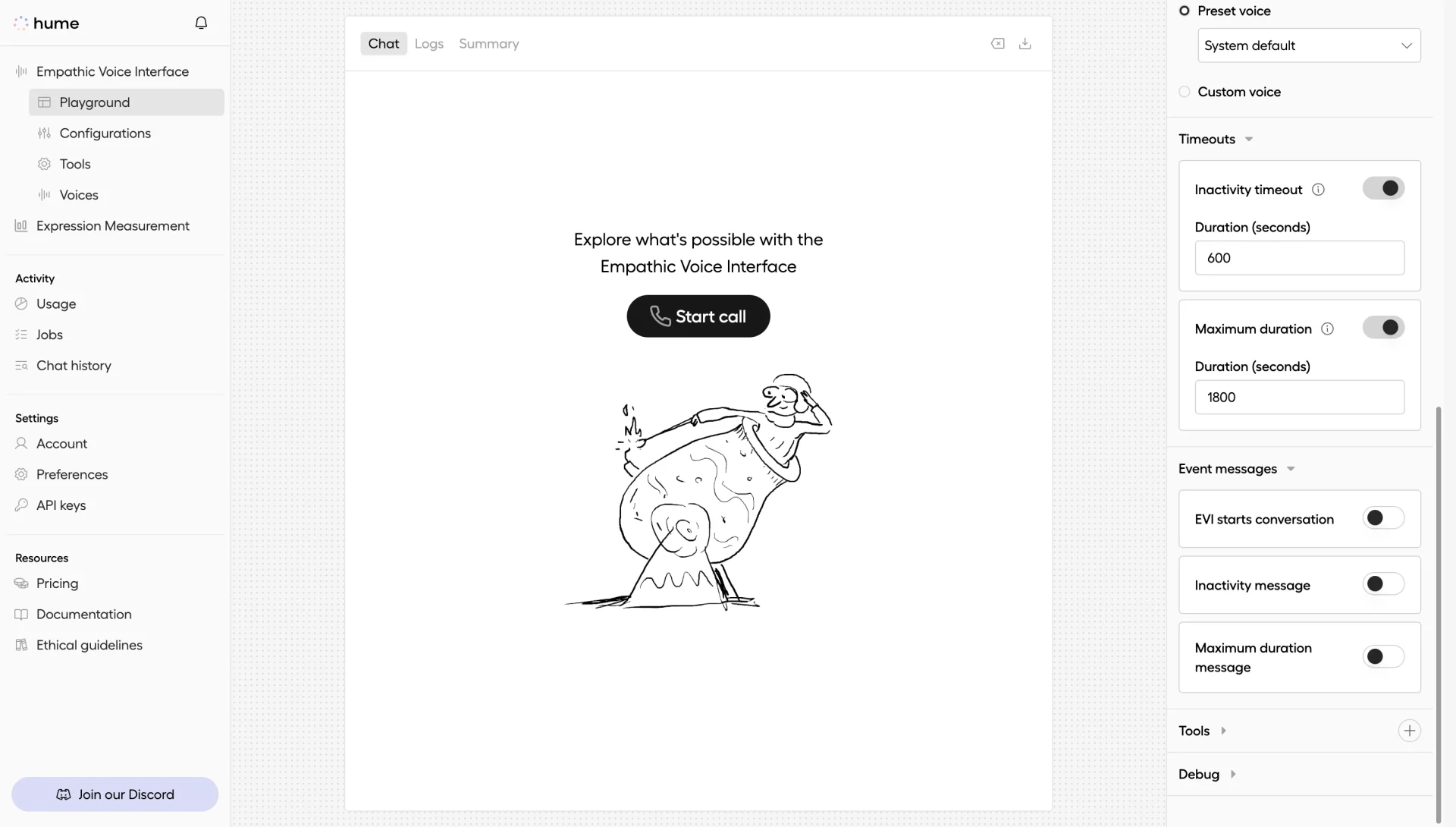
Imagine a world where your devices understand not just what you say, but how you say it. That future is closer than ever, thanks to Hume AI, a startup that just secured $50 million in funding from EQT Ventures to build an emotionally intelligent voice interface called EVI. This breakthrough technology promises to transform human-AI interaction, creating a more intuitive and empathetic relationship between humans and machines.
Hume AI’s innovative approach to AI development is rooted in founder Dr. Alan Cowen’s pioneering work on semantic space theory, which delves into the nuances of human emotional expression through voice, face, and gesture. By leveraging this research, Hume AI has created an advanced API toolkit that measures human emotional expression, already being used in various industries, including robotics, customer service, healthcare, and user research.
The newly released EVI is a testament to Hume AI’s commitment to creating AI that understands and responds to human emotions. Trained on data from millions of human interactions, EVI can accurately detect when users are finished speaking, predict their preferences, and generate vocal responses optimized for user satisfaction. This breakthrough technology enables developers to integrate an emotionally intelligent voice interface into their applications with just a few lines of code.
What sets Hume AI apart from other AI voice products is its ability to emulate natural speech patterns and engage in fluid, near-human-level conversation. EVI’s empathic large language model (eLLM) allows it to adjust its words and tone of voice based on the context and the user’s emotional expressions, creating a truly immersive conversational experience.
The potential applications of Hume AI’s technology are vast, ranging from enhancing customer service interactions to improving the accuracy of medical diagnoses and patient care. As Ted Persson, Partner at EQT Ventures, states, “Hume’s empathic models are the crucial missing ingredient we’ve been looking for in the AI space. We believe that Hume is building the foundational technology needed to create AI that truly understands our wants and needs”.
Hume AI’s founder, Dr. Alan Cowen, emphasizes the importance of building AI that learns directly from proxies of human happiness, stating, “By building AI that learns directly from proxies of human happiness, we’re effectively teaching it to reconstruct human preferences from first principles and then update that knowledge with every new person it talks to and every new application it’s embedded in”.
The company’s commitment to ethical AI development is evident in its support of The Hume Initiative, a non-profit organization that has released the first concrete ethical guidelines for empathic AI. This dedication to responsible AI development sets Hume AI apart and ensures that its technology will be used to better serve human goals and well-being.
As Hume AI continues to advance its research and develop its emotionally intelligent AI tools, the potential for revolutionizing human-AI interaction is immense. With its $50 million Series B funding, the company is well-positioned to lead the charge in creating AI that not only understands human emotions but also responds to them in a way that enhances our daily lives and improves our overall well-being.
Read More From AI Buzz

Perplexity pplx-embed: SOTA Open-Source Models for RAG
Perplexity AI has released pplx-embed, a new suite of state-of-the-art multilingual embedding models, making a significant contribution to the open-source community and revealing a key aspect of its corporate strategy. This Perplexity pplx-embed open source release, built on the Qwen3 architecture and distributed under a permissive MIT License, provides developers with a powerful new tool […]

New AI Agent Benchmark: LangGraph vs CrewAI for Production
A comprehensive new benchmark analysis of leading AI agent frameworks has crystallized a fundamental challenge for developers: choosing between the rapid development speed ideal for prototyping and the high-consistency output required for production. The data-driven study by Lukasz Grochal evaluates prominent tools like LangGraph, CrewAI, and Microsoft’s new Agent Framework, revealing stark tradeoffs in performance, […]