
Isambard-AI: UK's Bet on Energy Efficiency for AI Dominance
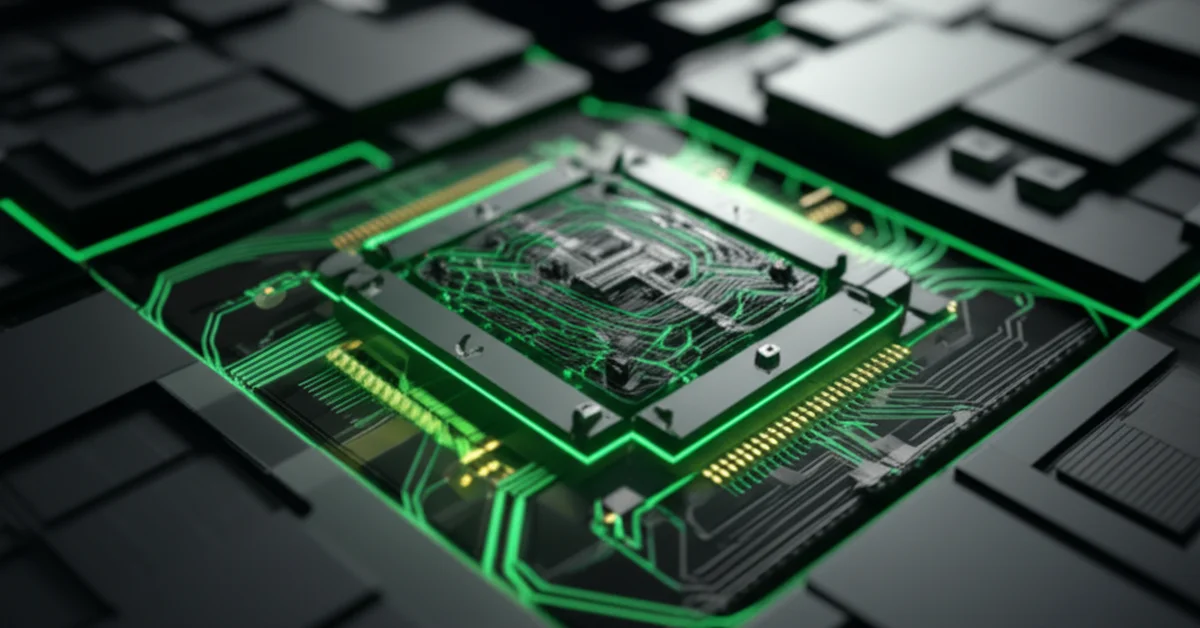
The United Kingdom has officially activated Isambard-AI, a £225 million system that marks a pivotal moment in the country’s technological ambitions. Housed at the National Composites Centre in Bristol, this machine is not merely an incremental upgrade; it represents a calculated and strategic pivot in computing architecture. While its projected 21 exaflops of AI performance command attention, the true story lies in its design. By building one of the world’s largest systems on NVIDIA’s Grace Hopper Superchips, the UK is making a definitive bet that the future of AI dominance will be won not just on raw speed, but on groundbreaking energy efficiency. This UK new AI supercomputer launch is the cornerstone of a national strategy to build sovereign capabilities and secure a leading role in a computationally intensive global landscape.
Key Points
• Isambard-AI’s architecture is built on 5, 448 NVIDIA GH200 Grace Hopper Superchips, designed to deliver over 21 exaflops of 8-bit AI performance.
• The system demonstrates elite power efficiency, achieving 68.83 gigaflops/watt and securing the #2 rank on the November 2023 Green500 list in its initial phase.
• This supercomputer is the flagship of the UK’s AI Research Resource (AIRR), backed by a £900 million government investment to reduce reliance on foreign commercial clouds and foster domestic innovation.
• The GH200 Superchip’s design eliminates traditional data bottlenecks by connecting its CPU and GPU with a 900 GB/s interconnect, 7 times faster than standard PCIe Gen5.
Silicon Symphony: The GH200 Architecture Breakthrough
The foundation of Isambard-AI’s performance is its HPE Cray EX2500 architecture, populated with 5, 448 NVIDIA GH200 Grace Hopper Superchips. This configuration represents a significant departure from traditional supercomputers that physically separate CPUs and GPUs, forcing them to communicate across a comparatively slow PCIe bus.
The GH200 Superchip integrates a 72-core Arm Neoverse V2 Grace CPU and a Hopper H100 GPU onto a single module. As NVIDIA explains, they are connected by a 900 GB/s NVLink Chip-2-Chip (C2C) interconnect. This high-bandwidth link is a critical piece of the Isambard-AI architecture details, as it is 7 times faster than a standard PCIe Gen5 connection. This design eliminates data transfer bottlenecks, allowing the GPU to access the CPU’s memory at immense speed—a crucial capability for training the massive AI models that define modern research.

Data flow across the entire system is managed by the HPE Slingshot-11 interconnect, a high-performance network engineered to prevent congestion during large, distributed AI tasks where thousands of processors must work in concert.
Watts Matter: The Power Efficiency Revolution
While Isambard-AI’s processing power is substantial, its most notable characteristic is its focus on sustainable computing. In an era where the energy cost of AI is a growing concern, the system’s design prioritizes performance-per-watt, a metric of Isambard-AI energy efficiency where it already stands as a global leader.
In the November 2023 Green500 list, which ranks supercomputers by power efficiency, the first phase of Isambard-AI was ranked #2 in the world. It achieved an efficiency of 68.83 gigaflops/watt, a direct result of its Arm-based Grace CPU and tightly integrated architecture. This focus on Isambard-AI energy efficiency is a key differentiator. The system is engineered for AI-specific calculations, projected to deliver over 21 exaflops of performance at the 8-bit precision common in AI. For traditional 64-bit scientific computing, it provides a still-powerful 2.7 petaflops, but its specialization is clear.

Even its initial 168-chip configuration debuted at #129 on the TOP500 list, a position expected to climb dramatically once the full system is benchmarked.
Digital Sovereignty: Britain’s AI Infrastructure Play
Isambard-AI is the centerpiece of the UK’s national AI strategy, a direct response to the government’s 2023 Future of Compute Review. That report identified a “significant shortfall” in the UK’s compute capacity and prompted the £900 million investment that underpins this project. The system forms the core of the new national AI Research Resource (AIRR), designed to provide UK researchers with the elite tools needed to compete globally.
The strategic goal is to foster UK energy efficient AI dominance by creating sovereign infrastructure. This reduces reliance on predominantly US-based commercial clouds for large-scale research, attracting top talent and enabling work on sensitive national projects, placing the UK in a competitive field with global leaders whose systems dominate the latest TOP500 rankings. However, this ambition is met with documented challenges. Successfully leveraging the machine requires closing a national skills gap in high-performance computing, and its reliance on a single vendor’s architecture highlights a dependency on global technology supply chains, though some industry analysts view this as a calculated “forward-looking bet” on an architecture designed for the AI era. Sustained investment will be critical to keep pace with rapid hardware evolution.
Exaflops With Purpose: The Technical Endgame
Isambard-AI is far more than a hardware installation; it is a declaration of intent. By investing in an architecture purpose-built for efficient, large-scale AI, the UK is making a forward-looking bet on where the field is headed. As NVIDIA’s Ian Buck noted, the goal is to give researchers the tools “to spearhead the next wave of AI innovation.” This UK national AI strategy supercomputer provides the domestic research community with advanced, specialized tools designed to tackle foundational challenges in drug discovery, climate science, and next-generation AI models. Professor Simon McIntosh-Smith, the project lead at the University of Bristol, has called the integrated CPU-GPU design a that allows scientists to tackle larger and more complex models.
As AI hardware and models continue to co-evolve, will this strategic focus on a tightly integrated, energy-efficient architecture provide Britain’s researchers with a durable competitive advantage?
Read More From AI Buzz

Perplexity pplx-embed: SOTA Open-Source Models for RAG
Perplexity AI has released pplx-embed, a new suite of state-of-the-art multilingual embedding models, making a significant contribution to the open-source community and revealing a key aspect of its corporate strategy. This Perplexity pplx-embed open source release, built on the Qwen3 architecture and distributed under a permissive MIT License, provides developers with a powerful new tool […]

New AI Agent Benchmark: LangGraph vs CrewAI for Production
A comprehensive new benchmark analysis of leading AI agent frameworks has crystallized a fundamental challenge for developers: choosing between the rapid development speed ideal for prototyping and the high-consistency output required for production. The data-driven study by Lukasz Grochal evaluates prominent tools like LangGraph, CrewAI, and Microsoft’s new Agent Framework, revealing stark tradeoffs in performance, […]