
Meta's Early Experience Bypasses RL Training Bottleneck

Meta AI has introduced a novel training methodology for language agents, named ‘Early Experience,’ that diverges from traditional reward-based learning. This new approach trains agents using pre-existing datasets of actions without requiring an explicit reward function, a development that, according to recent reports, addresses a significant bottleneck in reinforcement learning. Research on the latest Meta AI language agent training indicates that agents trained with this method consistently outperform those developed using standard Imitation Learning, signaling a notable advancement in creating more scalable and data-efficient autonomous systems. This reward-free paradigm simplifies the training process and demonstrates a more effective way to generalize from observed behaviors, moving beyond simple mimicry to a deeper understanding of action sequences, as outlined in the research.
Key Points
- Meta AI’s ‘Early Experience’ trains agents from offline data without needing engineered reward functions.
- The method involves a two-stage process: learning a latent action space, then training a goal-conditioned policy.
- Research documents that agents using this approach outperform standard Imitation Learning in generalization tasks.
- This development addresses the ‘reward hacking’ problem and complexity inherent in many Reinforcement Learning models.
Reward-Free Learning: The Two-Stage Revolution
The core innovation behind how Early Experience trains AI without rewards is its two-stage, reward-free process. This method is designed to teach an agent not just to mimic actions, but to build a foundational understanding of behavior from a static dataset of observed actions.
In the first stage, the model learns a latent action space. Instead of being trained on a specific task, it analyzes an offline dataset of “trajectories”—sequences of observations and actions—to build a compressed model of what is possible within its environment. This is analogous to an infant learning the physics of its own body before it can achieve specific goals. This foundational model of valid actions is the critical differentiator from simple behavioral cloning.
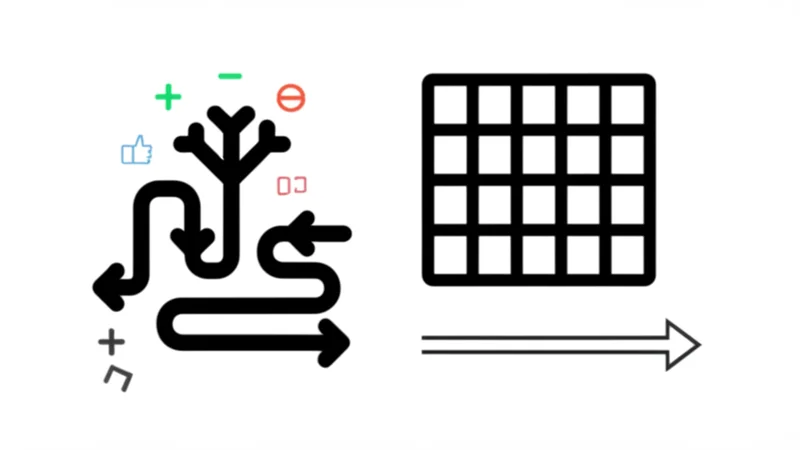
The second stage involves training a goal-conditioned policy on top of this learned action model. This policy learns to generate sequences of actions from the latent space to achieve a desired outcome. Because the agent already has a robust model of valid actions, it can more effectively plan and execute tasks, even if the exact sequence was not in the original dataset, as detailed in the paper on how Meta AI’s ‘Early Experience’ Trains Language Agents without Rewards.
Breaking the Reinforcement Learning Bottleneck
The ‘Early Experience’ approach presents a significant departure from prevailing agent training paradigms. Its most notable distinction is how Meta AI bypasses RL bottleneck problems by completely eliminating the reward function. Engineering a reward function that correctly incentivizes behavior without creating unintended loopholes is a notoriously difficult challenge in Reinforcement Learning. This new method sidesteps that entire problem.
Compared to standard Imitation Learning (IL), particularly Behavioral Cloning, this technique demonstrates superior generalization. While IL trains an agent to directly map observations to actions, it can be brittle when encountering novel situations. ‘Early Experience’ builds a model of behavior itself, allowing for more flexible composition of action sequences to solve new problems. It effectively learns the grammar of actions, not just specific sentences.
The research indicates agents trained with this method excel in tasks requiring navigation and object manipulation, showing they generalize better from training data.

Foundation Models Meet Action Intelligence
Meta’s development aligns with the broader industry trend of creating “foundation models for action,” similar to how LLMs serve as foundation models for text. By learning a general-purpose model of how to act, an agent can be adapted to perform a wide range of specific tasks. The Meta AI reward-free reinforcement learning approach is a pragmatic step in this direction, especially as it makes better use of unstructured data, such as video, without needing meticulous reward labeling.
However, the methodology’s effectiveness is not without constraints. The performance of an agent is fundamentally capped by the quality and comprehensiveness of the initial dataset. If the dataset lacks diversity or fails to cover critical actions, the agent’s learned action space will be incomplete. Furthermore, while the approach is promising, its application has yet to be proven in highly complex, open-ended real-world scenarios.
A comprehensive Meta Early Experience AI analysis must acknowledge that scaling this two-stage process to environments with astronomically large action spaces remains a key challenge.
Observation to Action: The Next AI Frontier
Meta AI’s ‘Early Experience’ presents a pragmatic and technically sound approach to building more capable AI agents. By focusing on learning from observation rather than explicit feedback, it addresses key practical barriers to deployment and scalability in reinforcement learning. This method makes efficient use of existing static datasets, reducing the computational cost and time required to train capable agents compared to many online RL methods.
The logical progression for this research is its application to more diverse and challenging domains, particularly in robotics and complex virtual environments. The framework provides a powerful new building block for autonomous systems. As the industry continues to push the boundaries of agent capabilities, will a focus on reward-free learning from vast, unlabeled datasets become the dominant paradigm for creating generalist AI?
Read More From AI Buzz

Perplexity pplx-embed: SOTA Open-Source Models for RAG
Perplexity AI has released pplx-embed, a new suite of state-of-the-art multilingual embedding models, making a significant contribution to the open-source community and revealing a key aspect of its corporate strategy. This Perplexity pplx-embed open source release, built on the Qwen3 architecture and distributed under a permissive MIT License, provides developers with a powerful new tool […]

New AI Agent Benchmark: LangGraph vs CrewAI for Production
A comprehensive new benchmark analysis of leading AI agent frameworks has crystallized a fundamental challenge for developers: choosing between the rapid development speed ideal for prototyping and the high-consistency output required for production. The data-driven study by Lukasz Grochal evaluates prominent tools like LangGraph, CrewAI, and Microsoft’s new Agent Framework, revealing stark tradeoffs in performance, […]