
Mistral's Open Gambit: Voxtral Takes On Proprietary Voice AI
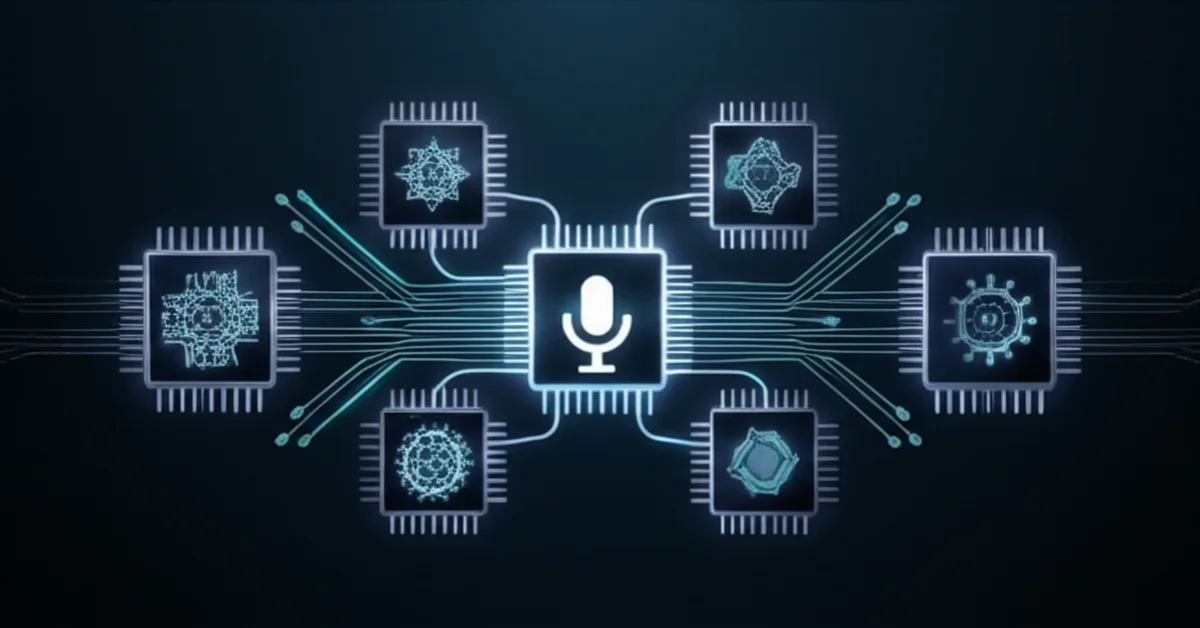
Mistral AI has released Voxtral, a large-scale, multilingual text-to-speech (TTS) model, marking a significant move in its strategy to challenge established AI leaders. Released under the permissive Apache 2.0 license, the model introduces a Mixture-of-Experts (MoE) architecture to the open-source voice synthesis landscape, a technique Mistral previously used to enhance the efficiency of its large language models. This development directly confronts the closed, API-gated business models of competitors like OpenAI and ElevenLabs by providing a powerful, adaptable, and free-to-use alternative. By understanding what is Mistral Voxtral, developers can see how it enables applications from custom voice assistants to content creation, while also presenting new questions about the responsible deployment of advanced voice cloning technology.
Key Points
• Mistral’s Voxtral is a transformer-based TTS model that uses a Mixture-of-Experts (MoE) architecture to improve computational efficiency and multilingual performance.
• Released under the Apache 2.0 license, Voxtral provides a free, commercially usable alternative with zero-shot voice cloning, directly contrasting with the paid, proprietary services from ElevenLabs and OpenAI.
• The release highlights a philosophical divide in the industry; Mistral’s open approach contrasts with OpenAI’s decision to withhold its advanced Voice Engine from public release, citing significant safety concerns.
• Voxtral enters a rapidly growing TTS market, projected to reach $12.5 billion by 2030, and fills a void in the open-source community left by the shutdown of Coqui.
Specialized Experts: The MoE Symphony
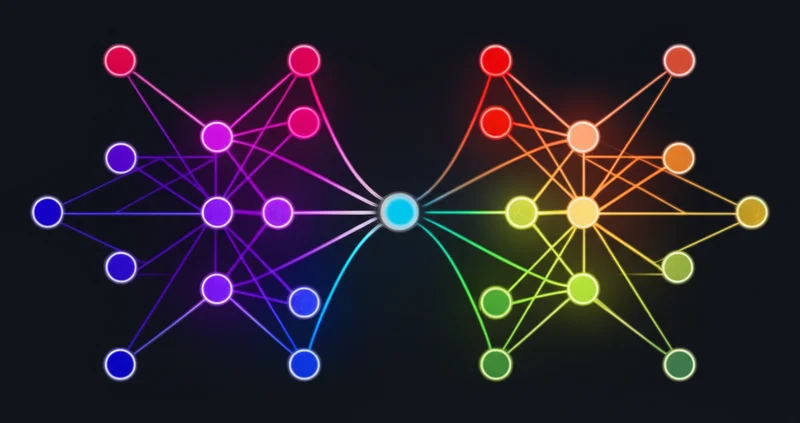
Voxtral’s technical foundation is its use of a Mixture-of-Experts (MoE) architecture, a design choice central to the Mistral open source strategy. Built on a transformer base, an MoE model employs multiple specialized “expert” sub-networks. A gating network routes input tokens to the most suitable expert, meaning only a fraction of the model’s total parameters are engaged during any single inference task.
This architecture, which Mistral successfully implemented in its Mixtral 8x7B language model as detailed in their official blog post, provides significant computational efficiency and reduced latency compared to a dense model of similar scale. For TTS, this allows different experts to specialize in the distinct phonetic nuances, prosody, and accents of various languages, enhancing output quality. The official model card on Hugging Face confirms Voxtral-v0.1 supports six languages: English, German, Spanish, French, Italian, and Dutch.
A standout feature is its zero-shot voice cloning, which allows the model to replicate a voice from a short audio sample without requiring specific fine-tuning. This capability, combined with its permissive Apache 2.0 license, gives developers unrestricted freedom to use, modify, and integrate Voxtral into commercial products.
Open Weights vs. Walled Gardens
Voxtral’s release creates a clear point of comparison in the voice AI market, particularly in the Mistral Voxtral vs ElevenLabs and OpenAI matchup. ElevenLabs, a dominant force valued at $1.1 billion, has built its success on a proprietary, subscription-based model. It offers a suite of high-quality voice generation tools behind a paywall, prioritizing ease of use and emotional range within a controlled ecosystem.
Mistral’s approach is fundamentally different. By offering a powerful, self-hostable model for free, it appeals to developers and businesses concerned with data privacy, scalability, and cost. This move represents a direct Mistral open source challenge to OpenAI and its business practices. While OpenAI provides high-quality TTS models like `tts-1-hd` through its API, which its documentation details are optimized for quality, its more advanced “Voice Engine” technology remains unreleased.
In a March 2024 announcement, OpenAI stated it was of its 15-second voice cloning tool, citing major safety risks. Mistral’s decision to release Voxtral publicly underscores a core philosophical divide: democratizing access to accelerate innovation versus prioritizing safety through restricted access.
Filling the Voice Void
Voxtral arrives at a pivotal moment for the open-source AI community and the broader TTS market. The global text-to-speech market, valued at USD 4.0 billion in 2023, is projected to grow to USD 12.5 billion by 2030, according to Fortune Business Insights. This growth is driven by demand for more natural, human-like voices in everything from customer service to content creation, with industry research confirming that the move away from robotic voices is a major market driver.
The shutdown of Coqui in late 2023, as reported by VentureBeat, created a significant vacuum for a high-performance, open-source TTS platform. Voxtral is perfectly positioned to fill this gap, providing a foundational tool for a new wave of innovation. However, this empowerment comes with a well-documented challenge: the dual-use nature of voice cloning technology.
The issue of open source voice AI safety is paramount. The ability to create convincing audio deepfakes from short voice samples presents clear risks of scams, harassment, and misinformation. Unlike proprietary services that can enforce safeguards at the API level, open-source models shift the burden of responsibility to the end-user. While Voxtral’s model card includes an ethical disclaimer, it contains no technical mechanisms to prevent misuse, highlighting an urgent need for parallel advancements in reliable deepfake detection.
Voices Unleashed, Questions Unanswered
Mistral’s release of Voxtral is a significant technical and strategic development. By applying its proven MoE architecture to voice synthesis and committing to an open-source license, the company has provided a powerful tool that directly challenges the business models of proprietary leaders. This move accelerates innovation by lowering the barrier to entry for developers and businesses. At the same time, it places the complex ethical dilemma of powerful, easily accessible voice cloning technology squarely in the hands of the community. As this technology proliferates, how will the open-source world balance the drive for innovation with the imperative for responsible deployment?
Read More From AI Buzz

Perplexity pplx-embed: SOTA Open-Source Models for RAG
Perplexity AI has released pplx-embed, a new suite of state-of-the-art multilingual embedding models, making a significant contribution to the open-source community and revealing a key aspect of its corporate strategy. This Perplexity pplx-embed open source release, built on the Qwen3 architecture and distributed under a permissive MIT License, provides developers with a powerful new tool […]

New AI Agent Benchmark: LangGraph vs CrewAI for Production
A comprehensive new benchmark analysis of leading AI agent frameworks has crystallized a fundamental challenge for developers: choosing between the rapid development speed ideal for prototyping and the high-consistency output required for production. The data-driven study by Lukasz Grochal evaluates prominent tools like LangGraph, CrewAI, and Microsoft’s new Agent Framework, revealing stark tradeoffs in performance, […]