
Nvidia PersonaPlex Beats Gemini Live in Latency Benchmark
Nvidia has released PersonaPlex, a 7-billion-parameter conversational AI model, making its code and weights freely available for commercial use. The open-source model introduces full-duplex capabilities, allowing it to listen and speak simultaneously to create a more natural, fluid dialogue. This development sets a new performance standard for open models, with Nvidia’s own benchmarks indicating it surpasses the conversational naturalness and response speed of prominent closed systems, including Google’s Gemini Live.
The release directly addresses a core challenge in voice AI: eliminating the awkward, turn-based pauses that define most human-computer interactions. By achieving a speaker-switching latency of just 0.07 seconds—a figure detailed in Nvidia’s research paper—PersonaPlex operates nearly 20 times faster than some commercial competitors, effectively closing the gap between AI response times and the cadence of human conversation. For developers, this provides a powerful new foundation for building sophisticated, real-time voice applications without being locked into a proprietary ecosystem.
Key Points
- Nvidia has released PersonaPlex, a 7B parameter open-source model enabling simultaneous listening and speaking for natural conversation.
- The model’s 0.07-second speaker-switching latency is documented as significantly faster than Google Gemini Live’s 1.3 seconds.
- In benchmark tests, PersonaPlex scored higher in dialogue naturalness than Gemini Live and demonstrated superior voice-cloning capabilities.
- Released with a commercially permissive license on GitHub and Hugging Face, the model empowers broad developer access.
Breaking the Turn-Taking Barrier
PersonaPlex achieves its human-like interaction through several architectural innovations designed to overcome the sequential processing bottlenecks of traditional voice AI. Unlike systems that must complete speech recognition, language modeling, and speech synthesis in distinct steps, PersonaPlex operates in a full-duplex mode. As reported by The Decoder, it continuously processes a user’s speech, updates its internal state in real-time, and can begin generating a response before the user finishes talking.
This capability is central to its impressive latency benchmark of just 0.07 seconds for speaker switching. A key innovation is its hybrid prompt system, which decouples voice from personality. Developers can provide a short audio sample as a voice prompt to define the vocal characteristics and a separate text prompt to describe the AI’s role and background. This allows for deep customization, enabling the creation of consistent characters with specific voices, a feature that, as noted in technical reviews, many competing models lack.
Metrics That Matter: The Benchmark Battle
Nvidia’s research provides quantitative data positioning PersonaPlex as a new leader in conversational AI performance. In a direct comparison detailed on the official project page, the open-source model achieved a Dialog Naturalness Mean Opinion Score (MOS) of 3.90, surpassing Gemini Live’s 3.72. The model upon which PersonaPlex is based, Moshi, scored 3.11, highlighting the significant advancements made.
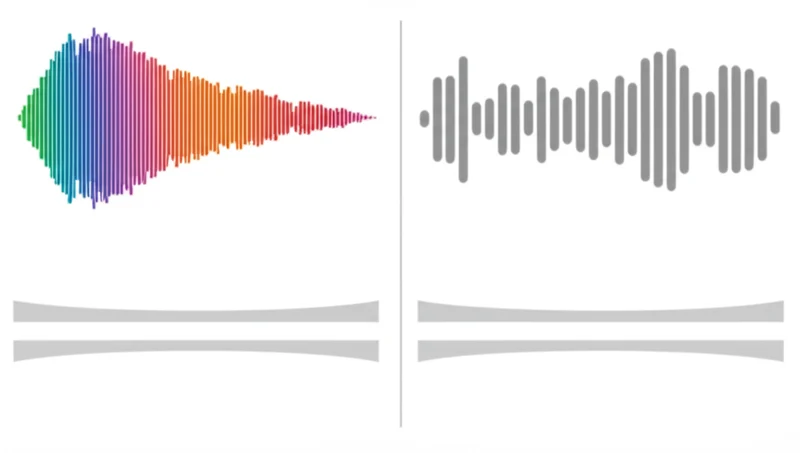
The same benchmarks show the model also excelled at managing interruptions, a hallmark of natural dialogue, with a 100% success rate in tests. Furthermore, its voice cloning capability, measured by speaker similarity, scored 0.57. This stands in sharp contrast to competitors like Gemini and Moshi, which registered near-zero scores, indicating they do not preserve the prompt’s voice identity. These metrics establish PersonaPlex as a formidable competitor in the open-source space, offering a unique combination of conversational fluidity and persona fidelity.
Hybrid Data: The Conversation Blueprint
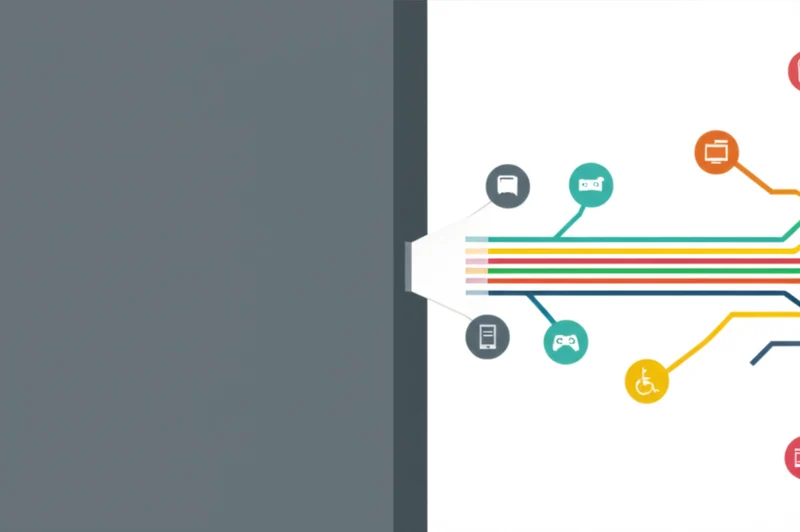
To train a model on the nuances of interrupt-driven conversation, Nvidia’s researchers developed a novel hybrid data strategy. As outlined in technical breakdowns, they combined 7,303 real-world conversations, totaling 1,217 hours from the Fisher English Corpus, with over 140,000 synthetic dialogues generated for specific tasks like customer service. This blended approach allowed the model to learn both natural conversational dynamics and task-specific, instruction-following capabilities.
Read More From AI Buzz
Perplexity pplx-embed: SOTA Open-Source Models for RAG
Perplexity AI has released pplx-embed, a new suite of state-of-the-art multilingual embedding models, making a significant contribution to the open-source community and revealing a key aspect of its corporate strategy. This Perplexity pplx-embed open source release, built on the Qwen3 architecture and distributed under a permissive MIT License, provides developers with a powerful new tool […]

New AI Agent Benchmark: LangGraph vs CrewAI for Production
A comprehensive new benchmark analysis of leading AI agent frameworks has crystallized a fundamental challenge for developers: choosing between the rapid development speed ideal for prototyping and the high-consistency output required for production. The data-driven study by Lukasz Grochal evaluates prominent tools like LangGraph, CrewAI, and Microsoft’s new Agent Framework, revealing stark tradeoffs in performance, […]

Vector DB Market Shifts: Qdrant, Chroma Challenge Milvus
The vector database market is splitting in two. On one side: enterprise-grade distributed systems built for billion-vector scale. On the other: developer-first tools designed so that spinning up semantic search is as easy as pip install. This month’s data makes clear which side developers are choosing — and the answer should concern anyone who bet […]