
Prefix-RFT: A Low-Cost RLHF Alternative for LLM Alignment

Researchers have introduced Prefix-RFT, a unified machine learning framework that represents a pivotal development in Large Language Model (LLM) alignment. The new model blends Supervised Fine-Tuning (SFT) with Reinforcement Fine-Tuning (RFT) into a single, streamlined process. This approach directly addresses the complexity and high computational cost of traditional alignment pipelines like Reinforcement Learning from Human Feedback (RLHF), which have long been a barrier for smaller teams and enterprises.
By integrating a preference-aware loss function with parameter-efficient techniques, the Prefix-RFT framework enables the creation of highly specialized and aligned models with a fraction of the typical resource requirements. This marks a significant step in democratizing advanced AI customization, making state-of-the-art alignment accessible beyond large, well-funded research labs. For developers and organizations, this translates to a more stable, cost-effective method for tailoring open-source models to specific brand voices, safety protocols, and business needs.
Key Points
• The Prefix-RFT framework has been introduced as a unified SFT and RFT model, designed to replace complex multi-stage RLHF pipelines with a single, efficient process.
• This low cost LLM alignment method leverages Parameter-Efficient Fine-Tuning (PEFT), with research showing it is possible to fine-tune a 7B model on a single 24GB consumer GPU.
• The framework builds on the success of Direct Preference Optimization (DPO), which has been shown to outperform traditional PPO-based RLHF on certain tasks while being more stable.
• This development significantly lowers the barrier to entry for creating custom-aligned models, enabling more organizations to enforce safety, compliance, and brand-specific conversational styles.
Breaking the RLHF Complexity Barrier
For years, the gold standard for aligning LLMs with human preferences has been a complex, multi-stage pipeline. It begins with Supervised Fine-Tuning (SFT) on demonstration data—a foundational step for adapting pre-trained models—followed by the notoriously difficult process of Reinforcement Learning from Human Feedback (RLHF). While instrumental in the success of models like ChatGPT, a process detailed by OpenAI, RLHF is computationally expensive, requires training a separate reward model, and can be unstable, as noted in research on Direct Preference Optimization (DPO).
The emergence of DPO marked a critical shift. DPO reframes preference learning as a simpler classification problem, directly optimizing the language model using a loss function that distinguishes between preferred and dispreferred responses. This eliminates the need for a separate reward model and the complex RL optimization loop, making the process more stable and akin to SFT. The original DPO paper demonstrated that this approach can outperform PPO-based RLHF on tasks like summarization and sentiment control, providing a powerful and more accessible Prefix-RFT RLHF alternative.
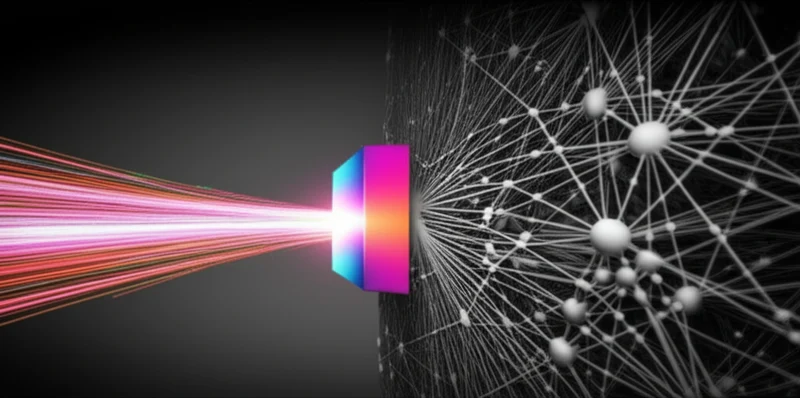
Computational Harmony: 0.1% of the Parameters, 100% of the Performance
The Prefix-RFT framework advances the DPO concept by integrating it with Parameter-Efficient Fine-Tuning (PEFT). Instead of updating a model’s billions of parameters, PEFT methods like Prefix-Tuning or LoRA freeze the base model and train only a small fraction of new parameters, an approach popularized by libraries like Hugging Face’s PEFT. The original Prefix-Tuning paper showed this can achieve performance comparable to full fine-tuning while training as little as 0.1% of the parameters.
This synergy of a unified DPO-style loss function and the efficiency of PEFT is the technical core of what is Prefix-RFT framework. The model learns a small set of parameters—an “alignment prefix” or LoRA adapters—that encapsulate desired behaviors using both demonstration and preference data in a single training run. This dramatic reduction in computational demand is a key piece of parameter-efficient fine-tuning news. A Hugging Face technical blog powerfully illustrates this by stating, “it is possible to fine-tune a 7B parameter model on a single 24GB NVIDIA 4090 GPU,” bringing advanced alignment within reach of individual developers.
When Enterprise Meets Engineering: The Data Quality Dilemma
The move toward efficient, unified alignment has substantial market implications, driven by a clear enterprise need for customized AI. The global generative AI market is projected to exceed USD 1.3 trillion by 2032, and a McKinsey Global Survey found one-third of organizations already use generative AI regularly. Frameworks like Prefix-RFT directly serve this trend by enabling companies to create specialized models for customer service or enforce strict safety guidelines, a process known as “constitutional AI” pioneered by Anthropic.

However, implementation is not without its challenges. The performance of any preference-tuning method is highly dependent on the quality of the preference data, which can be a significant bottleneck. Furthermore, while DPO offers a more accessible and stable process, expert analysis from figures like Nathan Lambert suggests that complex PPO-based RLHF may still achieve higher peak performance for state-of-the-art models. This indicates a trade-off between accessibility and the absolute performance ceiling, a critical consideration for teams deploying these models.
Democratizing AI’s Power Tools
The introduction of the Prefix-RFT framework confirms a clear industry trajectory away from monolithic, complex alignment pipelines toward more modular, efficient, and accessible methods. By combining the stability of direct preference optimization with the resource-saving benefits of parameter-efficient tuning, this approach makes advanced LLM customization a practical reality for a much broader audience. It empowers developers to iterate faster and build models that are not just powerful, but also precisely aligned with specific, real-world requirements. As these techniques mature, how will the new wave of accessible, custom-aligned models reshape the competitive landscape?
Tags
Read More From AI Buzz

Perplexity pplx-embed: SOTA Open-Source Models for RAG
Perplexity AI has released pplx-embed, a new suite of state-of-the-art multilingual embedding models, making a significant contribution to the open-source community and revealing a key aspect of its corporate strategy. This Perplexity pplx-embed open source release, built on the Qwen3 architecture and distributed under a permissive MIT License, provides developers with a powerful new tool […]

New AI Agent Benchmark: LangGraph vs CrewAI for Production
A comprehensive new benchmark analysis of leading AI agent frameworks has crystallized a fundamental challenge for developers: choosing between the rapid development speed ideal for prototyping and the high-consistency output required for production. The data-driven study by Lukasz Grochal evaluates prominent tools like LangGraph, CrewAI, and Microsoft’s new Agent Framework, revealing stark tradeoffs in performance, […]