
Anysphere Soars To $9B Valuation As Cursor's Growth Explodes
Anysphere, the startup powering the viral AI coding assistant Cursor, is finalizing a massive new funding round that will catapult its valuation to approximately $9 billion - more than tripling its worth in just months and underscoring the continued frenzy for AI startups despite broader market uncertainties.
The round, reportedly raising “hundreds of millions,” is being led by Thrive Capital, a known backer of OpenAI, according to multiple sources familiar with the deal. Andreessen Horowitz (a16z) and Accel, both participants in Anysphere’s previous funding round, are also joining the investment.
This stratospheric jump in valuation is even more remarkable considering Anysphere was valued at just $2.5 billion in January when it raised $105 million in a round also led by Thrive and a16z. The near-quadrupling in just months places Anysphere at the center of ongoing debates about whether such rapid rises reflect sustainable growth or signal an overheated AI investment market.
Four twentysomethings and a coding revolution
Anysphere was founded in 2022 by four MIT grads in their twenties - Michael Truell, Sualeh Asif, Arvid Lunnemark, and Aman Sanger - who met while studying math and computer science. Their journey from identifying developer pain points to scaling Cursor into a unicorn has been nothing short of meteoric.
“What we’re seeing with Anysphere might be unprecedented even by AI standards,” says one Silicon Valley VC who requested anonymity to speak freely about the company. “There’s froth in the market for sure, but their revenue numbers are the real deal.”
The secret sauce: Cursor’s explosive adoption
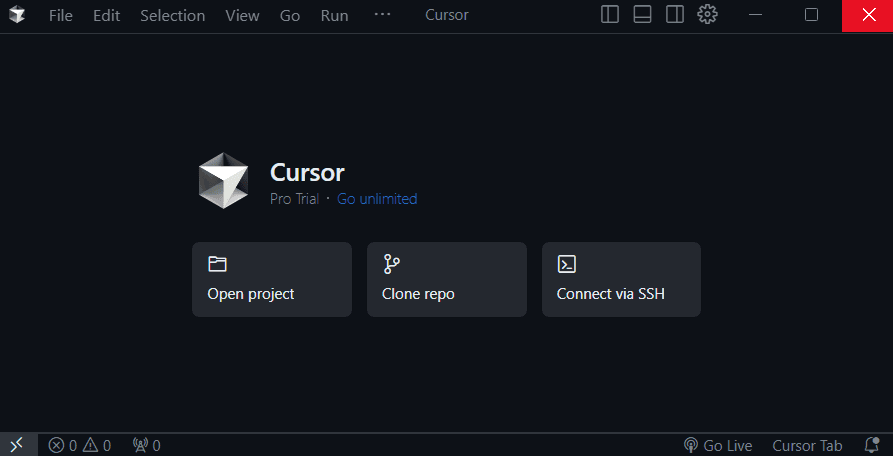
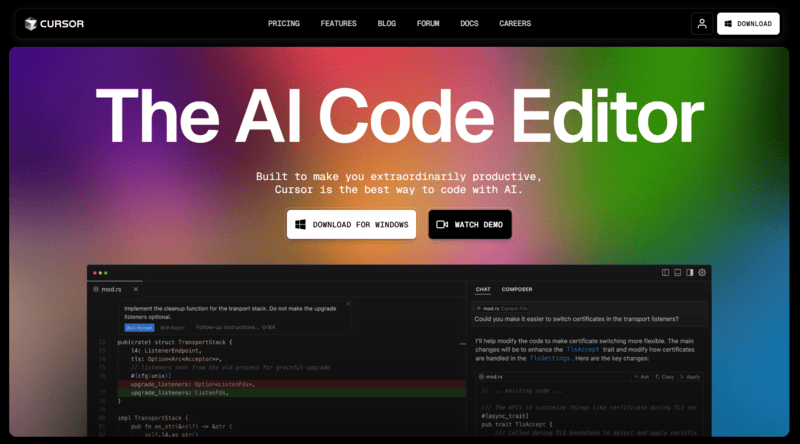
The driving force behind Anysphere’s astronomical valuation is Cursor, its flagship AI-powered development toolkit that has rapidly become the darling of the coding world. The editor leverages sophisticated large language models to help engineers generate, debug, and optimize code with unprecedented efficiency.
What’s remarkable about Cursor’s growth trajectory is that it reportedly occurred largely through word-of-mouth within developer communities, without massive marketing spend. By March, the tool had attracted over one million users - a testament to its perceived value among professional developers.
This rapid user adoption has translated into eye-popping financial results. Cursor reportedly became the fastest software product ever to hit $100 million in annual recurring revenue (ARR), reaching this milestone within just 12 months. By spring, that figure had reportedly doubled to approximately $200 million, with some sources suggesting ARR was approaching $300 million by April.
Cursor’s customer list reads like a who’s who of tech: Stripe, OpenAI, and Spotify are all featured prominently on the company’s website. Perhaps most tellingly, the tool has won over influential AI researchers like Andrej Karpathy, who famously described his experience using Cursor as “vibe coding” - an intuitive state where the interaction with AI becomes so seamless that one almost forgets “that the code even exists.”
$9 billion: The math behind the magic
The leap from $2.5 billion to $9 billion in mere months has made Anysphere the poster child in ongoing discussions about AI startup valuation sustainability. While Anysphere’s revenue growth is undeniably impressive, its valuation appears to be accelerating even faster.
The January round valued Anysphere at approximately 25x ARR ($2.5 billion on $100 million ARR). The new $9 billion valuation, based on reported ARR between $200-300 million, suggests a multiple between 30-45x - a substantial premium even by AI standards, where multiples for developer tools can reach stratospheric heights.
Investors like Thrive and a16z are likely making such aggressive bets based on several key factors:
- Product-market fit on steroids: Cursor’s organic adoption curve suggests a genuine solution to real developer pain points
- Revenue velocity: The pace at which Anysphere has scaled ARR is virtually unprecedented in SaaS
- Technical moat: The company’s advanced AI capabilities potentially create barriers to entry
- TAM expansion: The overall market for AI developer tools is projected to reach trillions globally by 2030
“When you have a product showing this kind of traction, conventional valuation metrics go out the window,” explains a fintech investor familiar with the AI space. “The question becomes not what it’s worth today, but what it could be worth if it maintains even half its current growth rate.”
The bigger picture: AI’s gold rush intensifies
Anysphere’s funding milestone comes amid an unprecedented wave of AI investment activity. With foundational model companies like OpenAI (valued at a reported $260 billion following SoftBank’s recent commitment) and Anthropic becoming prohibitively expensive for many investors, VCs are increasingly turning to AI application developers as entry points into the boom.

The trend has fueled massive rounds for companies like search app Perplexity, video generator Synthesia, and startups founded by former OpenAI executives. Ilya Sutskever’s Safe Superintelligence (SSI) recently secured a $30 billion valuation, while Mira Murati’s Thinking Machines Lab was reportedly discussing a $2 billion raise at a $10 billion valuation - notably, neither has launched a product yet.
AI coding assistants have emerged as a particularly hot category within this landscape. Google CEO Sundar Pichai recently revealed that “well over 30 percent” of code submitted internally involved AI-suggested solutions, validating the productivity gains these tools promise.
Euphoria vs. economics: The road ahead
The key question for Anysphere - and the broader AI ecosystem - is whether the current revenue surge represents sustainable demand or merely initial corporate experimentation with AI. The high operational costs of AI infrastructure (with leading labs reportedly facing annual expenses far exceeding revenue) also raises questions about long-term unit economics.
For now, Anysphere’s growth trajectory places it in rarefied air among software startups. Whether it can justify its $9 billion price tag will depend on continued hypergrowth, successful enterprise expansion, and navigating an increasingly competitive landscape that includes GitHub Copilot, Replit, Poolside, and Codeium (formerly Windsurf).
As one industry observer put it: “Anysphere is either the perfect case study in AI’s transformative potential or Exhibit A in the eventual post-mortem of a bubble. Either way, it’s the one to watch.”
Weekly AI Intelligence
Which AI companies are developers actually adopting? We track npm and PyPI downloads for 262+ companies. Get the biggest shifts weekly — before they show up in the news.
Content disclosure: This article was generated with AI assistance using verified data from AI-Buzz's database. All metrics are sourced from public APIs (GitHub, npm, PyPI, Hacker News) and verified through our methodology. If you spot an error, report it here.
Companies in This Article
Explore all companies →Anthropic
37AI safety company behind Claude. OpenAI's main competitor.
Anthropic profile →Perplexity
14AI-powered search engine. Answer engine that cites sources.
Perplexity profile →Poolside
8AI-native code generation using reinforcement learning
Poolside profile →OpenAI
49Creator of ChatGPT and GPT-4. The company that kicked off the generative AI boom.
OpenAI profile →Cursor
19AI-native code editor. Built for pair programming with AI.
Cursor profile →Replit
13Cloud IDE with AI code generation. Ghostwriter writes code as you type.
Replit profile →Codeium
11Free AI code completion. Copilot alternative for developers.
Codeium profile →Synthesia
7Enterprise AI video with digital avatars. Used for training and marketing videos.
Synthesia profile →Windsurf
11AI-powered code editor. Built for pair programming with AI.
Windsurf profile →Read More From AI Buzz

Notion AI Agents Revenue Surpasses $500M Amid Agent Launch
Notion has announced a significant evolution of its platform, launching customizable AI agents capable of executing complex, multi-step workflows while simultaneously revealing it has surpassed $500 million in annualized revenue. Unveiled at its “Make with Notion” conference, the dual announcement signals a strategic pivot from a collaborative documentation tool to an intelligent, automated work hub.

Kaggle Game Arena: AI Evaluation for Strategic Reasoning
In a significant development for AI assessment, Kaggle, in collaboration with Google DeepMind, has launched the Kaggle Game Arena, a new platform designed to benchmark the strategic decision-making of advanced AI models. Announced this month, the initiative moves AI evaluation away from static tasks like language translation and into the dynamic, competitive environment of strategy

OpenAI GPT-5-Codex: Autonomous Software Engineering Agent
As reported by The New Stack , OpenAI has officially announced GPT-5-Codex, a specialized version of its next-generation GPT-5 model engineered for autonomous software development tasks. Detailed in an addendum to the main GPT-5 system card, this release marks a significant architectural shift, moving AI from a coding assistant to an agentic partner capable of