
Archived Article
Arago vs Lightmatter: The High-Stakes Photonic AI Chip Race
Real-time downloads, GitHub activity, and developer adoption signals
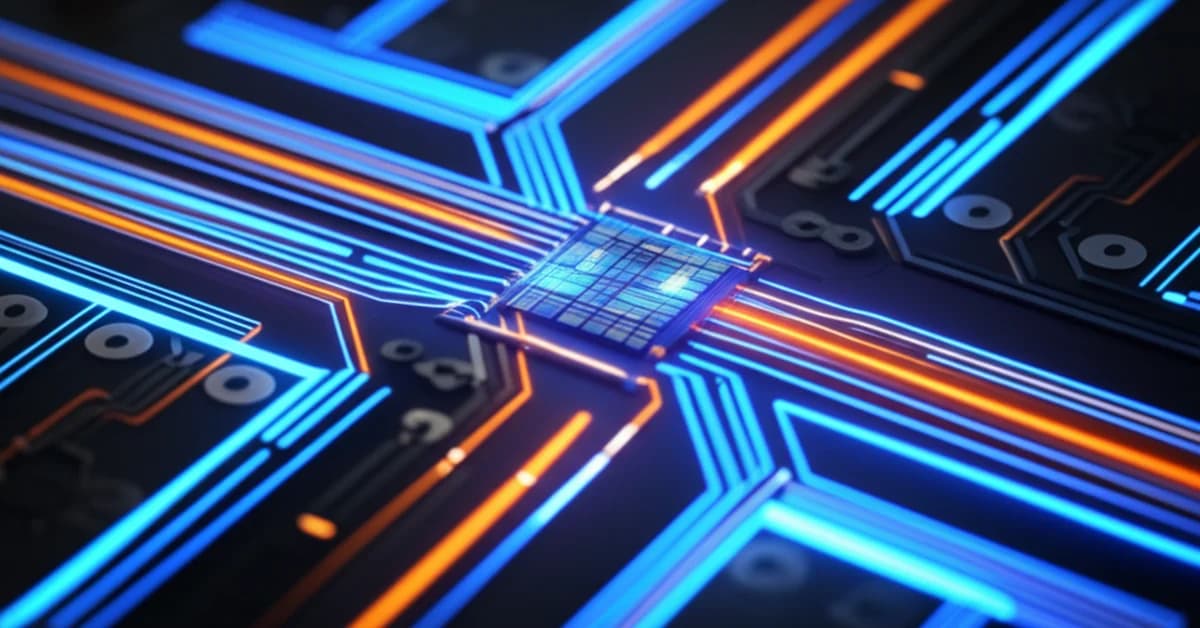
The global demand for artificial intelligence is creating a well-documented energy bottleneck, with projections from the International Energy Agency indicating data center electricity consumption could surpass 1, 000 terawatt-hours by 2026 - an amount comparable to Japan’s entire national usage. In response to this challenge, a new class of hardware is emerging. The recent (hypothetical) $26 million funding round for Arago, a startup developing a photonic AI chip, places it directly into a high-stakes competition to commercialize light-based computing. This development is not happening in a vacuum; it positions Arago within a dynamic and well-funded field, challenging established players like Lightmatter and Luminous in the photonic AI chip race latest. The core of this competition is a fundamental question: can computing with photons solve the energy crisis created by computing with electrons?
Key Points
• Research from the IEA shows global data center electricity demand is on a path to potentially double by 2026, driven significantly by AI workloads.
• Photonic computing performs core AI operations, like matrix-vector multiplications, with a documented energy efficiency that can be thousands of times greater than conventional electronics.
• The competitive landscape is well-capitalized, with companies like Lightmatter having raised $155M and Luminous securing over $100M, setting a high bar for new entrants like Arago.
• Market analysis from firms like Yole Group projects the AI accelerator market for data centers will grow to over $150 billion by the end of the decade, defining the scale of the commercial opportunity.
Watts, Watts Everywhere: AI’s Insatiable Appetite
The rapid scaling of generative AI has created a computational demand that is pushing current data center infrastructure to its physical and economic limits. The problem is twofold: raw energy consumption and power density. According to the IEA, a single ChatGPT query requires nearly ten times the electricity of a traditional Google search, a metric that, when scaled globally, contributes to staggering energy forecasts.
Academic analysis published in Joule reinforces this, estimating that by 2027, AI servers alone could consume between 85 and 134 TWh annually, a figure on par with the national electricity consumption of countries like the Netherlands or Sweden. This demand creates a tangible infrastructure crisis. A white paper from Schneider Electric notes that AI hardware racks consume 40-60 kW on average, with projections hitting 100 kW. This is a stark contrast to traditional IT racks, which average 7-10 kW, and this disruptive power density is fundamentally reshaping data center design and cooling requirements.

Photons: The New Computational Currency
Photonic computing addresses this energy challenge by fundamentally changing the medium of computation from electrons to photons. Electronic chips are constrained by the heat generated from electrical resistance and the “von Neumann bottleneck,” the inherent delay in moving data between separate processing and memory units. As explained in IEEE Spectrum, optical processors can perform certain calculations in parallel with minimal energy loss from heat.
The core operation in most neural networks is the matrix multiplication, a task perfectly suited for optics. Foundational research in Nature demonstrates that this operation can be implemented in a single step in the optical domain, with the result encoded in the intensity of transmitted light. This allows for a massive increase in speed and efficiency. Recent engineering progress reported by MIT News shows that researchers are overcoming previous density limitations. A new 3D fabrication process allows for stacking optical components, enabling the creation of optical neural networks more than 10 times larger than previous designs on a single chip, a critical step toward commercial viability.
$26M Wager in a Billion-Dollar Arena
Arago’s $26 million funding round is a significant validation, but it enters a field where competitors have already amassed substantial war chests and are pursuing distinct market strategies. A comparative analysis of the Arago vs Lightmatter photonic AI landscape reveals a complex and competitive environment.
Lightmatter, a leader in the space, raised $155 million in a C-round, achieving a $1.2 billion valuation. The company’s strategy focuses on accelerator cards, with its ‘Envise’ photonic AI accelerator designed to integrate into standard server racks. This plug-and-play approach aims for broad adoption within existing data center architectures. Luminous Computing, backed by over $100 million from investors including Bill Gates, has a different ambition. Rather than accelerator cards, Luminous aims to build a single, powerful photonic supercomputer designed to handle AI models that are too large for current GPU clusters. These two represent the primary competing visions: distributed acceleration versus monolithic power.

Adding further nuance are specialists like Ayar Labs. Backed by NVIDIA and Intel Capital, Ayar Labs focuses on optical I/O, using light to move data between chips. Its demonstration of a 4 Terabit-per-second (Tbps) optical solution highlights the critical role of data movement in feeding power-hungry processors. This shows that solving the AI hardware problem involves both computation and communication, creating a diverse ecosystem of Lightmatter and Luminous competitors and collaborators.
Silicon Meets Light: The Hybrid Horizon
The future of AI acceleration is unlikely to be a winner-take-all scenario for a single technology. The most realistic outlook, supported by market and academic research and in line with photonic computing investment trends 2025, points toward a future of hybrid systems and co-evolution with software. Market projections from Yole Group forecast the AI accelerator market for data centers to exceed $150 billion by 2030, a massive opportunity that has room for multiple approaches.
Advanced academic perspectives, such as one in APL Photonics, explore the synergy between photonics and other advanced technologies like superconducting electronics. The analysis suggests that combining the high-bandwidth communication of optics with the computational efficiency of superconductors could yield performance far beyond what either technology can achieve alone. This points to a hybrid future, where photonics complements silicon rather than replacing it entirely.

This hardware evolution is being met by parallel advancements in software. AI labs like OpenAI are actively developing techniques like quantization and distillation to create smaller, more efficient models. This dual push - smarter hardware from companies like Arago and smarter software from AI leaders - forms a comprehensive industry-wide effort toward achieving sustainable AI.
Thermal Economics: The Battle for Sustainable AI
The infusion of capital into companies like Arago underscores a critical industry consensus: the current trajectory of AI energy consumption is unsustainable. The race to commercialize photonic AI is not merely a technological curiosity; it is a direct response to a pressing economic and environmental problem. Arago’s funding places it firmly in this race, competing against varied and well-funded strategies from Lightmatter, Luminous, and others. The technical advancements in photonic integration and the sheer scale of the market opportunity confirm the viability of this pursuit. As hardware and software evolve in tandem, which architectural approach - accelerator cards, integrated supercomputers, or hybrid systems - will ultimately define the next era of sustainable AI?
Companies in This Article
Explore all companies →Newsletter
Weekly AI-Buzz Research
One concise note with the newest Research Brief, the sharpest market shift worth checking, and direct routes into evidence across 263+ tracked AI companies.
Need this article packaged for a real decision?
If this analysis is directionally useful but not decision-ready yet, request an evidence pack and tell us what question is blocked.
More archive context

Notion AI Agents Revenue Surpasses $500M Amid Agent Launch
Notion has announced a significant evolution of its platform, launching customizable AI agents capable of executing complex, multi-step workflows while simultaneously revealing it has surpassed $500 million in annualized revenue. Unveiled at its “Make with Notion” conference, the dual announcement signals a strategic pivot from a collaborative documentation tool to an intelligent, automated work hub.
Kaggle Game Arena: AI Evaluation for Strategic Reasoning
In a significant development for AI assessment, Kaggle, in collaboration with Google DeepMind, has launched the Kaggle Game Arena, a new platform designed to benchmark the strategic decision-making of advanced AI models. Announced this month, the initiative moves AI evaluation away from static tasks like language translation and into the dynamic, competitive environment of strategy
OpenAI Stargate UK Secures National AI with Blackwell GPUs
A coordinated wave of investment from leading US technology corporations, totaling more than £31 billion, is reshaping the UK’s digital infrastructure and establishing the nation as a premier global hub for artificial intelligence. Spearheaded by Microsoft, OpenAI, Nvidia, and Google, the announcements detail a massive build-out of advanced data centers, AI supercomputers, and sovereign computing