
Perplexity CEO Addresses User Fears Amid $18B Valuation
Data as of March 31, 2025 - some metrics may have changed since publication

Addressing the Echo Chamber: CEO Responds to User Concerns
In a direct chat with the user community, Perplexity CEO Aravind Srinivas recently took to Reddit. He aimed to address users’ product complaints and reassure them that the company isn’t facing serious financial trouble, a sentiment echoed in reports covering his efforts to assure stability. His appearance sought to calm worries spreading on sites like Reddit, where users questioned the company’s direction and the specific Aravind Srinivas user complaints behind product updates.
Srinivas appeared to be responding partly to a user theory suggesting the company is “doing horribly financially” and “making lots of changes to cut costs.” The user pointed to Perplexity’s Auto mode as an example. This feature lets the AI automatically pick the model for answering a prompt.
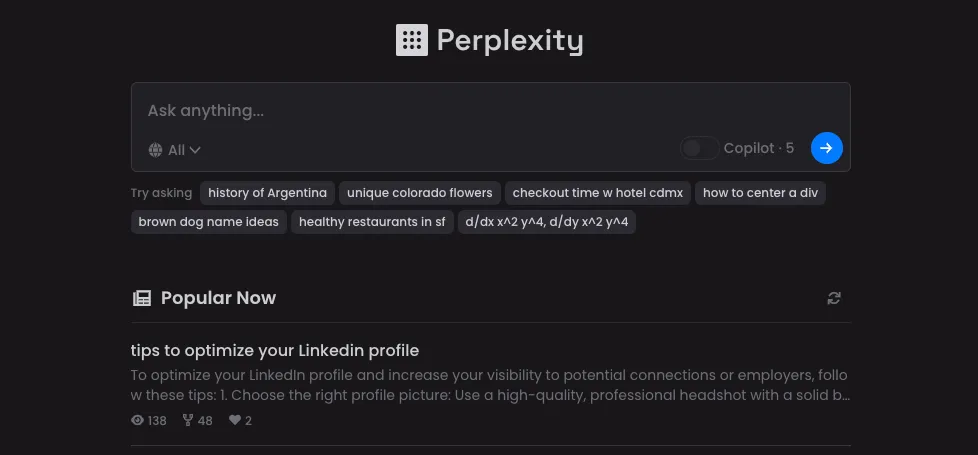
The speculation was that Auto mode might be using cheaper, less capable models to save money. Srinivas directly countered this idea. He described the situation not as financial distress, but as the normal challenge of managing complexity during rapid growth in the fast-paced AI industry.
Instead, Srinivas explained that Perplexity introduced Auto mode because “all AI products right now are shipping non-stop and adding a ton of buttons and dropdown menus and clutter.” He called this trend “not sustainable.” His explanation framed the feature as a deliberate move to simplify the user experience, not a cost-cutting measure. The goal was to make the interface less complex by smartly choosing the right AI model, taking that decision off the user’s plate.
“The user shouldn’t have to learn so much to use a product,” Srinivas stated, highlighting the aim for a more intuitive feel. He did admit, however, that the feature got mixed reviews. Users noted issues with follow-up questions and some Pro users felt it wasn’t using the best models they paid for. This honest feedback shows the tightrope AI companies walk: innovate quickly but stay tuned to user feedback.
Is Perplexity under pressure to cut costs or go public? Srinivas firmly denied it: “We have all the funding we’ve raised, and our revenue is only growing.” This statement directly pushed back against rumors of financial instability. He added that the company has “no plans of IPOing before 2028,” suggesting a longer-term strategy than some might expect in the current market buzz. His comments painted a picture of financial health and planned growth, contrasting sharply with user worries about cost-cutting.
Decoding Perplexity’s Financial Trajectory: Explosive Growth Meets Sky-High Expectations
Despite some user worries prompting searches for a Perplexity financial health update, the company’s actual story is one of incredibly fast growth and strong investor confidence. Far from struggling, the company is a venture capital favorite, attracting major investments that signal huge potential - but also intense pressure to deliver.

The company’s valuation has skyrocketed. It started at a solid $520 million after its $73.6 million Series B funding in January 2024. From there, its estimated worth climbed dramatically, according to reports cited by NBC Philadelphia and others:
- April 2024: Reached $1 billion (unicorn status).
- June 2024: Tripled to $3 billion.
- December 2024: Tripled again to an impressive $9 billion.
Now, as of March 2025, reports suggest Perplexity is discussing a new funding round, potentially seeking $500 million to $1 billion. This could potentially double its valuation again to a massive $18 billion. Such exponential growth in just over a year shows the immense faith investors have in Perplexity’s ability to challenge Google in the search market.
While valuations reflect future potential, Perplexity’s actual revenue is also growing fast, supporting investor excitement. As of March 2025, the company’s annual recurring revenue (ARR) is reportedly near $100 million. This is a significant jump from late 2024 estimates of around $63 million - which itself was reportedly an 800% year-over-year increase according to Sacra data. This rapid revenue growth, which Srinivas emphasized as “only growing,” provides solid proof against claims of financial trouble and supports the high valuations.
However, a potential $18 billion valuation against less than $100 million in ARR creates an extremely high revenue multiple - roughly 180 times ARR. This number dwarfs typical multiples for even other fast-growing AI startups (usually 21.8x to 40.6x) and standard Software-as-a-Service (SaaS) companies (around 7.8x), as noted by Tech Funding News. This gap shows investors aren’t just looking at current earnings. They’re making a huge, long-term bet that Perplexity can grab a large piece of the profitable search market and scale its revenue massively in the future. This puts enormous pressure on the company to perform perfectly and meet these incredibly high expectations.
Product Evolution Under the Microscope: Is ‘Auto Mode’ Simplifying or Sacrificing?
Perplexity introduced its “Auto mode” feature aiming for a cleaner, easier user experience. CEO Aravind Srinivas explained the goal was to reduce the “clutter” of options in AI tools by having the system automatically pick the best AI model for a query. This was presented as a smart simplification, not a cost-saving trick as some users suspected.
But the feature didn’t land perfectly, especially with paying “Pro” subscribers. Several key complaints emerged, showing a gap between the intended simplicity and how users actually experienced it:
- Lower Quality Concerns: Many users felt Auto mode often picked less powerful, standard models (like the basic Sonar) even for complex questions where they’d prefer a Pro model (like Claude 3 or GPT-4). This led to worries about getting less detailed answers and fueled suspicions about potential cost-saving.
- Follow-up Frustrations: A major issue was how the mode worked in conversations. Even if a user specifically chose a Pro model for their first question, the system often switched back to Auto mode for later questions in the same chat. This broke the workflow for users doing complex research needing a consistent, advanced model.
- Lingering Cost Doubts: Even after Srinivas explained the design goal, some users still suspected the feature favored cheaper models. This shows the difficulty in ensuring the rationale behind Perplexity Auto mode changes explained by leadership resonates when the user experience seems contradictory.
This feedback highlights a common tension in AI product design. The push for simple automation can sometimes clash with users wanting control, transparency, and top quality, particularly power users paying for premium features.
Responding to this feedback, Perplexity announced specific plans to fix the main issues. The company plans to combine its “Pro” and “Reasoning” modes into one unified “Pro” option. Crucially, this updated Pro mode will let users pick specific AI models (like GPT-4o, Claude 3 Opus) that will stay active for their entire session, including follow-ups. This directly addresses the problem of reverting to Auto mode and aims to give users back control over the AI engine.

This planned change shows Perplexity is willing to adjust features based on user experience and direct comments. It’s an effort to rebuild trust and find a better balance between automation and user control. While the Auto mode situation caused some bumps, it doesn’t necessarily undermine Perplexity’s larger product goals.
In fact, the earlier launch of “Deep Research” in February 2025 demonstrates the company’s commitment to advanced features. This tool, designed for deep analysis by combining info from hundreds of sources, shows strong technical skill. Its performance on tests like SimpleQA (93.9% accuracy) and the difficult Humanity’s Last Exam (21.1%) highlights its potential for factual accuracy and complex information handling, as detailed by AI-Pro.org. This reinforces Perplexity’s core aim to become a powerful knowledge discovery tool, even while it fine-tunes basic interactions like model selection.
Carving a Niche in a Giant’s Playground: Perplexity’s Market Position and Growing User Base
Perplexity AI operates in a tough market, going head-to-head with established giants. It challenges Google’s massive dominance in traditional search (around 94.80% of all organic traffic, according to SERanking) and competes in the growing AI chatbot arena against leaders like OpenAI’s ChatGPT (reportedly 59.70% market share), Microsoft Copilot (14.40%), and Google’s Gemini (13.50%), based on FirstPageSage data. Despite these powerful rivals, Perplexity is successfully creating its own distinct identity and market space.
Its current reported 6.20% share of the generative AI chatbot market might seem small, but it shows steady growth and a smart differentiation strategy. Perplexity isn’t trying to be a general chatbot or replace Google for every search. Instead, it positions itself as a specialized “answer engine,” sometimes described as the “Google Search for knowledge work.” It focuses specifically on “knowledge work,” serving users who need verified, deep understanding and summarized information with sources, not just links or a chat buddy.
This focused approach seems to be working. Perplexity’s growth, seen in its rising organic traffic through 2024, suggests it’s attracting a specific, growing group of users. This growth contrasts with signs that user numbers for larger competitors like ChatGPT might be leveling off, indicating Perplexity offers something unique. The platform is building a loyal following among users who value accuracy, source transparency, and efficient information gathering.
This appeal is reflected in its fast-growing user base, now estimated at about 10 million monthly active users (MAU). Website traffic numbers also show this momentum, jumping from 42.33 million visits in January 2024 to 52.4 million in February 2024, according to Saufter.io data. Even more telling is user engagement: the average visit lasts 23 minutes and 10 seconds - much longer than typical search engine interactions. This suggests users aren’t just asking one-off questions but are using the detailed AI answers, checking sources, and asking follow-ups, confirming the platform’s value for deeper research.
Geographically, Perplexity is popular in large, mobile-heavy markets like Indonesia (24.78% of users) and India (22.16%). It also has a strong presence in the United States (16.22%), showing broad international appeal. This distribution highlights its potential in various global markets looking for advanced information tools, with roughly one in four users based in Indonesia.
Perplexity’s main strengths are its unique offering: direct, conversational AI answers backed by clear source citations, delivered through a clean interface that many find easier to navigate than traditional search engines. This focus on citations addresses common worries about AI reliability and “hallucinations,” building user trust. However, as a young company, it faces challenges: less brand recognition than Google or ChatGPT, potentially less data coverage than Google for some topics (though it aims to build its own index), and the ongoing risk of AI errors that affect all current models. Successfully playing to its strengths while managing these weaknesses will be key to keeping its growth going and securing its market position.
The Road Ahead: IPO Timelines, Strategic Bets, and the Evolving Future of AI Search
Looking past immediate feature feedback, Perplexity AI’s future involves ambitious financial goals, potential major strategic moves, and the changing landscape of AI-driven information. The company must navigate mixed signals on its IPO timing, weigh high-stakes partnerships, and pursue a vision beyond traditional search.
Regarding the Perplexity IPO plans latest updates, the timing for a potential Initial Public Offering (IPO) is a hot topic with some uncertainty. CEO Aravind Srinivas publicly suggested a conservative target, stating an IPO is unlikely before 2028. This implies a focus on continued growth before going public. However, driven by the company’s fast-rising valuation and the strong market for AI stocks, some speculate an earlier IPO might happen, possibly between 2026 and 2027. Reaching key financial targets, like $250 million in Annual Recurring Revenue (ARR), is often seen as a likely trigger. This puts pressure on Perplexity to keep up its rapid revenue growth, especially given Srinivas’s stated internal goal of $1 billion ARR by 2026. The gap between public statements and market speculation highlights the tension between controlled growth and seizing favorable market opportunities.
Adding significant complexity is the widely reported, though unconfirmed, talk of a potential merger between Perplexity and TikTok’s U.S. operations. This “TikTok wildcard” could drastically alter Perplexity’s path. While just speculation now, such a merger could create a combined company valued at over $300 billion. This would offer massive scale and user reach but comes with huge political, regulatory, and integration hurdles, creating great uncertainty alongside the enormous potential.
Behind these financial and strategic moves lies Srinivas’s core vision: for Perplexity to become more than a search engine, evolving into a tool for true “knowledge discovery.” This philosophy guides product development, including plans for an “agentic” browser (codename Comet) to proactively help users, and deeper integration with mobile systems like Android’s “Circle to Search.” These steps show a strategic shift towards a more integrated, intelligent information system, aiming to embed Perplexity deeper into users’ daily lives and tap into the trend of AI-native interactions.
Perplexity is chasing these goals in a very favorable market. The AI search engine market alone is expected to boom, growing from about $18.8 billion in 2025 to $88.6 billion by 2034 (an 18.8% compound annual growth rate), according to OpenPR forecasts. The wider global AI market has even bigger potential, with some forecasts predicting it could hit $826 billion by 2030, up from an estimated $184 billion in 2024. While experts warn against excessive hype and note valid concerns about AI’s societal impact (like effects on critical thinking), the economic trend strongly points to massive growth. Perplexity, focused on cited, reliable answers and deep analysis, seems well-placed to capture a large share of this demand for trustworthy AI tools - if it can navigate its strategic choices, maintain user trust, and consistently hit its ambitious growth targets.
Final Thoughts: Balancing Innovation, Trust, and Exponential Growth
Perplexity AI offers a fascinating look into the high-pressure world of AI startups. CEO Aravind Srinivas’s recent Perplexity CEO Reddit response highlights the fine balance the company must strike. It needs to be quick and responsive to user feedback, especially on key features like Auto mode. At the same time, it must handle the immense pressure from its soaring valuation, fierce competition from tech giants, and the huge expectations of its investors.
The company’s journey shows the built-in tensions between fast innovation, keeping users happy, and the financial demands of scaling a potentially game-changing technology. Successfully managing this complex mix - building trust through openness and responsiveness, while driving for massive growth and fighting off established competitors - will decide if Perplexity can achieve its bold mission to reshape search and knowledge discovery in the AI era.
Weekly AI Intelligence
Which AI companies are developers actually adopting? We track npm and PyPI downloads for 263+ companies. Get the biggest shifts delivered weekly.
About this analysis: Written with AI assistance using AI-Buzz's proprietary database of developer adoption signals. Metrics sourced from npm, PyPI, GitHub, and Hacker News APIs. See our methodology | Report a correction
Data as of March 21, 2026. Data confidence details
Companies in This Article
Explore all companies →Make
Workflow automation platform. Formerly Integromat, now with AI features.
Anthropic
71AI safety company behind the Claude model family
OpenAI
74AI company behind ChatGPT, GPT models, and the OpenAI API
Later
24Visual social media scheduler with AI content recommendations. Instagram-focused.
Perplexity
36AI-powered search engine. Answer engine that cites sources.
Tags
Read More From AI Buzz

OpenAI's Governance Crisis Overshadows GPT-5's Launch
As anticipation builds for OpenAI’s next-generation model, a fictional Reddit post asking “AMA about GPT-5” but getting a sharp reply about corporate governance perfectly captures the company’s current reality. The enthusiasm for new technology is now directly challenged by a growing crisis of confidence. Recent high-profile departures from its safety team, coupled with the unresolved

Notion AI Agents Revenue Surpasses $500M Amid Agent Launch
Notion has announced a significant evolution of its platform, launching customizable AI agents capable of executing complex, multi-step workflows while simultaneously revealing it has surpassed $500 million in annualized revenue. Unveiled at its “Make with Notion” conference, the dual announcement signals a strategic pivot from a collaborative documentation tool to an intelligent, automated work hub.

Zoom Invests in Anthropic to Boost AI Features
In the digital age, we’re seeing a growing demand for enhanced video conferencing experiences.There are lots of improvements that can be made. How many times have you been on a video call and had technical issues? At least for me, just about every time there’s at least one person who faces a problem. Zoom’s latest